10.3 Session/Topic Radiation Safety in the Interventional Laboratory
Problem Presenter: Robert Riley
Problem Presenter: Robert Riley
These proceedings summarize the educational activity of the 18th Biennial Meeting of the International Andreas Gruentzig Society held January 27 to 30, 2026, in Puerto Ayora, Santa Cruz, Ecuador.
Faculty Disclosures Sponsors
2026 IAGS Summary Document
Statement of problem or issue
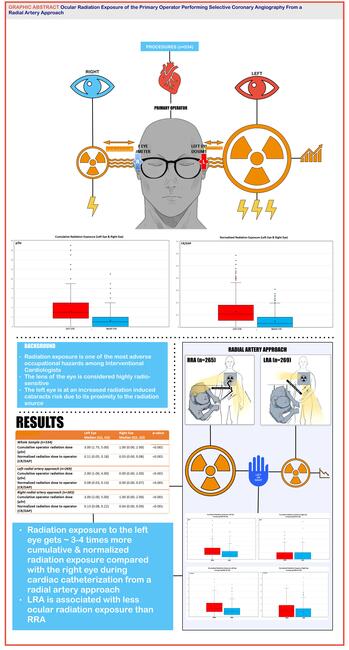
Studies of health hazards and occupational risks have consistently shown that personnel who work in cardiac catheterization laboratories, including cardiologists, technicians, and nurses, have higher levels of radiation exposure than in many other fields.[1-3] In fact, interventional cardiologists as a group are exposed to more radiation than nuclear power plant workers. These radiation risks are manifested through higher rates of cancers (brain, thyroid, hematopoietic, and skin), lens cataracts, and cardiovascular disease. In addition to radiation, the use of lead aprons by invasive cardiologists leads over time to orthopedic injuries of the neck, back, and legs. Professional societies have taken notice and have begun to publish studies and consensus statements advocating for greater protections for catheterization laboratory personnel.[4,5]
Gaps in current knowledge
There are enormous gaps in our knowledge base regarding radiation exposure. We only know some of the most basic details about radiation physics as it applies to the catheterization laboratory. Image intensifier distance, table height, left-right orientation, and a few other geometric details are only some of the factors that affect the amount of scatter radiation to which catheterization laboratory personnel are exposed. But there are many other considerations such as tube angulations, pulsed fluoroscopy dosing, contour shielding, etcetera, that remain only minimally explored. The true risks of longitudinal radiation exposure over many years have yet to be determined. Annual and lifetime thresholds and cumulative exposure limits must be defined.
Possible solutions or future directions
Greater professional society involvement will be enormously helpful and should be increasing. Cardiologist engagement through the professional societies is important for this. Improved x-ray technology to reduce radiation exposure levels is under development and must continue to evolve. Enhanced radiation protection devices (ERPD) like integrated leaded panels, ceiling-mounted lead-glass or lead-acrylic screens, radiation-blocking pads and drapes, and other items, are already in use and should continue to increase. Seamlessly integrating radiation protection activities into workflow is necessary and requires constant monitoring and oversight. The benefits are worth it.
References
- Zakeri F, et al. Biological effects of low-dose ionizing radiation exposure on interventional cardiologists. Occup Med (Lond). 2010 Sep;60(6):464-9. doi: 10.1093/occmed/kqq062. Epub 2010 Jun 2. PMID: 20519631.
- Andreassi MG, et al. Occupational Health Risks in Cardiac Catheterization Laboratory Workers. Circ Cardiovasc Interv. 2016 Apr;9(4):e003273. doi: 10.1161/CIRCINTERVENTIONS.115.003273. PMID: 27072525.
- Abudayyeh I, et al. Occupational Health Hazards in the Cardiac Catheterization Laboratory: Results of the 2023 SCAI Survey. J Soc Cardiovasc Angiogr Interv. 2025 Mar 4;4(4):102493. doi: 10.1016/j.jscai.2024.102493. PMID: 40308248.
- Tamirisa KP, et al; ACC Women in Cardiology Advocacy Work Group. Radiation Exposure, Training, and Safety in Cardiology. JACC Adv. 2024 Feb 29;3(4):100863. doi: 10.1016/j.jacadv.2024.100863. PMID: 38939686.
- Salavitabar A, et al. ALARA+: Summit on Radiation and Orthopedic Risks in Fluoroscopic Laboratories. J Soc Cardiovasc Angiogr Interv. 2026 Mar 24;5(4):104166. doi: 10.1016/j.jscai.2025.104166. PMID: 42111090.
© 2026 HMP Global. All Rights Reserved.
Any views and opinions expressed are those of the author(s) and/or participants and do not necessarily reflect the views, policy, or position of the Journal of Invasive Cardiology or HMP Global, their employees, and affiliates.