4.3 Minimizing Infarct Size in STEMI: Latest Techniques, Pharmacology and How to Manage Microvascular Obstruction
Problem Presenter: William O’Neill
Problem Presenter: William O’Neill
These proceedings summarize the educational activity of the 18th Biennial Meeting of the International Andreas Gruentzig Society held January 27 to 30, 2026, in Puerto Ayora, Santa Cruz, Ecuador.
Faculty Disclosures Sponsors
2026 IAGS Summary Document
Statement of problem or issue
Infarct size is important because it is correlated with mortality (i.e. survival) both in the short and long terms. [1] The major clinical predictors of infarct size are listed in Table 1. [2]
|
Table 1. Clinical Predictors of Large Infarct Size in STEMI. |
|
|
|
|
|
|
Several strategies to reduce infarct size and enhance myocardial salvage have been investigated over the past 50 years. Many of these have been disproven, but a few have shown promise. One of the important issues is timing of the proposed therapeutic intervention. An outline for this is shown in Figure 1.
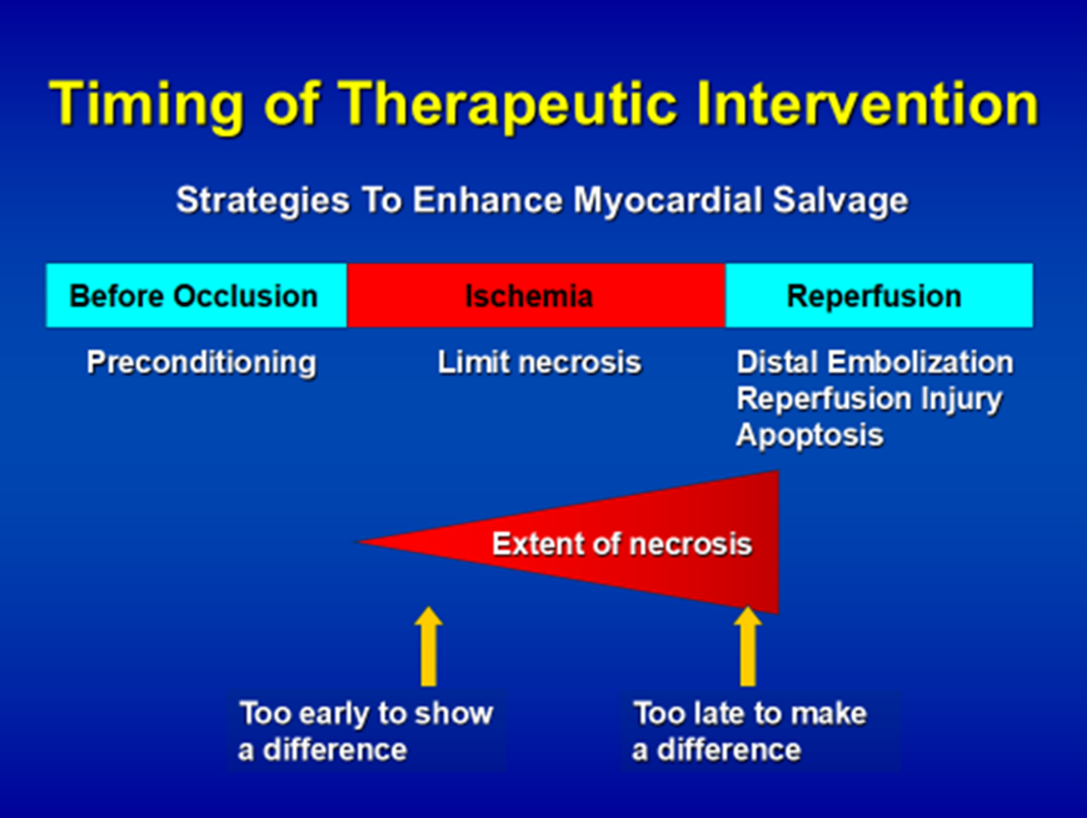
Figure by the author.
Gaps in current knowledge
Beyond achieving rapid and complete reperfusion, and supporting patients hemodynamically and clinically, everything else done therapeutically in this field has enormous gaps in the applicable knowledge base. As shown in Figure 1, understanding the timing of therapeutic intervention is critical: It may be implemented too early to show any difference, or, it may be implemented too late to make any difference.
Possible solutions or future directions
There are two extremely important avenues of investigation for reducing infarct size in the immediate future: (1) LV support (that is, mechanical circulatory support = MCS), for all STEMI patients but especially for those in cardiogenic shock (CS); (2) supersaturated oxygen (SSO2), usually infused via hyperoxygenated blood through a catheter into the target coronary artery immediately after successful PCI.
- Animal and clinical studies support the use of LV unloading (i.e. MCS) instituted immediately prior to reperfusion and continued during recovery. However, implementing MCS delays reperfusion, and this could be harmful. The DTU-STEMI pilot trial found that a brief delay up to 30 minutes to initiate LV support prior to reperfusion did not increase either infarct size or adverse event rates. [3] The full STEMI-DTU randomized trial (NCT03947619) with over 500 patients has been completed and results will be presented later this year.
- Experimental studies also support administration of SSO2 as a method to reduce infarct size, prevent LV remodeling, and improve survival in STEMI. [4-7]
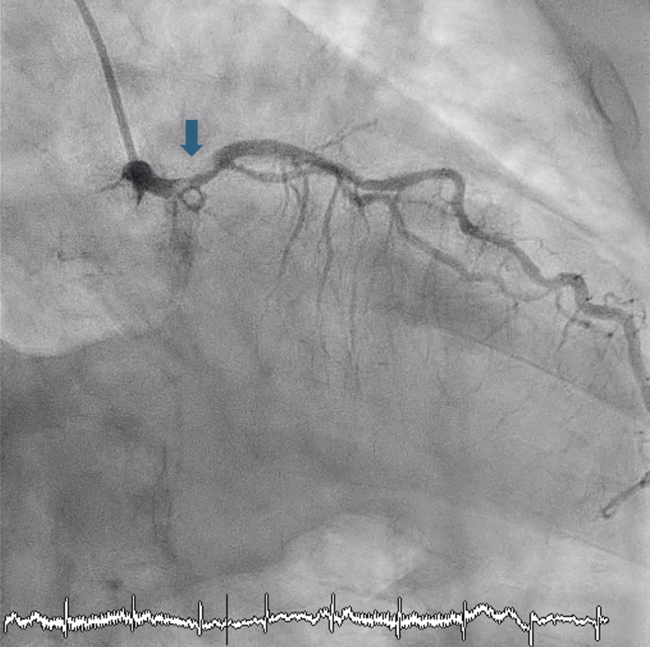
Research suggests that the mechanism of benefit from SSO2 comes from a reduction or elimination of microvascular obstruction in the myocardial capillary beds of reperfused areas (Figure 2). [7,8]
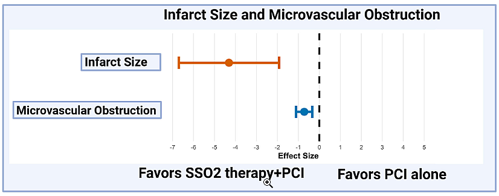
These areas are extremely hopeful for STEMI therapy. In terms of LV preservation and survival we have been stagnant for 30 years. We are now seeing an explosion in new research activity and many new things will come from it.
References
- van Kranenburg M, et al. Prognostic value of microvascular obstruction and infarct size, as measured by CMR in STEMI patients. JACC Cardiovasc Imaging. 2014;7(9):930-9. doi: 10.1016/j.jcmg.2014.05.010. PMID: 25212799.
- Stone GW, et al. Predictors of infarct size after primary coronary angioplasty in acute myocardial infarction from pooled analysis from four contemporary trials. Am J Cardiol. 2007;100(9):1370-5. doi: 10.1016/j.amjcard.2007.06.027. Epub 2007 Aug 17. PMID: 17950792.
- Kapur NK, et al. Unloading the left ventricle before reperfusion in patients with anterior st-segment-elevation myocardial infarction. Circulation. 2019;139(3):337-346. doi: 10.1161/CIRCULATIONAHA.118.038269. PMID: 30586728.
- O'Neill WW, et al; AMIHOT Investigators. Acute Myocardial Infarction with Hyperoxemic Therapy (AMIHOT): a prospective, randomized trial of intracoronary hyperoxemic reperfusion after percutaneous coronary intervention. J Am Coll Cardiol. 2007;50(5):397-405. doi: 10.1016/j.jacc.2007.01.099. Epub 2007 Jul 16. PMID: 17662390.
- Stone GW, et al; AMIHOT-II Trial Investigators. Effect of supersaturated oxygen delivery on infarct size after percutaneous coronary intervention in acute myocardial infarction. Circ Cardiovasc Interv. 2009;2(5):366-75. doi: 10.1161/CIRCINTERVENTIONS.108.840066. Epub 2009 Sep 15. PMID: 20031745.
- Chen S, et al. One-year outcomes of supersaturated oxygen therapy in acute anterior myocardial infarction: The IC-HOT study. Catheter Cardiovasc Interv. 2021;97(6):1120-1126. doi: 10.1002/ccd.29090. Epub 2020 Jul 10. PMID: 32649037.
- Kloner RA, et al. Update on Cardioprotective Strategies for STEMI: Focus on Supersaturated Oxygen Delivery. JACC Basic Transl Sci. 2021;6(12):1021-1033. doi: 10.1016/j.jacbts.2021.07.011. PMID: 35024508.
- Lingamsetty SSP, et al. Effects of supersaturated oxygen therapy on infarct size and microvascular obstruction following myocardial infarction: A systematic review and meta-analysis. Am Heart J. 2026;293:107311. doi: 10.1016/j.ahj.2025.107311. Epub 2025 Nov 24. PMID: 41297689.
© 2026 HMP Global. All Rights Reserved.
Any views and opinions expressed are those of the author(s) and/or participants and do not necessarily reflect the views, policy, or position of the Journal of Invasive Cardiology or HMP Global, their employees, and affiliates.