7.1 ECPR for Cardiac Arrest: Trending, but in Whom and When is it Futile? Do ECMO Devices Need to be Improved?
Problem Presenter: Jacqueline Tamis-Holland
Problem Presenter: Jacqueline Tamis-Holland
These proceedings summarize the educational activity of the 18th Biennial Meeting of the International Andreas Gruentzig Society held January 27 to 30, 2026, in Puerto Ayora, Santa Cruz, Ecuador.
Faculty Disclosures Sponsors
2026 IAGS Summary Document
Statement of problem or issue
There are approximately 370, 000 sudden cardiac deaths (cardiac arrests) every year in the United States.[1] Patients who have VTVF as the cause for their cardiac arrest have better outcomes than patients with arrest from other causes, but even so, survival after VTVF cardiac arrest is very low at approximately 30%. With refractory VTVF (defined as >3 shocks or >10 minutes of CPR), survival is only 5% to 15%.
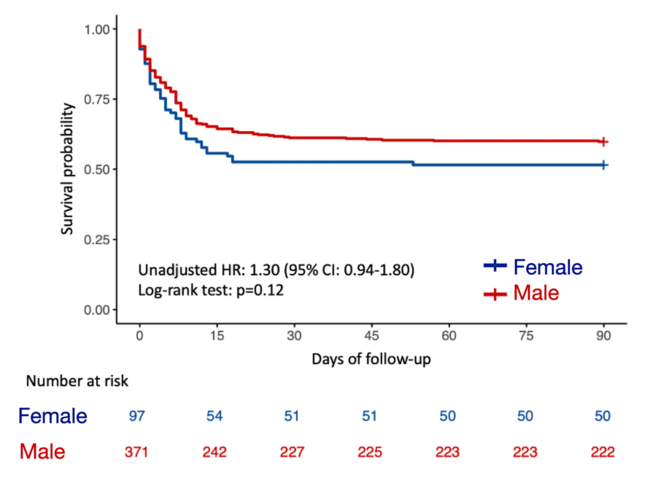
Over the past 10 to 15 years, multiple observational studies from excellent centers throughout the world have shown that extracorporeal cardiopulmonary resuscitation (ECPR) can be effective in patients with refractory cardiac arrest.[2] However, ECPR must be instituted within the first hour of the arrest. Beyond the first hour, survival declines dramatically.[3]
Gaps in current knowledge
One of the largest gaps in our current knowledge base arises from the discordance between observational data and the results of 3 randomized trials of ECPR that have been performed to date.[4-6] Additionally, the trials are all different and have yielded very different conclusions (Table 1).
|
Feature: |
ARREST [4] |
PRAGUE [5] |
INCEPTION [6] |
|
Centers |
Single |
Single |
Multiple |
|
No. patients |
30 |
254 |
133 |
|
Baseline rhythm |
Shockable |
Any |
Shockable |
|
Site of randomization |
ED |
Field |
Field |
|
Cross-overs |
None |
Permitted |
Permitted |
|
Conclusions |
Improved survival at hospital discharge (43% vs 7%). |
Trend toward improved 180-day survival with favorable neuro status: |
No difference in 30-day survival with favorable neuro status: |
Table 1. Comparison of selected features of three randomized controlled trials of ECPR versus conventional resuscitation for out-of-hospital sudden cardiac death.
What has been learned from the various studies is that there are certain key features to success with ECPR. These key features are summarized below:
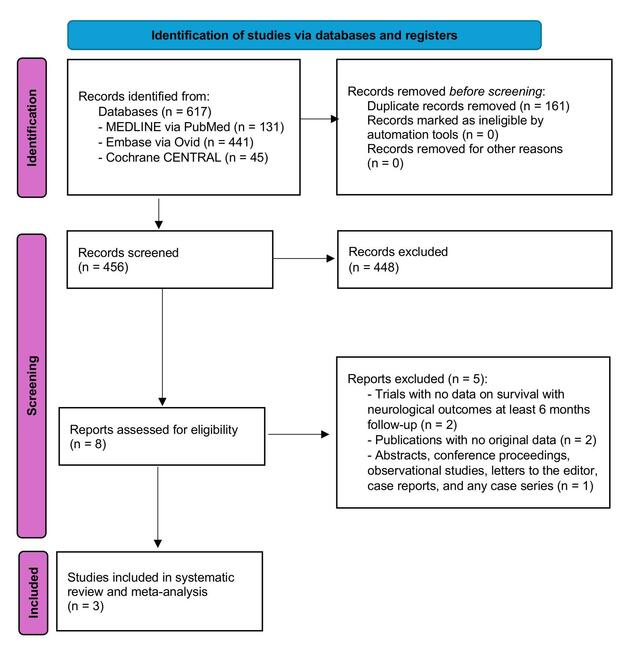
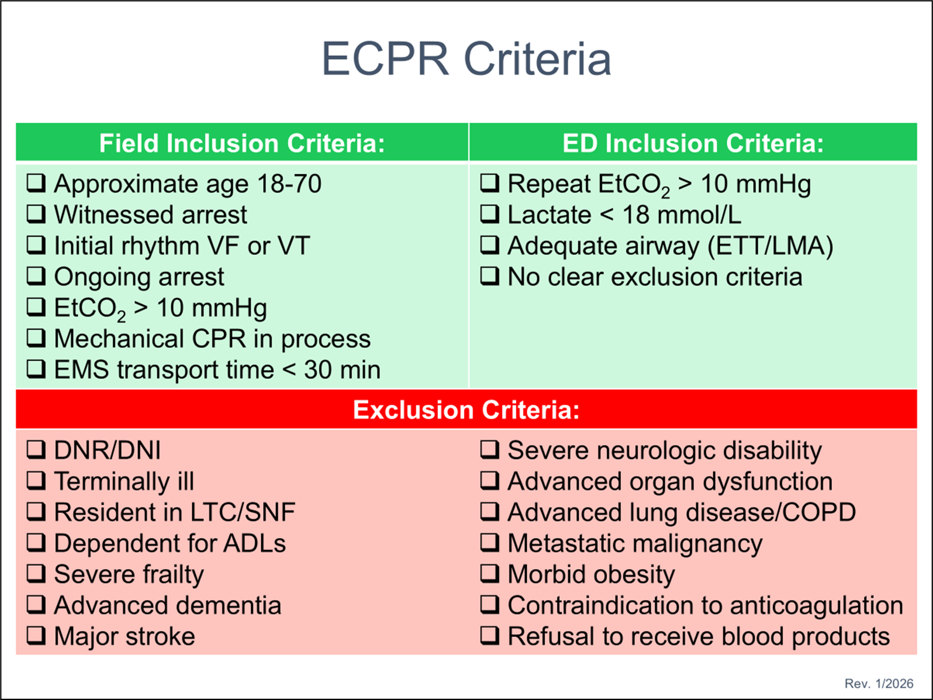
- Proper patient selection (Figure 1).
- Early consideration of ECPR (immediately on first shock).
- Rapid coordination and transport.
- Rapid mobility of ECMO team on site.
- ECPR teams should be immediately available.
- ECPR initiated within 10 to 15 minutes of arrival.
- Expertise in care.
Common criteria we use at our institution (which parallel criteria used around the world) for selecting patients appropriately for ECPR are shown in the figure below.
Other gap areas in our knowledge base are listed below:
- Does ECPR improve outcomes? Under all scenarios or only some? At what cost?
- Will outcomes be better if we adopt a “Load-and-Go” strategy for all patients with refractory arrest?
- Will institutional reporting of outcomes and associated costs create barriers to implementing this strategy?
- Can we develop Systems-of-Care for cardiac arrest patients?
- Improve proportion of eligible patients
- Expand EMS and community awareness
- Create mobile ECMO units and call teams to perform ECMO cannulation for ECPR at remote sites.
- How can we improve the safety of ECPR?
- Improve ECPR simulation mannequins for greater practice experience.
- Develop smaller devices (especially, cannulas) to allow safer cannulations.
- Consider alternative options for safe cannulation like mobile fluoroscopic C-arms of echo guidance.
Possible solutions or future directions
In addition to finding answers to the knowledge gap areas outlined above, it will need to be determined in whose domain the subject of ECPR resides. Is it the emergency medicine specialist, the critical care intensivist, the interventional cardiologist, or possibly the surgeon? A combination of these specialists working together on ECMO teams might be one solution. It is important that each institution considering ECPR determine who can be an ECMO cannulator, and whether fluoroscopic guidance or echo guidance are preferred or required.
Some further insights will likely come from registries of sudden cardiac death, like the CARES registry.[7] In addition, a large, multicenter, international randomized trial of ECPR versus conventional resuscitation, the OSIRIS trial (NCT06805344), is currently enrolling patients. This trial is anticipated to be completed in 2029.
References
- Jaiswal V, et al. Demographics and Trends of Sudden Cardiac Death-Related Mortality in the United States, 1999 to 2022. J Am Heart Assoc. 2025;14(18):e040340. doi: 10.1161/JAHA.124.040340. Epub 2025 Sep 11. PMID: 40932104.
- Morrison LJ, et al. International Consensus on Evidence Gaps and Research Opportunities in Extracorporeal Cardiopulmonary Resuscitation for Refractory Out-of-Hospital Cardiac Arrest: A Report From the National Heart, Lung, and Blood Institute Workshop. J Am Heart Assoc. 2025;14(6):e036108. doi: 10.1161/JAHA.124.036108. Epub 2025 Mar 5. PMID: 40040619.
- Kosmopoulos M, et al. The Association of Time to Reperfusion With VA-ECMO With Survival of Patients Who Experience Refractory Out-of-Hospital Cardiac Arrest. Circulation. 2025;152(12):902-904. doi: 10.1161/CIRCULATIONAHA.125.074507. Epub 2025 Sep 22. PMID: 40982582.
- Yannopoulos D, et al. Advanced reperfusion strategies for patients with out-of-hospital cardiac arrest and refractory ventricular fibrillation (ARREST): a phase 2, single centre, open-label, randomised controlled trial. Lancet. 2020;396(10265):1807-1816. doi: 10.1016/S0140-6736(20)32338-2. Epub 2020 Nov 13. PMID: 33197396.
- Belohlavek J, et al; Prague OHCA Study Group. Effect of Intra-arrest Transport, Extracorporeal Cardiopulmonary Resuscitation, and Immediate Invasive Assessment and Treatment on Functional Neurologic Outcome in Refractory Out-of-Hospital Cardiac Arrest: A Randomized Clinical Trial. JAMA. 2022;327(8):737-747. doi: 10.1001/jama.2022.1025. PMID: 35191923.
- Suverein MM, et al. Early Extracorporeal CPR for Refractory Out-of-Hospital Cardiac Arrest. N Engl J Med. 2023;388(4):299-309. doi: 10.1056/NEJMoa2204511. PMID: 36720132.
- Available at: www.mycares.net/sitepages/aboutcares.jsp. Accessed April 22, 2026.
© 2026 HMP Global. All Rights Reserved.
Any views and opinions expressed are those of the author(s) and/or participants and do not necessarily reflect the views, policy, or position of the Journal of Invasive Cardiology or HMP Global, their employees, and affiliates.