Clinical Perspectives Through an Integrated Triple Monoamine Lens
Experts discuss the interconnected roles of dopamine, norepinephrine, and serotonin in ADHD and examine how this framework may inform assessment of residual symptoms and treatment planning.
Transcript
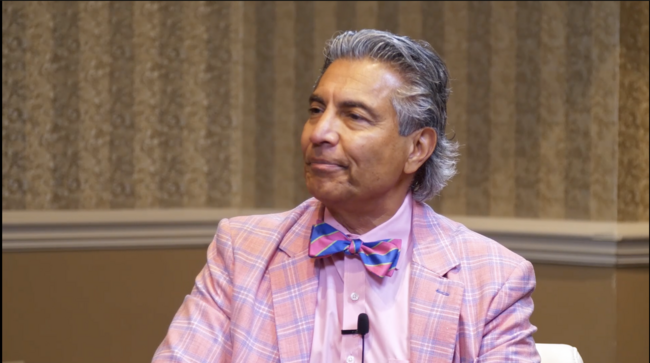
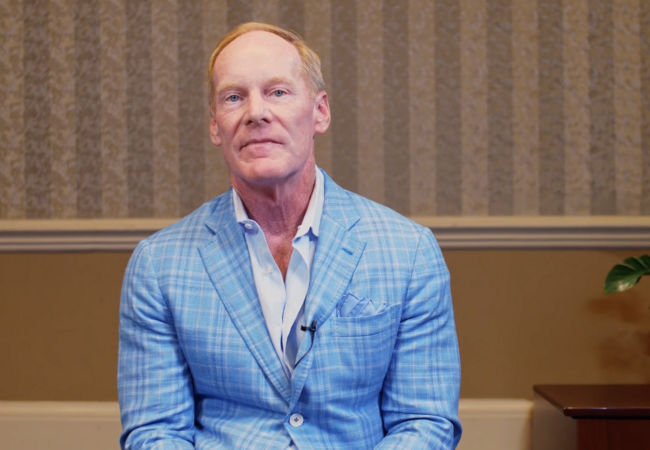
Craig Chepke, MD, DFAPA: So, Rakesh, we just had a great conversation about how based off of our clinical experiences, we're noticing that our impression of ADHD has been maybe over-indexed on just dopamine and norepinephrine, and that serotonin added in might give us a better picture to explain the symptoms of ADHD. I'd love if you could dive down into the neurobiological level, though, and talk a little bit more about why this might be on a neurobiological level.
Rakesh Jain, MD, MPH: I'm so glad you asked that because in the last 10 years or so, we have made some significant advances with fMRI studies of the brains of people who have ADHD. What we are finding is there is widespread hypofrontality. So, it is true, this is a disorder of the human cortex. What we're also finding is, interestingly, a high hyperperfusion in the subcortical structures where we control emotion and motivation. This imbalance between the networks that control it, Craig, it's the reason why patients have cognitive symptoms, hyperactivity, impulsivity, emotional dysregulation, executive dysfunction. I think we're mandated to think big because this disorder is big. To ask 1 or 2 neurotransmitters to address all these needs is simply folly.
Chepke: Absolutely. I think, furthermore, we've also siloed off what each neurotransmitter is separately. What does high or low dopamine mean? What does high or low norepinephrine mean? As we said, serotonin's usually left out of the party altogether. Talk about how these interact with each other in both subcortically and cortically.
Jain: I am, again, glad you asked that because the siloing effect, which you very eloquently put into a phrase that makes sense to me, has been damaging to our field. As a result, we have not only aimed narrowly; we've gotten narrow results.
Chepke: Exactly.
Jain: So, this interaction between these 3 neurotransmitters actually begins where they're born in the midbrain. These literally, when I and you've done dissections, these neuronal bodies live in a triangular little area. They are deeply interconnected through heteroreceptors and autoreceptors. In other words, it is illogical for the human brain to allow any of these neuronal systems to not interact with each other, but I do think we should also emphasize they do play a different role to some degree.
Dopamine very much is involved in inhibitory action. Norepinephrine may be involved in excitatory action. Having said that, there's also a reward processing deficit problem with this disorder; that's serotonin. Now a patient or a patient's family member is not breaking it down. All they're saying is, "I've got all these symptoms."
Chepke: Exactly.
Jain: So, the clinician has to think big because the disorder is big, and these 3 neurotransmitters appear to be vital if your goal is complete thinking about the disorder to address their symptoms.
Chepke: Absolutely. If you look at the projection patterns of the monoamines, they project widely throughout the cortex and very elaborately, but if you trace them all back, as you said, they all live within such a tiny region of each other.
Jain: They do.
Chepke: It's folly to think that they're going to be completely unrelated to each other in their function because they're structurally located so closely. While they project so far out, the number of projections they would have to each other and the number, as you said, of autoreceptors, heteroreceptors is mind-boggling. Of course, they are all one part of one big family.
Jain: If we can connect what you just shared with symptomatology, this may explain why the overlap between anxious symptoms, depressive symptoms, low self-esteem, but also things like executive dysfunction, both of omission and commission, exist together.
Chepke: Yes.
Jain: It's been really our folly to think just because DSM tells us this is the disorder... we looked at DSM, and we forgot to look at our patients.
Chepke: You're so right. Also, what has informed so much of our thought process, at least of what is the potential etiology/neurobiology of ADHD is from the serendipity of that stimulant medications were given, and there was seen a benefit largely in hyperactivity at first, at least. Then, tracing that back, "Oh, this is a medication that increases the throughput of dopamine and norepinephrine. Therefore, boom, it must be a dopamine-norepinephrine issue."
So, let's move beyond that lens and zoom back out from the neurobiology to, with this new view of the triple interplay system that we're coming up with this framework for, how do you think that should impact and will impact our treatment decisions going forward?
Jain: I think it will because even though we tend to think ADHD is those 3 classic symptoms, you know what we end up doing in clinical practice? We add a lot of medications that already induce...
Chepke: We sure do.
Jain: ... serotonin, but we say, "Oh, I'm treating it differently." No, what we are trying to do is treat the actual disorder. So, forget about comorbidities for a second. Just let's think about the associated very common symptoms of behavioral dysregulation, emotional dysregulation, obviously executive dysfunction. If that is a goal, this new emergent thinking is going to change clinicians' minds to think about interventions that better match the patient's needs.
Chepke: Yeah, absolutely. This is a common thing I see in practice, is that often an adult comes in, and they say they have depression, they have anxiety, but they're not really meeting criteria for those. I'm picking up that there are some attentional issues, there's some impulsivity. I realized that I think what they had is they had ADHD early on as a child, but they were able to, as I like to say, brute force IQ their way through it. They had good social supports and structure, and then at some point, it gets to a point where they're not able to cope with it anymore.
They come in, and those diagnoses are very common. So, they get those diagnoses, but they're not really fitting what we see when we see someone with purely major depressive disorder, purely generalized anxiety disorder. If we can treat the ADHD, then that often can improve some of those, but treating it doesn't mean just with the historical stimulant class. Talk about some of the treatment choices with stimulants and non-stimulants, and how that treatment planning might change going forward into the future.
Jain: Craig, I am not one who just runs to new ideas because they sound good or because what I'm offering them is not adequate enough. The truth is, the neurobiology compels us to appreciate that all 3 are equally important. So, this is no attempt on my part to make dopamine and norepinephrine less important. In fact, I think they're incredibly important.
Chepke: Oh, absolutely.
Jain: I just want to make sure that the neurobiological evidence that serotonin is important is not forgotten, because the symptom complex is large. So, if you think about stimulant class, we primarily have 2 stimulants, don't we, Craig? Essentially, what they do in different ratios, depending on the kind of stimulant, is dopamine, and some of them are norepinephrine.
So, not thinking about these 3 neurotransmitters isn't just inadequate in terms of not addressing all the patient's symptoms. Sadly, we end up exacerbating, exaggerating the problems. Now, if you think about non-stimulants, we do have several FDA approved options, but they do tend to be very limited. So, we have a group of medications that are primary norepinephrine reuptake inhibitors. We've got a couple of them that are norepinephrine receptor modulators. We have one that is norepinephrine and has some serotonergic. That's good, but what we need for certain groups of patients is not 1, 2, or 3, or 1-2, or 2-3, what I need is 1, 2, and 3. What do you think?
Chepke: I think it's like a 3-legged stool. If you only have 2 solid legs, and the other is made out of a cardboard...
Jain: Great analogy.
Chepke: ... then that's not something you're going to want to sit on. That's how we have to think of the monoamines, I think, is we've got to attend... They don't have to be all equally strong, but they've got to at least be enough to support the weight that we're putting on them. That weight of treatment is imbalanced historically for people with ADHD. We've got to bring that into a balance. Again, not all equal necessarily, but enough that it's going to support that there is mental wellbeing across a wide variety of symptoms, not just attention and hyperactivity and impulsivity, but all those associated features, which are part of the condition of ADHD.
Jain: Well said. We are dealing with a disorder that's cortical and subcortical. If the disorder chose to be that broad in its pathophysiology, as a clinician, I'm compelled to think bigger. That's why these 3 neurotransmitters are a tool for me as a clinician and my dear patients to actually have a bigger vision, to dream a little bit bigger.
Chepke: Absolutely. Well, thank you so much for your insights. I really appreciate you diving deep onto this.
Jain: Thank you, Craig. I enjoyed the conversation.
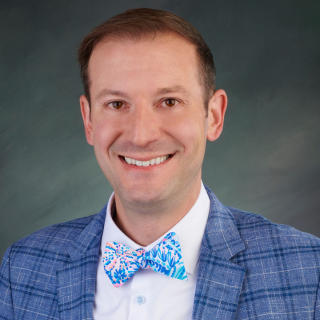 Craig Chepke, MD, DFAPA
Dr Craig Chepke is a board-certified psychiatrist in clinical practice as the medical director of Excel Psychiatric Associates in Huntersville, North Carolina. He serves as an adjunct associate professor of psychiatry for the Atrium Health Psychiatry Residency Program and is the chief medical officer of Psych Congress. As part of an interdisciplinary treatment team in his practice, he employs a person-centered care model to tailor treatments to each individual's needs, integrating traditional pharmacotherapy with psychotherapeutic and physical health and wellness interventions. His clinical and academic interests include serious mental illness, movement disorders, ADHD, and sleep medicine. Dr Chepke has been recognized as a distinguished fellow of the American Psychiatric Association and is a recipient of the National Alliance on Mental Illness Exemplary Psychiatrist Award.
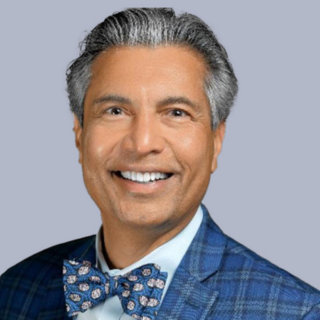
Rakesh Jain, MD, MPH
Dr Rakesh Jain is a clinical professor at the Texas Tech University School of Medicine. He attended medical school at the University of Calcutta in India. He then attended graduate school at the University of Texas School of Public Health in Houston, where he was awarded a “National Institute/Center for Disease Control Competitive Traineeship.” His research thesis focused on the impact of substance abuse. He graduated from the School of Public Health in 1987 with a Master of Public Health degree. Dr Jain served a 3-year residency in Psychiatry at the Department of Psychiatry and Behavioral Sciences at the University of Texas Medical School at Houston. He then obtained further specialty training, undergoing a 2-year fellowship in child and adolescent psychiatry. In addition, Dr Jain completed a postdoctoral fellowship in research psychiatry at the University of Texas Mental Sciences Institute in Houston. He was awarded the “National Research Service Award” for the support of this postdoctoral fellowship.Left off here
Speakers are paid consultants of Otsuka America Pharmaceutical, Inc.
July 2026 US.UNB.X.26.00028