The Gap Between the Traditional Framing of ADHD Neurobiology vs Clinical Reality of ADHD
Review the evolving understanding of ADHD neurobiology and how the interplay among dopamine, norepinephrine, and serotonin may help explain the broader clinical presentation of ADHD.
Transcript
Rakesh Jain, MD, MPH: Well, hello, dear colleagues, and welcome to this video. It's titled “ADHD Neurobiology: How Norepinephrine, Dopamine and Serotonin Interplay to Shape Clinical Presentation and Management.” My name is Rakesh Jain. I'm an adult and a child psychiatrist, and I'm a clinical professor of psychiatry at Texas Tech University School of Medicine in Texas. And I'm joined by one of the great thought leaders in the world of psychiatry and my friend, Dr Craig Chepke. Craig, would you kindly introduce yourself to the audience?
Craig Chepke, MD, DFAPA: Absolutely. My name's Craig Chepke. I'm a psychiatrist in private practice at Excel Psychiatric Associates in Huntersville, North Carolina, just outside of Charlotte. I'm also the chief medical officer of Psych Congress.
Jain: Well, you've now been treating and helping people with ADHD of all ages for quite a while.
Chepke: Yes.
Jain: Well, the truth is, and I'm sure our colleagues agree, that there is a gap between the traditional framing of ADHD and the neurobiology. Why is there a gap? If ADHD is all about dopamine and norepinephrine, why aren't we there yet, Craig?
Chepke: Well, I think that speaks to the fact that that can't be all, because we've got many different traditional treatments, lots of different formulations and options, but we still struggle to get full symptom control of all the types of symptoms that people with ADHD present with. If we just take a narrow look at attention, concentration, hyperactivity, sure... many individuals, we can get those symptoms under control with the historical treatments, but unfortunately, no matter how hard we try with those historical treatments, it often leaves a lot to be desired in many of the patients I see, and I'm sure you as well.
Jain: It is so true. It's so true. When I went to residency training and fellowship training in child and adolescent psychiatry, the training back then, Craig, I hate to admit this to you, but I must, was it's a disorder of hyperactivity, impulsivity, and attentiveness. By now, now that the lens has sharpened a little bit, we do see associated symptoms that are so common. They literally have, in my practice, become part of the disorder, such as executive dysfunction, emotional dysregulation. Would you mind expanding on these 2 sets of symptoms. How is it that norepinephrine, dopamine by itself doesn't fully cover it in most patients?
Chepke: You're absolutely right. I mean, if you look at the DSM-5 and some previous versions, the diagnostic criteria only talk about what the person is doing, like you're observing a lab rat. Are they able to attend to a stimulus? Are they hyperactive or not? Do they make impulsive decisions? It never talks about how the person feels, and that is just so different from anything else we think of in psychiatry.
Those are contained in the DSM, just in the additional associated features section of it, just not part of the diagnostic criteria, but that doesn't mean that they're not important. They are incredibly clinically important and meaningful in the lives of those living with ADHD. That's what we've been missing. We've been, I think, over-indexing on just the diagnostic criteria and trying to hammer down those symptoms as sequentially with our patients and not thinking about the whole holistic picture.
Maybe dopamine-norepinephrine can explain those well, but monoamines don't live in a vacuum. They all interact with each other. Different heteroreceptors are located on the neurons of other monoamine receptors. So, if you change the concentrations of one neurotransmitter of the monoamines, you're going to change those of the other monoamines well. You can't change one without changing the other. That's where I think maybe we're missing the mark because we've left a very important monoamine out of the conversation historically, and that's serotonin.
Jain: That's serotonin. So, I'm so glad you brought that up because I do think serotonin has been a widely underappreciated neurotransmitter in the entirety of the pathogenesis of this disorder. So, perhaps you could expand on what role might serotonin play along with its buddies, dopamine and norepinephrine, in addressing, to borrow your phrase, the holistic complete picture of ADHD?
Chepke: Well, anytime we think about mood disorders and anxiety, you can't think about those without thinking about serotonin. Those are symptoms—anxiety, depressive features—that I think the vast majority of individuals with ADHD live with to some extent, either small, medium, or large. So, many individuals with ADHD, in addition to some of the traditional treatments for the core symptoms, are on antidepressants as well to try to address some of those.
So, we're already doing this in a piecemeal fashion because we're seeing that people aren't getting full relief. They may start with the antidepressant and then later get the ADHD diagnosis, start the traditional treatment, or vice versa. We're seeing a lot of polypharmacy to address a complicated problem, so that makes sense in terms of the emotional dysregulation and executive dysfunction. That could be also related. Serotonin can play roles directly in certain aspects of cognition, but then indirectly, as I said, with modulating those other monoamines. Whether directly or indirectly, I really think we need to shift our focus to including serotonin as part of and parcel of ADHD.
Jain: I love that. I love that thinking. So even if a patient does not have a full-blown anxiety disorder...
Chepke: Correct.
Jain: ... or a mood disorder, the fact that they have these important, worrisome symptoms, one could think broadly. I think it's it. I think the time has come for us to think a little bit broadly, think about dopamine and norepinephrine, but not ignoring serotonin from this conversation. Triple monoamines do play a role, and they do explain this broad clinical picture that Craig and I have been talking. We very much appreciate your interest in this topic. Thank you, Craig, for joining me in this conversation.
Chepke: Thank you for having me, Rakesh.
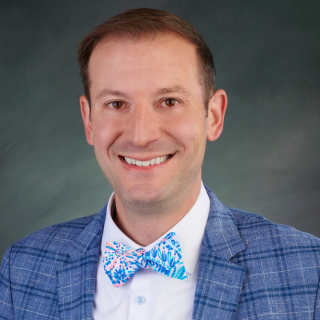
Craig Chepke, MD, DFAPA
Dr Craig Chepke is a board-certified psychiatrist in clinical practice as the medical director of Excel Psychiatric Associates in Huntersville, North Carolina. He serves as an adjunct associate professor of psychiatry for the Atrium Health Psychiatry Residency Program and is the chief medical officer of Psych Congress. As part of an interdisciplinary treatment team in his practice, he employs a person-centered care model to tailor treatments to each individual's needs, integrating traditional pharmacotherapy with psychotherapeutic and physical health and wellness interventions. His clinical and academic interests include serious mental illness, movement disorders, ADHD, and sleep medicine. Dr Chepke has been recognized as a distinguished fellow of the American Psychiatric Association and is a recipient of the National Alliance on Mental Illness Exemplary Psychiatrist Award.
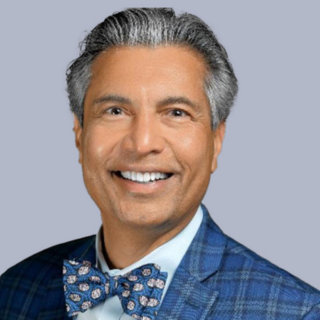
Rakesh Jain, MD, MPH
Dr Rakesh Jain is a clinical professor at the Texas Tech University School of Medicine. He attended medical school at the University of Calcutta in India. He then attended graduate school at the University of Texas School of Public Health in Houston, where he was awarded a “National Institute/Center for Disease Control Competitive Traineeship.” His research thesis focused on the impact of substance abuse. He graduated from the School of Public Health in 1987 with a Master of Public Health degree. Dr Jain served a 3-year residency in Psychiatry at the Department of Psychiatry and Behavioral Sciences at the University of Texas Medical School at Houston. He then obtained further specialty training, undergoing a 2-year fellowship in child and adolescent psychiatry. In addition, Dr Jain completed a postdoctoral fellowship in research psychiatry at the University of Texas Mental Sciences Institute in Houston. He was awarded the “National Research Service Award” for the support of this postdoctoral fellowship.
Speakers are paid consultants of Otsuka America Pharmaceutical, Inc.
July 2026 US.UNB.X.26.00028