First-Line Decisions in ADHD: Lifestyle Modification or Medication?
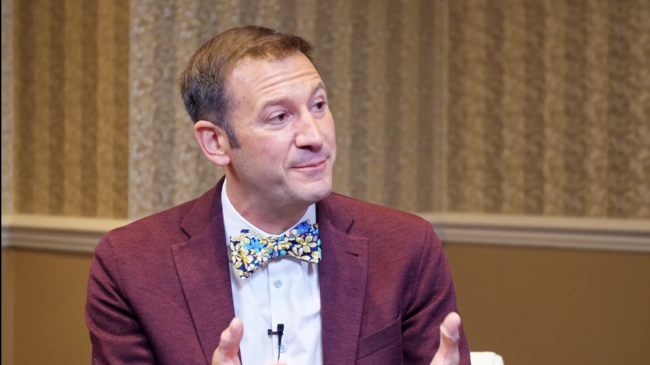
Should attention-deficit/hyperactivity disorder (ADHD) treatment begin with medication or lifestyle modification? Psych Congress Network sat down with meeting Co-Chair, Julie Carbray, PhD, PMHNP-BC, and Steering Committee member James Greenblatt, MD, to discuss essential insights from their 2026 Psych Congress session, “First-Line Decisions: Lifestyle Modification or Medication? Balancing Pharmacologic and Non-Pharmacologic Care in ADHD.”
In this interview, Carbray and Greenblatt discuss how functional impairment, symptom severity, patient preferences, life stage, and family perspectives can shape initial ADHD treatment decisions. They explore when pharmacotherapy may warrant earlier consideration, when lifestyle approaches may be more suitable, and why multimodal treatment remains important.
For more news and insights from Psych Congress, visit the Psych Congress newsroom.
Key Takeaways for Clinical Practice
- ADHD treatment decisions should reflect functional impairment, symptom severity, and patient preferences. Medication may be a potential starting point when impairment is substantial, while lifestyle approaches may be more suitable when impairment is less pronounced.
- Multimodal ADHD treatment can incorporate pharmacotherapy, lifestyle modification, psychoeducation, and shared decision-making. Higher-risk symptoms may require more immediate intervention.
- Patient and family preferences can evolve during ADHD treatment. Psychoeducation, respect for initial treatment preferences, and clinician-patient trust may help patients and families reconsider medication when lifestyle interventions do not adequately improve functioning.
Read the Transcript
Julie Carbray, PhD, PMHNP-BC: I'm Julie Carbray. I'm a clinical professor of psychiatry and nursing at the University of Illinois, Chicago, and I'm a psychiatric nurse practitioner.
James Greenblatt, MD: My name is Dr James Greenblatt. I'm a child and adult psychiatrist. I’ve been practicing over 30 years, focusing on integrated nutrition, lifestyle, and pharmacotherapy for the treatment of ADHD.
Psych Congress Network: How do you determine whether initial treatment should begin with pharmacotherapy or lifestyle interventions? How do factors like patient life stage and sex inform your decision?
Greenblatt: I think the most important piece in evaluating a child, adolescent, or adult with ADHD is understanding the severity of the impairments and understanding what they want.
So many of my patients come in looking for vitamins and they leave with a stimulant because the severity of their symptoms are so profound and they're not functioning well at home or school. I know a stimulant will work more quickly and helpfully. It doesn't mean I don't have other additional nutritional or lifestyle factors. Then there are patients, they took someone else's medications, they want the Adderall.
Carbray: That the Adderall worked, perhaps.
Greenblatt: I'm saying, well, maybe we should look at some lab tests first, let's not rush. You're getting all A's in school and there's really no impairment in any aspect of your life. So, I think it's really important to look at the individual. With some, we focus on medications as the place to start, and others where we slow it down and work with lifestyle.
Carbray: I know you and I have talked about this, that we're really meeting our patients where they're at. They come to us with an ask of an evaluation, a diagnostic impression, and a discussion of their functional impairment. What is falling apart in their lives that have brought them to you in confidence and in hope that there's something that can happen to make things better. We have a lot of psychoeducation in our approach. It's really one of those conversations where they bring to us where those impairments are and then we talk with them about what we know about efficacy and about the disease state. Then, together, there's some shared decision-making.
Offering lifestyle approaches, especially, I find, is an option when there isn't as much functional impairment. While we might mention it, if we have a kid who's already been kicked out of a couple of schools and they've been waiting a long time on our waitlist to get treatment, families might be more open to medication and pharmacotherapy. But they still want to hear about other options and we still need to talk about multimodal treatment. We talked about this together that a comprehensive approach will have the best outcomes anyway, but really identifying that higher risk symptomatology that we need to care for more immediately is important.
Then, different types of people require different types of approaches, perhaps. Maybe if you're speaking with a woman who is premenopausal or postmenopausal, you might also talk more comprehensively about other aspects of lifestyle.
Greenblatt: Yeah, I think with the women that we're treating now and that we are seeing now, most of the time they've been kind of either misdiagnosed or the focus on anxiety and depression, so they’re on multiple antidepressants, but they've just compensated for the ADHD by working really hard and these moments of perfectionism, but they really struggled internally and the ADHD diagnosis was not available to them as women because they weren't hyperactive.
Carbray: They weren't. They weren't. So, not meeting those classic symptoms. But lifestyle modifications too, often, I find women come to us and they've already tried to incorporate some of those lifestyles, and they're not sticking and there's a lot of shame again that's being built. When we can talk about the disease state and how it impairs overall functioning, I think there's some relief if we can get the diagnosis right, offer treatment, and help them to understand it's not about themselves, it's about this illness.
Greenblatt: I think for a clinician to be able to offer both lifestyle and medication choices is incredibly helpful for our patients. Many patients who come in adamant they would not give their child a medication. Either someone in the family had a bad side effect or they read something online.
Carbray: Or culturally, it's not a part of what's acceptable.
Greenblatt: Right, and then I work with them for so many months on a lifestyle approach. Then they trust me, and then I say, Johnny or Sally is still struggling. I think medication might be helpful. Where 3 months earlier, they were adamant they weren't going to take medications, they've come to trust me as a clinician who respected their wishes to look beyond just a pill.
Carbray: Right, that trust and that education along the way builds the path for medication acceptance down the road. As a clinician, I think you need to sit and as you continue to educate, acknowledge that in the end, it's really their decision. If you're educating them along the way, you'll be in a great space if the other interventions aren't taking hold and you can move forward. So it really depends on the family and trust.
Julie Carbray, PhD, PMHNP-BC, PMHCNS-BC, FAAN, holds her PhD and Master of Science degrees from Rush University, Chicago. A clinical professor of psychiatry and nursing at the University of Illinois Chicago, she has been practicing as a psychiatric nurse practitioner over 35 years. As UIC faculty, Dr Carbray teaches course content in psychopharmacology, mood disorders, and development and therapeutic interventions with children and adolescents for students across various multidisciplinary programs. As the Director of the Pediatric Mood Disorder Clinic, Dr Carbray leads the clinical program and multidisciplinary training and is a nationally recognized clinical expert in children and adolescents with mood disorders.
Dr Carbray holds a national reputation of excellence in serving families of children with mood disorders and was recognized with the UIC Preceptor of the year award, the Karen Gousman Excellence in Nursing Award, the American Psychiatric Nurses Association Best Practices in an Outpatient Program for Bipolar Disorder Award, the UIC Inspire Award, the APNA Distinguished Service Award and the Susan McCabe psychopharmacology lectureship from the International Society of Psychiatric Nurses.
A pioneer in the field of functional and integrative medicine, board-certified child and adult psychiatrist James M. Greenblatt, MD, has treated patients since 1988. After receiving his medical degree and completing his psychiatry residency at George Washington University, Dr Greenblatt completed a fellowship in child and adolescent psychiatry at Johns Hopkins Medical School.
Dr Greenblatt has lectured internationally on the scientific evidence for nutritional interventions in psychiatry and mental illness. He is the author of several books including Finally Focused: The Breakthrough Natural Treatment Plan for ADHD, Finally Hopeful, and, most recently, The Lithium Revolution (2026).
He is the founder of Psychiatry Redefined, an educational platform dedicated to the transformation of psychiatry, which offers online courses, educational webinars, and fellowships for professionals.
© 2026 HMP Global. All Rights Reserved.
Any views and opinions expressed above are those of the author(s) and do not necessarily reflect the views, policy, or position of the Psych Congress Network or HMP Global, their employees, and affiliates.