5.2 Interventional Solutions for TR: Any Room for More "T's" (Triapta, Tricvalve, Trillium) or "C's" (Cormaze, Cardioband) and How to Factor Pacemakers, RV Dysfunction
Problem Presenter: Jonathan Schwartz
Problem Presenter: Jonathan Schwartz
These proceedings summarize the educational activity of the 18th Biennial Meeting of the International Andreas Gruentzig Society held January 27 to 30, 2026, in Puerto Ayora, Santa Cruz, Ecuador.
Faculty Disclosures Sponsors
2026 IAGS Summary Document
Statement of problem or issue
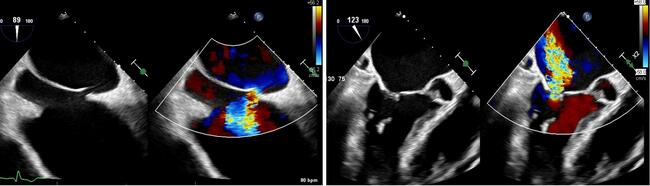
Tricuspid valve insufficiency or regurgitation (TR) has become a popular field of clinical research. Currently, proposed interventional transcatheter solutions are quite numerous. Some of these involve valve repair (such as TriClip, TriCinch, PASCAL, Millipede IRIS, Mistral, LaVingi TR, DragonFly, and others) and some involve replacement (EVOQUE, LUX-Valve, TriFlo, Sapien XT, Trillium, Melody, VDyne, and others). This is a crowded field, and we can expect it get more crowded. We will have to make room for more “T’s” and more “C’s” and probably more of every other letter too. At least temporarily.
Gaps in current knowledge
The largest gaps in our current clinical knowledge base are:
1) management of cardiac implantable electronic devices (CIED);
2) assessment and management of right ventricular (RV) function.
3) design of clinical trials for TR intervention.
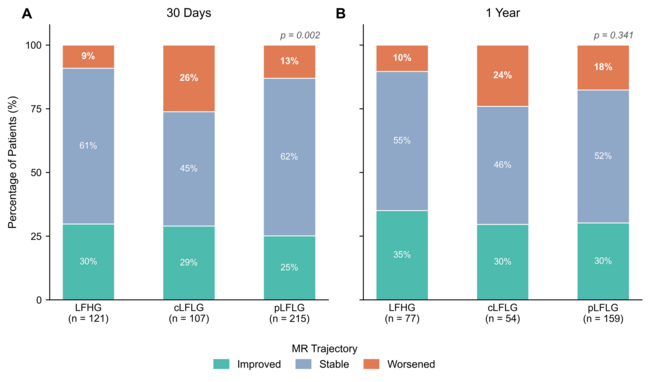
Almost all CIED devices affect the native tricuspid valve, usually by propping open the leaflets. This can worsen TR and also potentially make it more difficult to correct with repair or replacement. In the TRISCEND I + II clinical trials of transcatheter tricuspid valve replacement (TTVR) using the EVOQUE valve, 10/152 patients developed CIED-related events; most required new leads or repositioning of existing leads. Yet the authors concluded that TTVR was safe and effective in patients with pre-existing and new CIED.[1,2] Similarly, the TRILUMINATE randomized trial of T-TEER using the TriClip found that T-TEER was safe and effective in patients with CIED, with similar rates of TR reduction and low complication rates in patients with CIED.[3] The populations studied in these trials were quite different and it is difficult to compare them.
Regarding RV function, there is no consensus on which parameter is most useful for prognosis and which could help guide timing of intervention. The tricuspid annular plane systolic excursion (TAPSE) index is likely the most commonly used parameter, but isn’t great used in isolation. Other parameters are RV-PA coupling, which might perhaps be the most suitable and has shown promise. Then there are also TAPSE/PASP ratio, RV global longitudinal strain, RVEF, and PAPi. Finally, the TRI-SCORE is a point-scoring system designed to predict mortality in patients undergoing tricuspid valve surgery. However, it has been found to be useful in studies of transcatheter intervention.[4]
The final gap mentioned is trial design. What outcomes are relevant for tricuspid intervention? What should the control group be? Should there be sham controls? Should there be both a surgical control group as well as an optimal medications control group? When is the RV too far gone for any intervention?
Possible solutions or future directions
We can expect a large number of clinical trials to be done on both existing and nearly-developed devices. Many devices likely will not make it to approval and commercialization. Hopefully, there will be subgroup analyses of currently available trial data as well as any newly generated data; this may help guide development. Competition is a good thing and will drive innovation. Our task now and in the future is to focus on knowledge gaps.
References
- Kodali S, et al; the TRISCEND study investigators. Transfemoral tricuspid valve replacement and one-year outcomes: the TRISCEND study. Eur Heart J. 2023;44(46):4862-4873. doi: 10.1093/eurheartj/ehad667. PMID: 37930776.
- Hahn RT, et al; TRISCEND II Trial Investigators. Transcatheter Valve Replacement in Severe Tricuspid Regurgitation. N Engl J Med. 2025;392(2):115-126. doi: 10.1056/NEJMoa2401918. Epub 2024 Oct 30. PMID: 39475399.
- Tang G, et al. Tricuspid Transcatheter Edge-to-Edge Repair for Severe Tricuspid Regurgitation: 1-Year Outcomes From the TRILUMINATE Randomized Cohort. JACC. 2025 Jan, 85 (3) 235–246. doi.org/10.1016/j.jacc.2024.10.086
- Dreyfus J, et al; TRIGISTRY investigators. TRI-SCORE and benefit of intervention in patients with severe tricuspid regurgitation. Eur Heart J. 2024;45(8):586-597. doi: 10.1093/eurheartj/ehad585. PMID: 37624856.
© 2026 HMP Global. All Rights Reserved.
Any views and opinions expressed are those of the author(s) and/or participants and do not necessarily reflect the views, policy, or position of the Journal of Invasive Cardiology or HMP Global, their employees, and affiliates.