Psych Congress 2026 Keynote Highlights Hope—and Uncertainty—for Psychedelic Therapies
Federal agencies are expanding cooperation on psychedelic drug research and seeking public input on future implementation, but major questions about approval, infrastructure, clinician training, and patient access remain, speakers said during the 39th annual Psych Congress in New Orleans.
“In cases where prescribed medications don’t work, psychedelics offer hope,” said Matthew Zorn, JD, Deputy General Counsel at the US Department of Health and Human Services (HHS), during the Eric C. Arauz Memorial Keynote address.
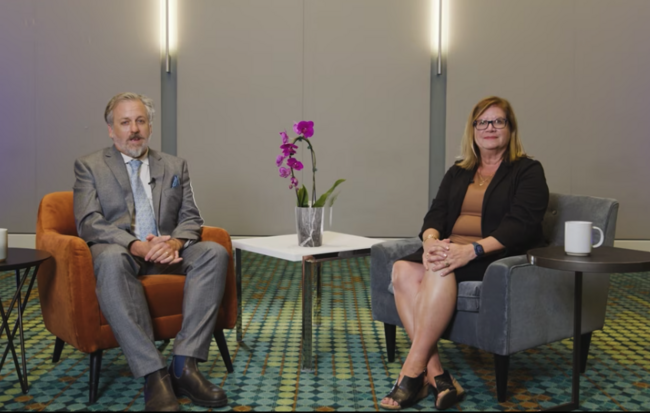
The session, “Psychedelic Therapy After the Executive Order: Now What?” featured a chorus of leading voices involved in the psychedelic psychiatry conversation.
“I have a tremendous amount of optimism,” said Rakesh Jain, MD, MPH, Psych Congress Co-Chair and session moderator, describing the panel, which brought together patient advocates, a federal official, and expert clinicians.
The interdisciplinary panel reflects the momentum behind psychedelic therapies for mental health disorders. Interest has grown significantly since an executive order issued in April 2026 and company-reported positive topline data from phase 3 clinical studies of Definium Therapeutics’ investigational DT120 (lysergide) formulation for generalized anxiety disorder (GAD) and major depressive disorder (MDD).
Veteran Advocates Share Their Experience With Ibogaine
To begin the session, Jain invited to the stage Marcus and Amber Capone, the married co-founders of Veterans Exploring Treatment Solutions (VETS) and subjects featured in the documentary In Waves and War, to share their personal experiences with psychedelic-assisted therapy. Marcus is a former Navy SEAL and veteran of the Afghanistan and Iraq Wars who, after leaving the military in 2013, experienced significant anger and suicidal ideation stemming from posttraumatic stress disorder (PTSD).
Despite following doctors’ advice to continue taking selective serotonin reuptake inhibitors (SSRIs) and seeking care at specialty clinics, Marcus’ symptoms worsened.
Terrified that he may hurt himself, Amber urged Marcus to pursue a last-resort treatment option: travel to Mexico and undergo treatment with the investigational drug ibogaine. Ibogaine is not FDA-approved and carries potentially serious cardiac risks.
“I would have tried anything at the time,” Marcus said. When he received ibogaine treatment, he was on 10 different psychiatric medications.
The experience “rapidly changed [his] life in 48 hours,” he reported.
“What psychedelics seemed to do was excavate the root cause of the trauma,” explained Amber.
Marcus emphasized that psychedelic therapy wasn’t a “one and done” experience and credited his improvement to a ongoing treatment regimen.
“Psychedelic experiences can be destabilizing—the more integration you do, the more you work with a coach or therapist, the longer you can make these experiences last,” he said.
With the hope of expanding veteran access to ibogaine therapy, the Capones founded VETS, a 501(c)(3) organization that now funds research into psychedelic therapy.
HHS and VA Collaborate on Psychedelic Drug Research
Following the discussion with the Capones, Jain welcomed HHS Deputy General Counsel Matthew Zorn, who described how the federal government is proceeding in the wake of Executive Order 14401, “Accelerating Medical Treatments for Serious Mental Illness.”
Zorn highlighted 2 primary challenges: infrastructure and public education. “Even if [psychedelics] have lots of promise, if they’re not accessible, they’re not going to live up to their promise,” the Zorn emphasized.
HHS is working with the Department of Veterans Affairs (VA) on clinical trial participation, workforce training, data collection, and information sharing, Zorn reported. US health infrastructure is built largely around a “take-home” medication model, one that does not work well for interventional psychiatry that requires extended in-facility supervision. Zorn said the partnership aims to “scale psychedelic therapy for the veteran population” and could help establish the infrastructure needed to deliver psychedelic therapies if specific products ultimately receive FDA approval.
Zorn emphasized the importance of individual education as well as public input on a field that is “very much in its infancy.” He noted that HHS and other government entities have created multiple avenues for public engagement that are open to anyone who wants to be involved in the field. The US Food and Drug Administration (FDA) held a public hearing on September 14 to collect perspectives on the potential therapeutic use of psychedelic drugs in supervised settings and is accepting written comments through October 5.
“I don’t think there are definitive answers, just questions and hopefully open minds,” Zorn said. “The best thing to do is go out and learn for yourself—make up your own mind. That’s what the world of science is and that’s what HHS is doing.”
What Mental Health Clinicians Should Know Now
The keynote concluded with a panel of Psych Congress faculty experts on psychedelic therapies. Moderated by Steering Committee member Charles Raison, the panel included Rakesh Jain alongside fellow Steering Committee members Saundra Jain, MA, PsyD, LPC, and Andrew Penn, MS, PMHNP-BC. The group addressed common questions from mental health clinicians about what the future holds for psychedelic therapy in psychiatry, and what to do right now.
Many things, including the pathway to becoming a psychedelic-assisted therapy practitioner, will depend on future federal and state regulatory requirements.
“Undoubtedly, psychedelics will have a Risk Evaluation and Mitigation Strategy (REMS) of some form,” Penn predicted.
As for the qualifications psychedelic-session facilitators may need, “We don’t know yet,” said Saundra Jain. “In the interim, it’s curiosity, it’s adding to our toolkit, it’s education—see how that sits with you and see how you can answer your patients’ questions.”
Even for those clinicians uninterested in psychedelic-assisted interventions, there is a role to play. “Your patients are going to be interested in this, so even if you’re not, you’re still going to be a source for referral,” Penn emphasized.
Until regulatory and training standards are established, clinicians can prepare by following FDA guidance, understanding the evidence and risks, and developing appropriate responses to patient questions about unapproved psychedelic drugs.
Psych Congress Announces 2027 Psychedelics Academy
While the keynote session left many immediate questions unanswered, 2 key takeaways emerged: the growing significance of psychedelics in psychiatry and, as a result, the need for ongoing education.
In response, the faculty panel announced that its members will serve as Co-Chairs of the inaugural Psych Congress Psychedelics Academy, a 3-day event dedicated to psychedelic research and clinical practice, scheduled for July 30 to August 1, 2027, in Nashville, Tennessee. The agenda will cover topics ranging from the fundamentals of neurobiology to managing difficult patient experiences during psychedelic sessions, with the goal of providing clinicians with current evidence and emerging clinical considerations.