iTBS Offers Short-Term Improvement in Major Depressive Disorder
Key Clinical Summary
- Once-daily intermittent theta-burst stimulation (iTBS) reduced clinician-rated depressive symptoms more than sham stimulation after 5 and 10 sessions.
- The between-group advantage was not sustained at 4-week follow-up, as the sham group continued to improve.
- Treatment was well tolerated, with no serious adverse events and mostly mild, transient stimulation-related symptoms.
A randomized clinical trial found that 10 once-daily sessions of iTBS produced short-term improvement compared to sham in clinician-rated depressive symptoms among adults with recurrent major depressive disorder (MDD). The group difference, however, was not sustained at 4 weeks. Findings were published in JAMA Network Open.
Study Findings
The randomized, double-blind clinical trial conducted at an outpatient psychiatric clinic in North Norway enrolled 73 adults aged 22 to 65 years with MDD and Montgomery-Åsberg Depression Rating Scale (MADRS) scores of at least 20. Participants were randomized to iTBS (n = 41) or sham treatment (n = 32).
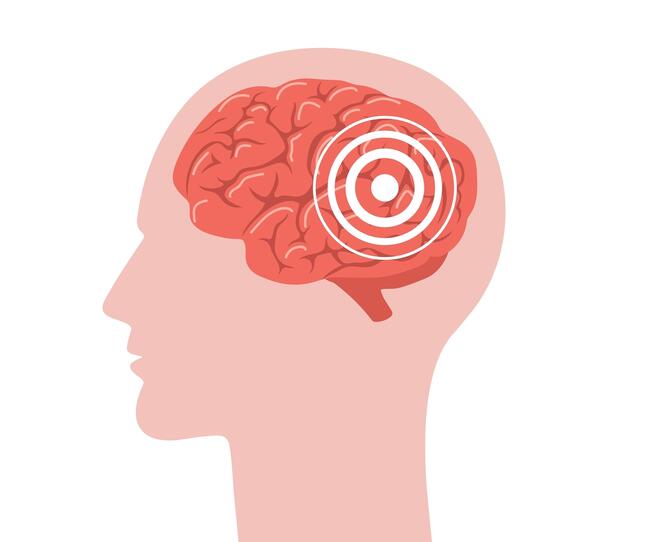
Participants received 10 weekday sessions targeting the left dorsolateral prefrontal cortex. Active treatment delivered 600 pulses at 120% of resting motor threshold, while sham treatment used a validated sham coil. A 4-week follow-up assessed durability.
Primary outcomes were between-group differences in depression scores at day 10, as measured with MADRS and the Beck Depression Inventory-II (BDI-II). Secondary measures included MADRS scores on day 5, MADRS and BDI-II scores at follow-up, and response and remission rates on day 10. The authors utilized linear mixed-effects models in a modified intention-to-treat sample.
On day 10, active treatment was superior to sham on MADRS scores (mean difference, 3.57 [95% CI, 0.79-6.35]; Hedges g = 0.61; P = .01) but not on BDI-II scores (mean difference, 3.05 [95% CI, -2.72-8.82]; P = .30). iTBS was also superior to sham on day 5 for MADRS scores (mean difference, 2.89 [95% CI, 0.13-5.64]; Hedges g = 050; P = .04). The significance of greater MADRS scores did not persist at the 4-week follow-up due to improvement in the sham group.
Response and remission rates were numerically higher with active treatment but did not differ significantly. At day 10, 39.5% of the active-treatment group met the clinician-rated response criterion compared with 22.6% of the sham group; remission occurred in 34.2% and 22.6%, respectively.
Clinical Implications
For clinicians treating major depressive disorder, this trial suggests that short-course intermittent theta-burst stimulation may produce measurable early symptom reduction, particularly on clinician-rated scales. However, the lack of sustained separation at 4 weeks limits conclusions about durability and stand-alone clinical value.
The findings also reinforce the importance of assessing both clinician-rated and patient-reported outcomes in neuromodulation studies. In this trial, MADRS results separated by treatment group, whereas BDI-II scores did not. The authors noted that this divergence may reflect measurement sensitivity, construct differences, or contextual influences.
Safety findings were reassuring within the study period. No serious adverse events were recorded, and common adverse events such as headache and scalp pain were described as mild and transient.
Expert Commentary
Marte C. Ørbo, PhD, Department of Psychology, Faculty of Health Sciences, UiT The Arctic University of Norway, Tromsø, Norway, and colleagues emphasized that the findings “highlight the importance of treatment duration and follow-up” when interpreting clinical response. They also concluded that “further research is needed to optimize” intermittent theta-burst stimulation protocols.
Reference