9.3 Uncaging Coronary Artery Aneurysms: Have we Made Progress and Which Ones to Treat?
Problem Presenter: Steve Bailey
Problem Presenter: Steve Bailey
These proceedings summarize the educational activity of the 18th Biennial Meeting of the International Andreas Gruentzig Society held January 27 to 30, 2026, in Puerto Ayora, Santa Cruz, Ecuador.
Faculty Disclosures Sponsors
2026 IAGS Summary Document
Statement of problem or issue
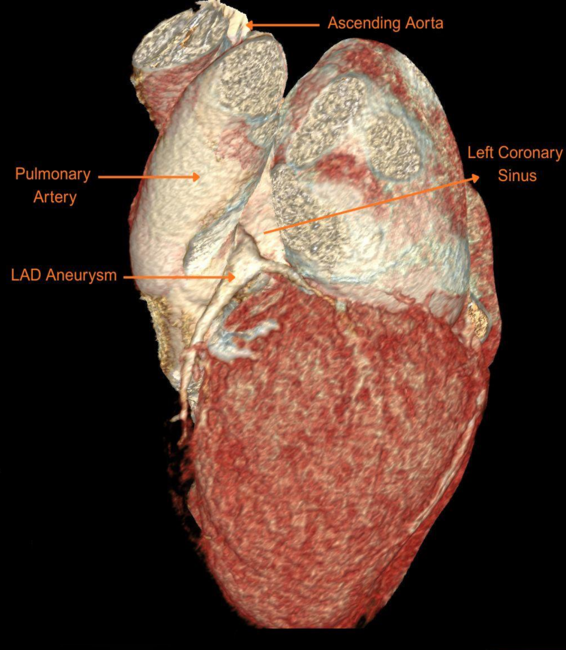
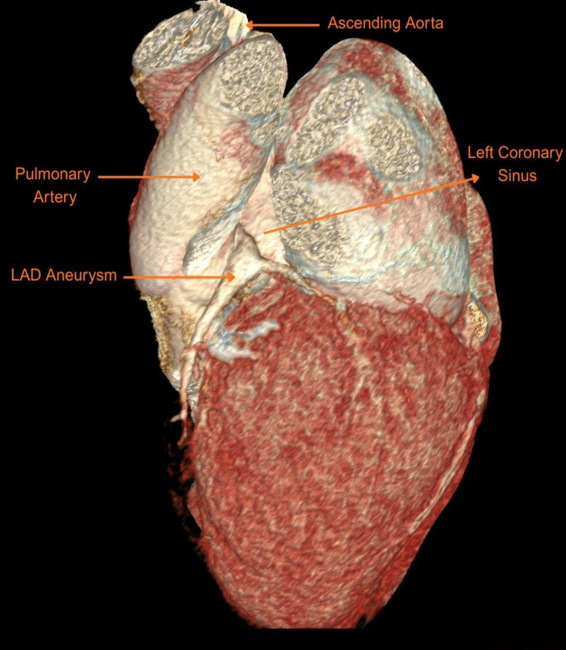
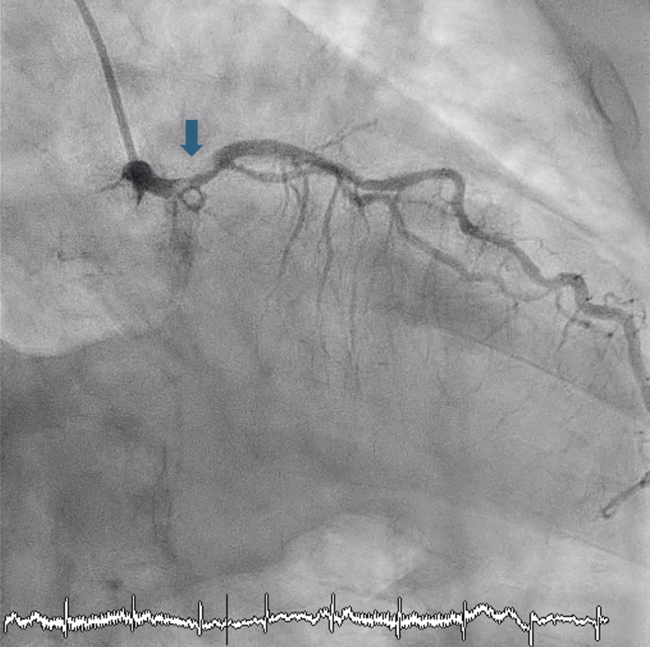
Coronary artery aneurysms (CAA) are common; they are found in approximately 6% of coronary angiograms and 8% of coronary CT studies. It is important to distinguish CAA from coronary artery ectasia (CAE). With CAA all three layers of the vessel wall form a localized enlargement which extends <1/3 of vessel length; CAE is diffuse, generalized enlargement that extends ≥1/3 of vessel length. Some characteristic features of CAA, along with common clinical presentations and types of treatments, are described in Kawsara A, et al.[1]
There is a classification system for CAA:
Type 1: Aneurysms grow rapidly during the acute phase (first 4 weeks) often accompanied by pericarditis.
Type 2: Aneurysms develop slowly during subacute and chronic phases; may remain asymptomatic or cause angina.
Type 3: Infective aneurysms; with high risk of fatality.
Giant CAA (>20mm) are particularly significant due to their elevated risk of complications, including in situ thrombosis, distal embolization, and rupture.
Gaps in current knowledge
Long term prognosis of CAA is not favorable. The largest collection of data is the Coronary Artery Aneurysm Registry (CAAR - NCT02563626), with 1,729 consecutive patients from 33 hospitals across 9 countries. [2,3] In the most recent report, after median follow-up of 45 months, 379 patients died (21.9%), and 641 (37.1%) developed a major adverse cardiovascular event (MACE: all-cause death, heart failure, unstable angina, and reinfarction). Age, diabetes, renal insufficiency, peripheral vessel disease, reduced LVEF, acute indication for the index coronary angiography, and the number of coronary vessels presenting severe stenosis, were independent predictors of MACEs. How these factors interact to produce adverse events, beyond their known associations with atherosclerotic coronary disease risks and outcomes, is a large knowledge gap area.
As outlined in Kawsara, there are many clinical management challenges for patients with CAA. All existing data is observational only; no specific guidelines exist. Treatment is often driven by management of underlying coronary artery disease, other comorbid conditions, and their sequelae. Stents (bare metal [BMS] and drug-eluting [DES]), covered stents (CS) or stentgrafts, and coil embolization, are all available for percutaneous transcatheter treatment of CAA. Little comparative data exists to help guide treatment choices. Encouragingly, the initial report from CAAR found clear mortality and event-free survival advantages with DES compared to BMS.
Although CS represent a potentially life-saving intervention for CAA that perforate or rupture (CAP), their application has expanded to other CAA contexts. Yet long-term outcomes of CS in these non-perforation scenarios remains limited. A recent meta-analysis of three studies of the PK Papyrus CS covered stent system found that MACE (cardiac death, stent thrombosis [ST], and target lesion revascularization [TLR]} were significantly higher in patients treated with CS for CAA compared with those treated for CAP (Jurado-Román).[4]
Possible solutions or future directions
- Studies of the underlying etiology and pathophysiology of CAA and CAE?
- Are these two completely separate entities, or different phenotypes of the same disease?
- Should incidentally discovered CAAs be intervened upon?
- Better assessments of risk of adverse events.
- Is there a role for a US registry to evaluate outcomes?
- Should anti-inflammatory agents be added to medication regimens for CAA?
- Interventional studies:
- New and improved covered stent designs.
- Self-expanding stents with and without coverings.
- New coil designs for coil embolization.
- Gel injections for aneurysm closure.
- Energy sources for aneurysm closure.
References
- Kawsara A, et al. Management of Coronary Artery Aneurysms. JACC Cardiovasc Interv. 2018;11(13):1211-1223. doi: 10.1016/j.jcin.2018.02.041. PMID: 29976357.
- Núñez-Gil IJ, et al; CAAR investigators. Coronary artery aneurysms, insights from the international coronary artery aneurysm registry (CAAR). Int J Cardiol. 2020;299:49-55. doi: 10.1016/j.ijcard.2019.05.067. Epub 2019 Jul 19. PMID: 31378382.
- Sánchez-Sánchez I, et al; CAAR Investigators. Long-Term Prognosis of Coronary Aneurysms: Insights of CAAR, an International Registry. JACC Cardiovasc Interv. 2024;17(22):2681-2691. doi: 10.1016/j.jcin.2024.08.034. PMID: 39603781.
- Jurado-Román A, et al. Meta-long Papyrus: Meta-analysis of mid to long-term outcomes of PK Papyrus covered stent. Catheter Cardiovasc Interv. 2024;104(3):492-498. doi: 10.1002/ccd.31157. Epub 2024 Jul 20. PMID: 39033331.
© 2026 HMP Global. All Rights Reserved.
Any views and opinions expressed are those of the author(s) and/or participants and do not necessarily reflect the views, policy, or position of the Journal of Invasive Cardiology or HMP Global, their employees, and affiliates.