Immune Checkpoint Inhibition in Advanced cSCC: Perspectives From Clinical Practice
Summary
In this podcast, Omid Hamid, MD, discusses how clinicians can individualize treatment selection for patients with advanced cutaneous squamous cell carcinoma based on factors such as age, performance status, comorbidities, and the risk of immune-related toxicities. Through a real-world patient case, he explores considerations surrounding the use of cosibelimab, its PD-L1–targeting mechanism and antibody-dependent cellular cytotoxicity activity, and its potential role in the evolving treatment landscape.
Transcript
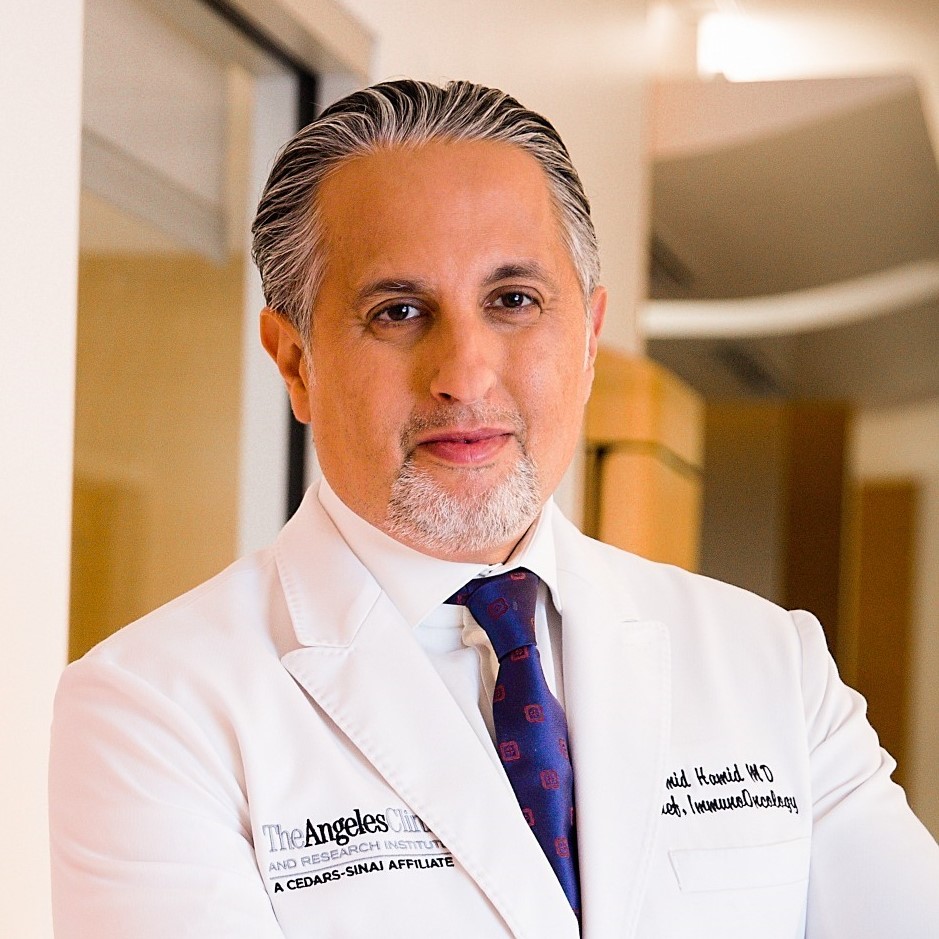
Moderator: Welcome to the Oncology Learning Network podcast. There are now three approved checkpoint inhibitors for advanced cutaneous squamous cell carcinoma—cosibelimab, cemiplimab, and pembrolizumab—which means today's question for clinicians isn't just ‘what can I use?’ It's ‘which one, for this patient?’ To talk through how that decision actually gets made, I'm joined by Dr Omid Hamid, co-director of the Cutaneous Malignancies Program at The Angeles Clinic and Research Institute, a Cedars-Sinai affiliate, in Los Angeles. Dr Hamid, let's start with your patients. Tell me about your practice and the kind of advanced CSCC patient who typically ends up in front of you.
Dr Hamid: Sure, my practice is an academic and community hybrid practice. That is, we do an extensive amount of clinical trials and multidisciplinary care of cutaneous malignancies, including cutaneous squamous cell carcinoma. I see a significant amount of advanced cutaneous squamous cell carcinoma. As you know, squamous cell carcinoma of the skin is a very high-incidence tumor, but the majority are manageable with surgery or radiation. Once those cases become either recurrent or they become locally advanced—that means in an area they've grown where they're not amenable to surgery or radiation—or they become metastatic, those are the patients that come to me for options. As we have developed more immunotherapies for cutaneous squamous cell carcinoma, at times I may not see those patients with locally advanced or metastatic disease at the initial point of therapy, but we'll see them once they have a need for a novel therapy and they have failed treatment with a standard therapy. So the transition point at which patients become candidates for systemic therapy, for me, is that point where they are multiply recurrent, having failed radiation or surgery, unable to be taken care of by radiation or surgery despite the fact that they are just focal—that is, in areas where they can cause deformity or morbidity—locally advanced, where they cannot be treated with just one surgical procedure alone, or metastatic, meaning they've left the local area and gone elsewhere in the body.
Moderator: So, by the time someone's in your chair, surgery and radiation are usually already off the table. When you're down to the three approved options, how do you actually decide between them?
Dr Hamid: Choosing the right therapy for these patients who are locally advanced or metastatic or multiply recurrent with cutaneous squamous cell carcinoma is hard. The benefit is that we're at a time where we have three approved options, including cosibelimab, cemiplimab, and pembrolizumab. These three immune checkpoint inhibitors are similar in many ways and different in others. Choosing therapy could be as simple as evaluating what therapy is available—that is, for example, on a clinical protocol or for an indication—and it can be as complicated as having to review the incidence of toxicities and make decisions based on a full history. Personalizing therapy in this fashion is difficult, as these drugs have not been reviewed head-to-head. But some of the data behind PD-L1 targeting and not PD-1 targeting lends us to consider possibly the use of cosibelimab in those patients who may have an increased risk of toxicity. That is, PD-L1 inhibitors may protect normal viscera in ways that PD-1 inhibitors don't. And that's a very complicated situation. But when I look at these patients who are older and may have multiple comorbidities, may live far from an area where they can get urgent care, the idea that with cosibelimab, some of the visceral organ preservation from immune-related toxicities are available—that makes this therapy one that I may lend myself towards more than the PD-1 inhibitors. And then this is based on individual patients. There is no one-size-fits-all. There is no ‘similar to this, similar to that.' And that's another reason why I like my practice. We are a multifaceted practice with surgical oncologists, radiation oncologists, palliative care, social work, and also medical oncology and radiation oncology who come in to discuss the pros and cons of therapy. So—a complicated decision tree, but one that we are grateful to have multiple options for.
Moderator: Let's get specific. Which patient characteristics—age, performance status, comorbidities—actually move the needle for you when you're leaning toward one therapy over another? And how do you have that conversation with, say, an older patient who's more worried about treatment-related toxicity than a younger patient might be?"
Dr Hamid: Sure, this is a great question. At this point, all three of these drugs are approved for this one indication—advanced, multiply recurrent, metastatic, not amenable to surgery or radiation—that it's important to look at each one of them one by one. So what are the specific characteristics I think of? I think of age, performance status, and other comorbidities. Obviously, no head-to-head trials makes it difficult to say one is over the other. But if you go back to the early times when we were doing phase 1 trials with PD-1 inhibitors and PD-L1 inhibitors, there's always been this idea that they have a decreased incidence of toxicity. And that is due to their interactions, where PD-L1 blockade blocks PD-1/PD-L1, but allows the PD-1/PD-L2 interaction to continue. Now, this is a lot of molecular discussion, but we believe that in the setting of stress or inflammation, PD-L2 is overexpressed on normal tissues as a protective mechanism, and it allows that interaction with the T-cell to become immunosuppressive. Therefore, you don't see as many immune-related toxicities. Now, what's striking to me in the data from cosibelimab is the fact that their grade 3 toxicities were very minimal and very manageable. And for me, that's an important point to make—that the immune-related adverse events seen were dermatological. There were no grade 4 and no grade 5 toxicities. I think you can say that we've seen higher toxicity rates with PD-1 inhibitors amongst all solid tumors. When you review the data in cutaneous squamous cell carcinoma, what struck me most was low toxicity followed by an efficacy that is similar to PD-1 inhibitors. And that's something that's novel and new that we really hadn't seen before. I look forward to updated data that will be presented at future meetings, including the European Society for Medical Oncology and other immunotherapeutic meetings, to see how this data matures over time.
Moderator: Can you walk us through an actual case where those factors led you to cosibelimab—and I want to be clear, as a first choice, not something you turned to after another therapy hadn't worked?
Dr Hamid: A very, very germane recent clinical example was a patient of mine who showed up. He's 84 years old. He's got some cardiac issues from long-standing heart disease. There was a question of whether he had polymyalgia, which his rheumatologist said he didn't have; he had some symptomatology. And this gentleman had a squamous cell carcinoma that had recurred and moved to the parotid area, and was causing a lot of pain, some functional issues, and was really growing in a rapid fashion. It was locally advanced. Now, the patient was on blood thinners, and this tumor was located in a very, very intricate area, so surgery was out of the question. We discussed radiation as a first-line option, and the risk of fibrosis and ineffectivity—and the inability to then go back in surgically if there was a good response—made us steer towards an immune checkpoint inhibitor. Given my experience and the data with toxicities, this is where I really thought it was best to utilize a PD-L1 inhibitor like cosibelimab. And we talked to the patient and his spouse in a very comprehensive fashion about why I thought that this would be better for him and how we would manage toxicities if they showed up. They agreed, and we moved on to utilizing this drug.
Moderator: You mentioned the PD-L2-sparing mechanism earlier—that's part of why the toxicity profile looks the way it does. But cosibelimab's mechanism goes beyond checkpoint blockade alone. Can you talk about the role of ADCC—antibody-dependent cellular cytotoxicity—and why that nuance actually matters clinically?
Dr Hamid: With cosibelimab, one could think that, well, there might be decreased efficacy. But as we have looked into this, we found that there are multiple other ways that this drug works towards stimulating the immune system and eradicating tumor. One is through antibody-dependent cellular cytotoxicity. The other is through stimulation of another subset of immune cells—NK cells. And then the third is the traditional way that checkpoint inhibitors work. Safety is an important rationale for selection of therapy in fragile and comorbid populations. And that's extremely important for me.
Moderator: As more oncologists get comfortable with cosibelimab, where do you see it fitting into the standard treatment paradigm going forward?
Dr Hamid: As the oncology community gains more familiarity with cosibelimab, I see its role evolving in many different ways. Number one, I think it is a valid option to consider for patients where you want to avoid significant immune toxicity. Number two, I think we'll begin to understand how to target PD-L1 and what the benefits of this drug are, with off-target NK-cell and ADCC activity. And number three, here we have another player—another pharmaceutical partner—who is willing to look at novel combinations and support the growth of this drug in cutaneous squamous cell carcinoma through clinical trials. To me, it's clear that as our toolkit grows, the ability to tailor therapy to the individual patient's comorbidities and performance status is becoming our most important clinical skill.
Moderator: Dr Hamid, thank you for walking us through how you make this call in practice. For more education on the cSCC treatment landscape, visit Oncology Learning Network. Thanks for listening!
References
- Clingan P, Ladwa R, Brungs D, et al. Efficacy and safety of cosibelimab, an anti-PD-L1 antibody, in metastatic cutaneous squamous cell carcinoma. J Immunother Cancer. 2023;11(10):e007637. doi:10.1136/jitc-2023-007637
- Ruiz ES, Muñoz-Couselo E, Montaudié H, et al. Efficacy and safety of cosibelimab in advanced cutaneous squamous cell carcinoma: results from a pivotal open-label study with a median follow-up of ≥2 years. J Am Acad Dermatol. 2026;94(1):48-56. doi:10.1016/j.jaad.2025.09.009
- Idris OA, Westgate D, Saadaie Jahromi B, Shebrain A, Zhang T, Ashour HM. PD-L1 inhibitor cosibelimab for cutaneous squamous cell carcinoma: comprehensive evaluation of efficacy, mechanism, and clinical trial insights. Biomedicines. 2025;13(4):889. doi:10.3390/biomedicines13040889
- Bartley B, Rosenberg A, DeBusk L, et al. Efficacy and safety of cosibelimab for advanced cutaneous squamous cell carcinoma: an expert consensus panel. J Drugs Dermatol. 2026;25(5):413-420. doi:10.36849/JDD.9954
- Burshtein J, Schlesinger T. Cosibelimab: a novel therapeutic for advanced cutaneous squamous cell carcinoma. J Clin Aesthet Dermatol. 2025;18(11):21-23.
- Lee A. Cosibelimab: first approval. Drugs. 2025;85(5):695-698. doi:10.1007/s40265-025-02164-2
- Migden MR, Rischin D, Schmults CD, et al. PD-1 blockade with cemiplimab in advanced cutaneous squamous-cell carcinoma. N Engl J Med. 2018;379(4):341-351. doi:10.1056/NEJMoa1805131
- Hughes BGM, Guminski A, Bowyer S, et al. A phase 2 open-label study of cemiplimab in patients with advanced cutaneous squamous cell carcinoma (EMPOWER-CSCC-1): final long-term analysis of groups 1, 2, and 3, and primary analysis of fixed-dose treatment group 6. J Am Acad Dermatol. 2024;92(1):68-77. doi:10.1016/j.jaad.2024.06.108
- Grob JJ, Gonzalez R, Basset-Seguin N, et al. Pembrolizumab monotherapy for recurrent or metastatic cutaneous squamous cell carcinoma: a single-arm phase II trial (KEYNOTE-629). J Clin Oncol. 2020;38(25):2916-2925. doi:10.1200/JCO.19.03054
- Hughes BGM, Muñoz-Couselo E, Mortier L, et al. Pembrolizumab for locally advanced and recurrent/metastatic cutaneous squamous cell carcinoma (KEYNOTE-629 study): an open-label, nonrandomized, multicenter, phase II trial. Ann Oncol. 2021;32(10):1276-1285. doi:10.1016/j.annonc.2021.07.008
© 2026 HMP Global. All Rights Reserved.
This is a non-CME activity.
The views and opinions expressed by the presenter(s) do not necessarily reflect the views and opinions of the Oncology Learning Network, HMP Global, or its employees and affiliates.