Acting Before Certainty: Practical Management of Suspected ADC-Associated Pneumonitis
Drs Kathleen Moore and Melissa Tukey discuss practical, real-world strategies to evaluate, manage, and escalate care for suspected pneumonitis before diagnostic certainty.
To learn more, view the full series: From Early Signs to Clinical Action: A 2-Part Series on ADC-Associated ILD and Pneumonitis in Oncology Care
Transcript
Dr Moore: Hello, everyone. My name is Dr Kathleen Moore. I'm the deputy director of the Buffett Cancer Center in Omaha, Nebraska, and a phase one trialist and G1 oncologist. And it's my really great honor to host this series of videos talking about the emerging opportunity to diagnose and treat and prevent pneumonitis and ILD in our patients receiving novel oncologic therapeutics. This is not easy. This can be a challenge to A, identify patients who are at risk. What are the baseline scans mean? And B, what changes on an ongoing CT scan warrant a discussion with radiology and pulmonology? And so the multidisciplinary need. for taking care of our patients is kind of more urgent than ever. And so with that stated, I'm delighted to say on this video series, we are joined by an expert pulmonologist in ILD. I'm going to ask Dr Tukey to introduce herself.
Dr Tukey: Well, thank you so much, Dr Moore. It's a pleasure to be here. My name is Dr Melissa Tukey. I'm an associate professor of medicine at the University of Massachusetts Medical Center in Worcester, Massachusetts. I'm an international pulmonologist with a particular clinical and academic area of focus on pulmonary complications of oncologic treatments. And just to jump in and clarify the terminology, I often see the terms pneumonitis and ILD used somewhat interchangeably in this setting. Conceptually, interstitial lung disease, or ILD, is more of an umbrella term that we use for a large array of chronic disorders that can cause inflammation and scarring in the lung. As a pulmonologist, I can use the term pneumonitis to describe more acute or subacute inflammatory changes in the lungs, where ILD can also include more chronic structural or fibrotic lung changes that patients can experience over time. That said, in the context of the ADC-related toxicities that we're discussing today, there's a lot of overlap both clinically and on imaging.
Dr Moore: Dr Tukey, can you speak about when we have a patient that I'm treating on whatever antibody-drug conjugate, how do our patients commonly present as they're diagnosed with treatment-related pneumonitis? What's the most common way you see them?
Dr Tukey: Absolutely. So there can be a really broad range of symptoms. Patients may be completely asymptomatic and we're discovering something on a routine surveillance. chest image, which is often when patients come to see me, or they may initially present with mild or gradually progressive respiratory symptoms, symptoms like dry cough, shortness of breath, particularly doing more strenuous activities like climbing up their stairs or walking up a hill, fatigue, or less commonly symptoms like fevers or chills.
Dr Moore: How do you assess a patient and not over-react but also not miss the opportunity to make an appropriate referral to you as a pulmonologist?
Dr Tukey: Absolutely. That's a great question. And we as pulmonologists recognize how high stakes these decisions are, particularly when there may be an implication for stopping a very important treatment. Symptoms are, you know, relatively non-specific. And as you mentioned, they can easily be misattributed to infection, disease progression, or even alternative diagnoses such as pulmonary edema. And our job as clinicians is really to help tease that out as best we can.
Dr Moore: All right, well, let's move on to our next discussion. Once I'm thinking as an oncologist, once I'm like, I'm worried. I'm worried about something in your CT scan. You have a mild cough. I don't know. But it's on a differential. How do you, and I'm going to say, hey, Dr Tukey, I've got a patient. I'm not sure. I'm referring her to you and I'm holding. How do you approach the workup for her? She's now sent to you.
Dr Tukey: Absolutely. So, you know, first place I always start is with optimal chest imaging. That's. It's actually always going to be with a chest CAT scan, preferably high resolution within slices of the lungs. And then, as we mentioned, a thorough review of systems looking for mimickers of pneumonitis. And then, even regardless of symptoms, a relatively broad search for any potential infectious causes. That's going to include labs, respiratory viral swabs, both our COVID and flu swabs, as well as the more extended respiratory viral panels, and then sputum cultures for bacterial acid fast bacilli and fungal cultures to be very confident that we've done a thorough infectious evaluation. In some cases, we do consider bronchoscopy, particularly if the clinical picture is more convoluted. And bronchial lavage can certainly help with our diagnosis and can often be very helpful if cancer progression is also on the differential.
Dr Moore: How do you advise, you know, the oncologists who refer to you around this particular issue?
Dr Tukey: Absolutely. So, you know, I think the important thing to recognize is that these are important decisions to be made timely. And so this evaluation and management really needs to occur in parallel rather than performing different tests sequentially. At the institutions that I've worked at, my oncology colleagues have done a wonderful job starting the evaluation, particularly sending those infectious work up, and then very quickly communicating with me so that I can get the patient in timely and get a better clinical sense as to where we think this is going. That said, sometimes the presentation is going to be much more dire, particularly if you're seeing a patient that has some hypoxia, even hypoxia just with ambulation. And in those cases, I do have a very low threshold to start treatment while we are performing this additional workup.
Dr Moore: I think the thing to emphasize to everybody is that this is really the era of multidisciplinary team-based medicine for so many things that we're using in oncology now, but certainly around, you know, antibody-drug conjugates, early incorporation of pulmonology expertise. And then really making sure our teams, including our advanced practice providers and our oncology nurses and our infusion nurses who are our partners in taking care of our patients, our physicians assistants, clinical pharmacists, so that there's early recognition wherever the front door is for your patient in terms of communicating with your practice. If there's anything of concern, it's communicated appropriately and the workup is initiated.
How are you thinking about management? What sort of interventions are on the table and how do you figure out what steroids, what dose, what medications to use and recommend for our patients?
Dr Tukey: Fantastic questions. So, you know, for the majority of the decisions, they are really going to be guided by the severity of the clinical presentation, both radiographically in terms of how extensive the changes are and also the patient's symptoms. And I can't kind of emphasize enough assessing their oxygen saturations both at rest and with ambulation to ensure that we don't have any occult hypoxemia. These factors, their symptoms, and their geographic degree of change, alongside with information related to the load of drug toxicity related to the medication that they happen to be on helped me to determine how aggressive to be as my next steps, whether to hold the potential offending medication, whether to start steroids right away, or potentially recommend hospitalization.
In general, when I'm seeing somebody as an outpatient, we're going to be talking about oral prednisone at, you know, standardly a dose of one milligram per kilogram, but that may change depending on tolerance to medications as well as the overall body size of the patient. And really, we're going to be thinking of those from a grading severity of grade two or higher. In that setting, I do strongly feel that initiation is important, both to control that inflammation, but even more so to prevent progression. So I strongly believe that timely treatment can improve patient outcomes and reduce the risk of more severe and potentially permanent pulmonary complications.
Dr Moore: In practice, what are the challenges of trying to implement this for patients, if any?
Dr Tukey: Absolutely. So, you know, one of the key things is that patients don't want to stop their medications. And so they may minimize the symptoms when they present to me. So I have to be a little bit of a detective. And the other main thing is that they often feel immediately better when starting their steroids and perhaps may want to stop them early, particularly to potentially get better. those medications that caused the symptoms to begin with. So premature discontinuation is something that I see very frequently, both when I'm prescribing them, but also when my oncology colleagues are prescribing them. I see a lot of very short courses that are stopped immediately when symptoms resolve. And in my clinical experience, that tends to not be a long enough steroid taper to have the inflammatory cascade go away permanently. So, incomplete or shortened tapers, in general, I find I can increase the risk of symptom recurrence or flare, and that gradual tapers tend to result in a more complete resolution of the inflammation process.
Dr Moore: Mercifully, this is happening less and less, but it still happens to all of us where we think we're doing everything right and someone presents symptomatic and really has a rapid deterioration. And so you started the steroids and they are not getting better. And so can you talk us through when do I escalate care?
Dr Tukey: So if I have a patient who initially presented with some more mild symptoms and I'm finding on my close evaluation of them that we're seeing a change in their oxygen needs. That's a very strong signal to me that the patient likely should be hospitalized and we should be thinking about escalating our care, potentially to IV steroids.
Dr Moore: How are you communicating with our mutual patient about what she should be watching for? How are you talking with them about this whole journey?
Dr Tukey: Absolutely. So a lot of times we will talk very clearly about what symptoms they actually initially presented with. So oftentimes if it's somebody who's presented with a little bit of a dry cough, we're talking about, hey, if you start feeling that tickle in the back of your throat, that's a really important thing for me to know. Similarly, if it was that second flight of stairs in their house that they started noticing they were having more difficulty climbing up. That may be their litmus test as to how is our steroid taper going. So we really will discuss what symptoms they had and talk about, you know, how to potentially recognize if we're starting to see subtle recurrence of those symptoms.
Dr Moore: We did this with immune checkpoint inhibitors. I think we just need to get back into that groove with antibody-drug conjugates. And it was a challenge then. It still remains a challenge in GYN oncology and all of oncology. Patients are managed in the community, in small practices, in big community practices, in small academic, big academic practices. some with easy access to expert pulmonology, some not so much. And so finding that buddy, it can be really easy. It's down the hall for me. Or across town for somebody in a smaller community. So these multidisciplinary teams can look very different depending on where our patients are being cared for. And I think these sorts of opportunities to just speak broadly are really important in terms of helping our colleagues and our patients understand sort of what we're worried about and excited about.
Before we close, what would be a takeaway you would want oncologists, any providers also helping to care for our patients, what would you want them to remember when managing anything of suspected pneumonitis?
Dr Tukey: Absolutely. So the most important thing is going to be to not wait to have complete certainty. If it's something that you're worried about, you need to be holding that medication and starting the evaluation as quickly as possible. And potentially for more severe cases, starting corticosteroids while awaiting for some of that evaluation to occur.
Dr Moore: Definitely in severe cases, but even in... the sort of grade one early involvement of pulmonology can often help expedite resolution. And it's a partnership in taking care of our patients.
And so with that, thank you so much for taking the time to join us. I know this was like a lot of information in a very short period of time, but really critically important for making sure that we can offer these very effective medicines to our patients, but also keep them safe. while we're doing it. So recognizing and managing ADC-associated pulmonary toxicities does require a very thoughtful multidisciplinary approach. You can be sure to view the companion video in this series where we take a closer look at early detection and imaging considerations. We didn't even talk about that for ADC-related ILD. So it's in that video. So please join us there and take a look. I appreciate you spending some time with us and have a great day. Thank you.
 Kathleen Moore, MD, is a professor in the Section of Gynecologic Oncology, and deputy director and director of the Phase I Program for the Buffett Cancer Center at the University of Nebraska Medical Center. She attended medical school at the University of Washington School of Medicine and completed her residency in obstetrics and gynecology at the University Health Center of Pittsburgh. Dr Moore completed a fellowship in gynecologic oncology at the University of Oklahoma Health Sciences Center while simultaneously earning a master's degree in epidemiology. She is board-certified in obstetrics and gynecology, gynecologic oncology, and hospice and palliative care. She has published over 400 peer-reviewed publications and has a clinical research interest in drug development and phase I–III clinical trials.
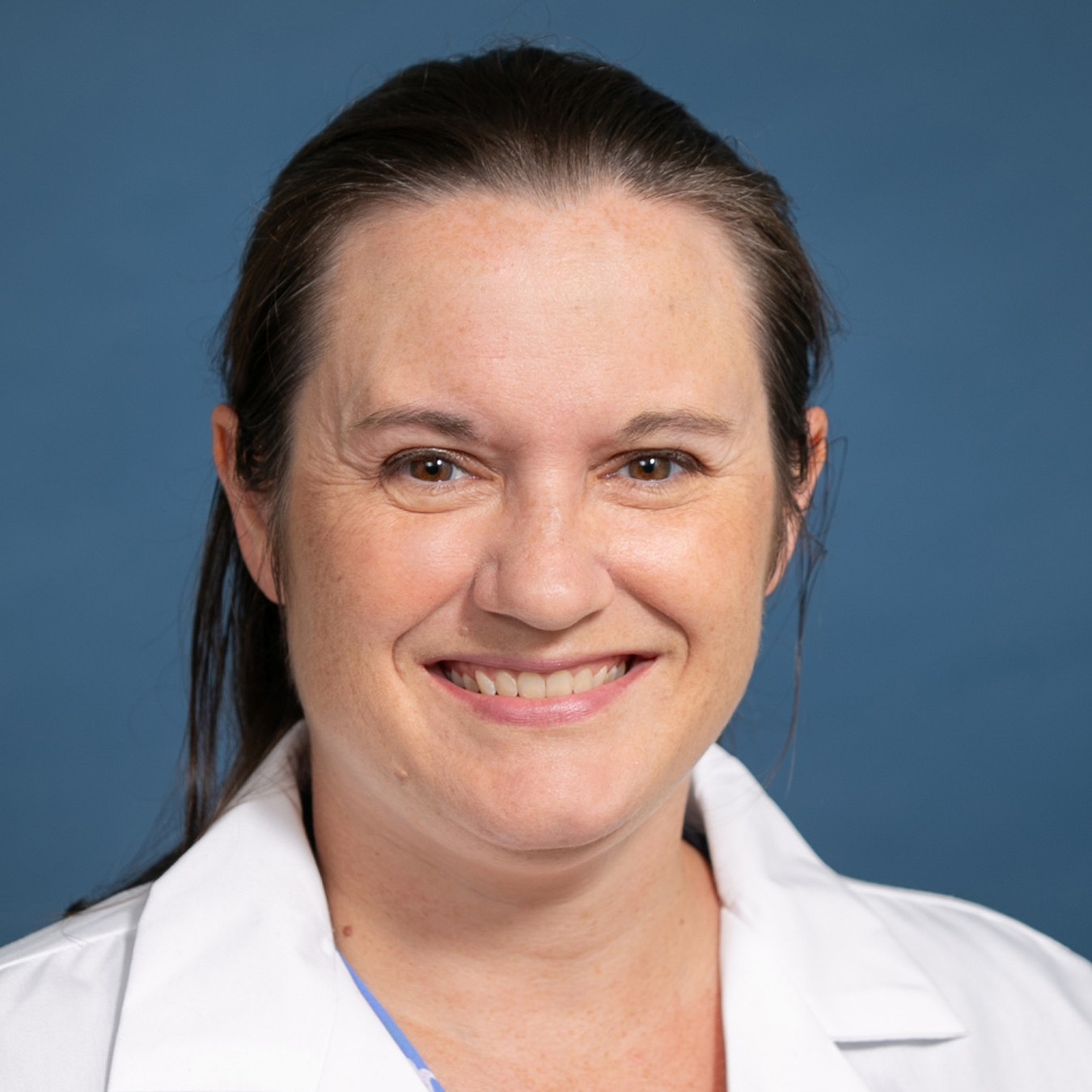 Melissa Tukey, MD, is an interventional pulmonologist with clinical and academic expertise in the pulmonary side effects of cancer treatments. She completed medical school at Harvard Medical School followed by internal medicine residency at Beth Israel Deaconess Medical Center, pulmonary and critical care fellowship at Boston University, and interventional pulmonary fellowship at the Lahey Clinic. Since completing her training in 2014, she has served as chief of interventional pulmonology at Brown University and Kaiser Permanente Oakland Medical Center, respectively, and as pulmonary site director at Moffitt Cancer Center. She is currently an associate professor of medicine at the University of Massachusetts Medical Center where in addition to performing a wide array of minimally invasive procedures to diagnose and palliate malignancy, she has a special focus in pulmonary symptoms affecting oncology patients.
© 2026 HMP Global. All Rights Reserved.
Any views and opinions expressed are those of the author(s) and/or participants and do not necessarily reflect the views, policy, or position of Oncology Learning Network or HMP Global, their employees, and affiliates.