Balancing Promise and Uncertainty With RAS Inhibitors in Pancreatic Cancer
Clinical Summary:
- Olatunji Alese, MD, and Efrat Dotan, MD, examine whether emerging RAS inhibitors are ready for broad integration into the treatment of pancreatic cancer, weighing recent efficacy advances against questions surrounding real-world patient selection, long-term outcomes, resistance, and future drug development.
- RAS-targeted therapy represents a major advance for a disease historically dominated by chemotherapy, with emerging data demonstrating substantial improvements in outcomes. However, broader adoption requires continued evaluation of real-world effectiveness, appropriate patient selection, mechanisms of resistance, and the role of newer allele-specific and other RAS-directed approaches.
- As RAS inhibitors enter pancreatic cancer practice, comprehensive molecular profiling and clinical trial enrollment remain critical to identifying eligible patients while continuing to advance the next generation of targeted therapies.
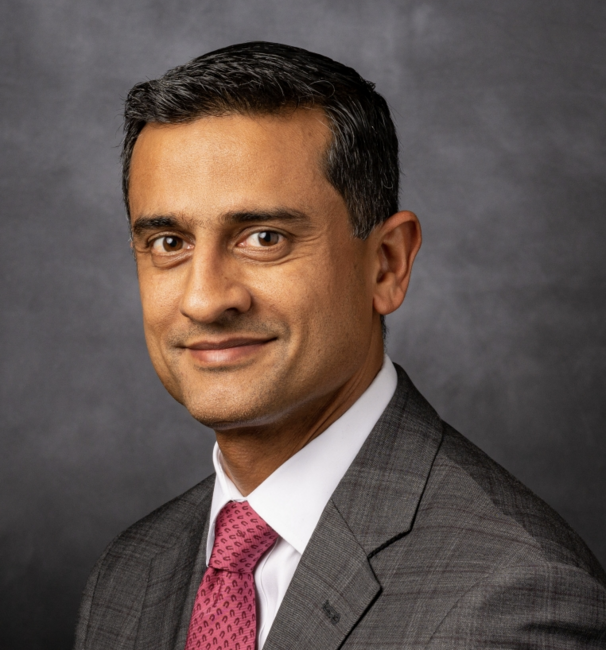
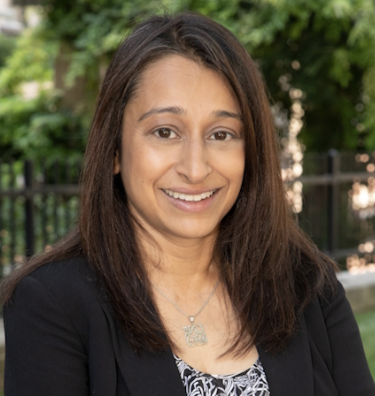
Olatunji Alese, MD, Emory University Winship Cancer Institute, Atlanta, Georgia, and Efrat Dotan, MD, University of Pennsylvania, Philadelphia, Pennsylvania, evaluate whether RAS inhibitors are ready for broad clinical use in pancreatic cancer following recent advances in RAS-targeted therapy at Great Debates in Solid Tumors in New York City.
They discuss the significant efficacy improvements observed with RAS inhibition while weighing remaining questions surrounding real-world effectiveness, patient selection, toxicity, long-term outcomes, and mechanisms of resistance. They also emphasize the importance of comprehensive next-generation sequencing and continued clinical trial enrollment as allele-specific and other novel RAS inhibitors move through development, highlighting the need to integrate currently available advances without slowing further therapeutic innovation.
Transcript:
Dr Alese: I'm Olatunji Alese, I'm a professor of oncology at the Winship Cancer Institute of Emory University in Atlanta, and I'm really delighted to be at the Great Debates here in New York to have a very, very interesting debate with my co-debater, Dr Dotan.
Dr Dotan: I'm Efrat Dotan, I'm a medical oncologist and a professor of medicine at the University of Pennsylvania, and I'm excited to be here and talk about this really major advancement that we've seen in pancreatic cancer care.
Dr Alese: I think it would be an understatement to say that the news, the excitement about RAS inhibitors in pancreatic cancer is routine. For many years pancreatic cancer had been termed the graveyard for drug development because it's so difficult for us to develop more effective treatment options. And we've known for a long time that KRAS alterations play such a pivotal role. The oncogenic addiction is so strong that the opportunity to actually exploit this abnormality within the tumor cells would invariably lead to better survival outcomes, which is exactly what we are seeing.
Apart from RASolute 302, there are many other interesting data that are emerging. And so I think an area where we may differ will probably be the currently approved agent, the best in class. But as far as the expected improvements in not just overall survival, but even quality of life, things that I'm really passionate about, which was why I was so happy to be given the opportunity to argue for. I'm really curious to see what Dr Dotan has to say about the evidence against.
Dr Dotan: A lot of people probably think I'm crazy to argue against the use of RAS inhibitors. I should say I wasn't informed that was going to be my topic when I agreed to give this talk. But thinking about this, this is clearly a major development in the field that we can't ignore.
However, I think we have a lot more work to be done. The main concern with adopting this therapy across the board, in my mind, lies in the real-world adoption of this therapy, how it's really going to affect patients that we're seeing day-to-day in clinic that were not part of the clinical trial, what are the risks versus benefits that we're going to gain from using this drug, and is it going to pan out the same way as it did on the trial?
A second point that really, I think, needs to be highlighted is that this is just the iceberg of our development in pancreatic cancer. And we really need to understand that, yes, this is another available therapy, but we have so much more work to do. So much more areas to explore, specifically in RAS inhibition, whether it's allele-specific or other types of inhibitors, and also in other targets that are emerging. And if we just put all our eggs in this basket, I think we're going to cut short our amazing development that we're seeing in the field. So exciting, yes, but I think there is still much work to be done in this area.
Dr Alese: So I actually agree with you that there is a lot that we still need to tease out. Patient selection is always a major issue in oncologic practice compared to clinical trial participants. But my caution is really throwing out the baby with the bathwater because right now this is really arguably the most impressive advancement we've seen in the field.
And even though we kind of agree that we still need long-term follow-up, we still need to tease out mechanisms of resistance. For example, no doubt in my mind that there will be better agents coming down the pipeline. But right now, we'll take the win. We'll take what we have, and I think make sure that patients who are eligible do not miss the opportunity to have a doubling of the median overall survival.
Dr Dotan: I definitely cannot dispute that, and I agree with it 100%. I would also urge all our providers that are listening to this to remember to conduct NGS testing on all the patients to really get a good understanding of who it is that we're treating, identify other targets, and also think about clinical trials. This is still where we really need to put a lot of emphasis in this disease because I think there is so much more that we can do, maybe we can quadruple survival or even more. I don't think it's a dream, I don't think it's far away. I think we're feeling it as a real possibility.