Encorafenib and Cetuximab Plus FOLFIRI Improves Outcomes in BRAF V600E-Mutant Metastatic Colorectal Cancer
Clinical Summary:
- Design/Population: Cohort 3 of the phase 3 BREAKWATER trial randomized 147 patients with previously untreated, BRAF V600E-mutant metastatic colorectal cancer and ECOG performance status 0–1 to receive encorafenib plus cetuximab and FOLFIRI (EC+FOLFIRI) or standard FOLFIRI-based therapy with or without bevacizumab.
- Key Outcomes: EC+FOLFIRI significantly improved progression-free survival (median, 15.2 vs 8.3 months; HR, 0.44; P=0.0002), prolonged overall survival (HR, 0.56), and previously demonstrated a superior objective response rate (64.4% vs 39.2%). The safety profile was consistent with known toxicities, with no new safety signals observed.
- Clinical Relevance: These findings further support EC+FOLFIRI as a first-line treatment option for patients with BRAF V600E-mutant metastatic colorectal cancer, expanding practice-changing, biomarker-driven standard-of-care approaches in this historically poor-prognosis population.
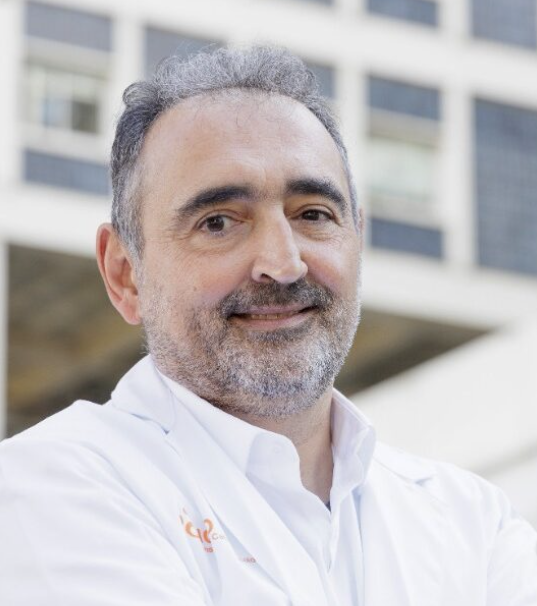
Scott Kopetz, MD, PhD, FASCO, MD Anderson Cancer Center, Houston, Texas, discusses updated findings from Cohort 3 of the phase 3 BREAKWATER trial evaluating encorafenib plus cetuximab and FOLFIRI (EC+FOLFIRI) as first-line treatment for patients with BRAF V600E-mutant metastatic colorectal cancer.
Results demonstrated clinically meaningful and statistically significant improvements in progression-free survival, with a median PFS of 15.2 months compared with 8.3 months for standard FOLFIRI-based therapy, along with encouraging overall survival outcomes. These findings build on previously reported improvements in objective response rate and further support the regimen as a potential first-line standard-of-care option for this patient population.
The safety profile was consistent with the known toxicities of the individual agents, with no new safety signals identified.
Dr Kopetz presented these results at the 2026 ASCO Annual Meeting in Chicago, Illinois.
Transcript:
My name's Scott Kopetz, professor of GI Medical Oncology from MD Anderson Cancer Center. Really delighted to be able to present updates on the BREAKWATER study at ASCO and this is targeting a population that has been historically difficult to treat, but we're pleased that we're making progress. This is the BRAF V600E-mutated metastatic colorectal cancer in the firstline untreated population.
The phase 3 study for BREAKWATER previously reported out a doubling of overall survival, 15 months to over 30 months in patients that were treated with FOLFOX and encorafenib cetuximab compared to a control arm in the large pivotal study. The unanswered questions were really what do we do with those patients that either may not be eligible for or may not want FOLFOX-based chemotherapy? We recognize certainly that some patients receive adjuvant FOLFOX or may have neuropathy from some other reason and may not be a candidate for oxaliplatin-based therapy and increasingly patients and providers just prefer a FOLFIRI backbone in firstline.
This was the rationale for the cohort 3. This enrolled after completion of enrollment of the pivotal phase 3 cohort with FOLFOX. This was a randomized study of over 140 patients that were treated with FOLFIRI with or without bevacizumab as a control arm and then FOLFIRI plus encorafenib and cetuximab in the experimental arm. This again, firstline previously untreated patients. The primary end point was response rate and we saw a higher response rate up to 65% approximately with the experimental arm and that was reported out at GI ASCO earlier this year.
Here at ASCO, we presented the key secondary endpoint of progression-free survival and demonstrated a median progression-free survival of over 15 months for patients with the FOLFIRI backbone compared to a little over 8 months in the control arm. This was associated with an improvement in overall survival with a hazard ratio a little over 0.5. Very consistent with the magnitude of benefit, the doubling of median overall survival that we saw with the FOLFOX arm.
This survival benefit is despite the fact that 66% of patients in the control arm had access and were treated with BRAF inhibitors. This was really reiterating that the magnitude of this benefit is not about having access or treatment with the BRAF, but the idea that we really need to treat patients with the combination of BRAF encorafenib cetuximab combined with chemotherapy in the firstline.
Now we know that safety data here was consistent with what was seen previously. We know the increased rates of anemia, arthralgia with the combination. Importantly, the rash is less than you would see with cetuximab alone and that was not a major toxicity seen in this regimen.
The kind of focus of this data was really to confirm the data seen with FOLFOX. As a result of this, the FDA has provided a full approval for encorafenib and cetuximab with any 5-FU-based firstline regimen. It gives a lot of flexibility that these patients with BRAF can be treated.
The key message is treating these patients in firstline is critical. How do we do this in real world? We know that tissue testing takes time and for patients that can wait, they should wait. Sometimes circulating tumor DNA can be utilized to get a more rapid return of the genotype for patients or other strategies that people have been utilizing is starting with a dose of FOLFOX or FOLFIRI alone depending on the preference for a cycle or 2 until the molecular testing results are back and then guiding the appropriate biologics as a follow on from that.
In conclusion, really delighted to be able on behalf of just a tremendous study team to report out these results that seeing a continued trend towards doubling of overall survival, high response rates, 15-month median progression free survival in what has historically been a very difficult patient population. We're very thankful to the patients for their contribution to this research and glad to be making advances.
Source:
Kopetz S, Tabernero J, Lonardi S, et al. BREAKWATER: Progression-free and overall survival analyses of first-line (1L) encorafenib + cetuximab (EC) + FOLFIRI in BRAF V600E-mutant metastatic colorectal cancer (mCRC). Presented at the ASCO Annual Meeting. May 29 - June 2, 2026. Chicago, Illinois. Abstract LBA3503.