






ET Management Question 4
Transcript
The correct answer is consider the results most relevant to patients resembling those studied, then weigh the endpoint, safety, and follow-up alongside other evidence and the individual patient's goals and clinical factors. So, in the SURPASS-ET study, ropeginterferon alfa-2b was compared to anagrelide in high-risk ET patients who had failed hydroxyurea. They were either resistant or intolerant. The study endpoint, primary endpoint, was at month 12, between month 9 and month 12 count control, so platelet control, white count control. The white count had to be greater than 10,000 to be enrolled in the study, and the absence of progressive spleen, large symptom burden, or hemorrhage or thrombosis. This was superior in the ropeginterferon alfa-2b arm compared to anagrelide. The 2-year follow-up, I think, is very important because it demonstrates durability of response and deepening of the driver VAP refraction with ropeginterferon alfa therapy, even in those patients who crossed over from anagrelide.
It is the reduction in driver VAP that we believe is associated with better event-free survival, better progression-free survival that's extrapolated from other studies but not yet conclusive and proven by evidence. So, one needs to take that in consideration when discussing this option with patients, and balance the potential for toxicity. For example, the potential for neuropsychiatric toxicity must be weighed against the potential benefit of count control, and disease burden reduction, and appropriate monitoring for the patients, both from a laboratory standpoint, a clinical standpoint, and neuropsychiatric standpoint. So, taking into all of these considerations, and personalizing the treatment decision based on the patient's expectations, and the optimal approach to treating a patient who has failed hydroxyurea.
References
- Tefferi A, Gangat N, Loscocco GG, et al. Essential thrombocythemia: a review. JAMA. 2025;333(8):701. doi:10.1001/jama.2024.25349
- Tefferi A, Vannucchi AM, Barbui T. Essential thrombocythemia: 2024 update on diagnosis, risk stratification, and management. Am J Hematol. 2024;99(4):697-718. doi:10.1002/ajh.27216
- Godfrey AL, Green AC, Harrison CN. Essential thrombocythemia: challenges in clinical practice and future prospects. Blood. 2023;141(16):1943-1953. doi:10.1182/blood.2022017625
- Sever M, Newberry KJ, Verstovsek S. Therapeutic options for patients with polycythemia vera and essential thrombocythemia refractory/resistant to hydroxyurea. Leuk Lymphoma. 2014;55(12):2685-2690. doi:10.3109/10428194.2014.893310
- Referenced with permission from the NCCN Clinical Practice Guidelines in Oncology (NCCN Guidelines®) for Myeloproliferative Neoplasms V.3.2026. © National Comprehensive Cancer Network, Inc. 2026. All rights reserved. Accessed October 15, 2026. To view the most recent and complete version of the guideline, go online to NCCN.org. NCCN makes no warranties of any kind whatsoever regarding their content, use or application and disclaims any responsibility for their application or use in any way.
- Mesa R, Gill H, Zhang L, et al. Ropeginterferon alfa-2b in hydroxyurea-intolerant or hydroxyurea-refractory essential thrombocythaemia (SURPASS-ET): a multicentre, open-label, randomised, active-controlled, phase 3 study. Lancet Haematol. 2025;12(11):e862-e875. doi:10.1016/S2352-3026(25)00264-9
- Awada H, Voso M, Guglielmelli P, Gurnari C. Essential thrombocythemia and acquired von Willebrand syndrome: the shadowlands between thrombosis and bleeding. Cancers. 2020;12(7):1746. doi:10.3390/cancers1207174
- Park YH, Lee S, Mun Y, Park DJ. Prognostic value of modified criteria for hydroxyurea resistance or intolerance in patients with high‐risk essential thrombocythemia. Cancer Med. 2023;12(7):8073-8082. doi:10.1002/cam4.5602
- Reilly JT, McMullin MF, Beer PA, et al. Guideline for the diagnosis and management of myelofibrosis. Br J Haematol. 2012;158(4):453-471. doi:10.1111/j.1365-2141.2012.09179.x
- Tremblay D. Cytoreduction for ET and PV: who, what, when, and how? Hematol Am Soc Hematol. 2023;2023(1):660-666. doi:10.1182/hematology.2023000451
- Abu-Zeinah G, Hobbs GS, Rampal RK, et al. Molecular response, event-free survival, and treatment-free remission in myeloproliferative neoplasms: update and review with insights from MPN Asia 2026. Curr Hematol Malig Rep. 2026;21(1):21. doi:10.1007/s11899-026-00790-5
This presentation is funded by PharmaEssentia.
©2026 HMP Global. All Rights Reserved.
Any views and opinions expressed are those of the author(s) and/or participants and do not necessarily reflect the views, policy, or position of Oncology Learning Network or HMP Global, their employees, and affiliates.
Related Content
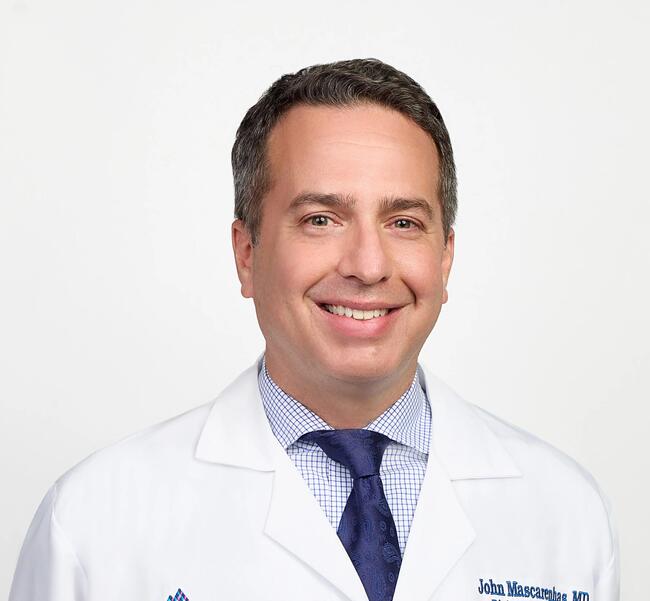


Dr John Mascarenhas is a professor of medicine at the Icahn School of Medicine at Mount Sinai (ISMMS) and a member of the Tisch Cancer Institute in New York City. He also serves as the director of the Center of Excellence in Blood Cancers and Myeloid Disorders, director of the Adult Leukemia Program, and leader of clinical research within the Myeloproliferative Disorders Program at Mount Sinai. As a clinical investigator in malignant hematology with a focus in translational research involving myeloproliferative neoplasms, he is primarily responsible for the clinical trials portion of the Myeloproliferative Disorders Program at ISMMS. Dr Mascarenhas is also the principal investigator (PI) of the clinical trials project within the National Cancer Institute sponsored Myeloproliferative Neoplasms Research Consortium. He has served as PI or study chair of multiple investigator-initiated and industry-sponsored early- and late-phase clinical trials evaluating innovative approaches to the treatment of myeloproliferative neoplasms and secondary acute leukemia.




