Round 2: If DLL3 Becomes Actionable in NEC, Who Should Be Tested and When?
As delta-like ligand 3 (DLL3)-directed therapies move into earlier stages of clinical development, questions around testing strategy and timing are becoming increasingly relevant. In Round 2, faculty weigh selective versus broader, earlier DLL3 characterization, considering disease context, intended clinical or trial use, tissue availability, specimen quality, and the potential consequences of delaying testing.
To hear arguments related to DLL3 predictive utility, see Round 1.
To hear arguments related to clinical actionability and implementation, see Round 3.
To view the full series, click here.
Transcript
Jonathan Strosberg, MD: All right. So the next session is going to be if DLL3 becomes actionable in neuroendocrine carcinoma, who should be tested and when?
So we now have some first-line DLL3-targeted clinical trials. One of them is DAREON-7, which is a phase 1 study with expansion cord of obrixtamig, which again is a DLL3 bispecific T-cell engager, plus platinum-doublet chemotherapy for locally advanced or metastatic neuroendocrine carcinoma.
And the next study is DAREON-NEC-1, which is going to be an untreated advanced extrapulmonary neuroendocrine carcinoma, obrixtamig plus chemotherapy versus standard-of-care chemotherapy. So these are 2 first-line studies.
So if DLL3-directed regimens are approved in the first line, what would that shift mean as far as timing of testing and for treatment sequencing decisions? So Dr Raj, you come up. Thanks.
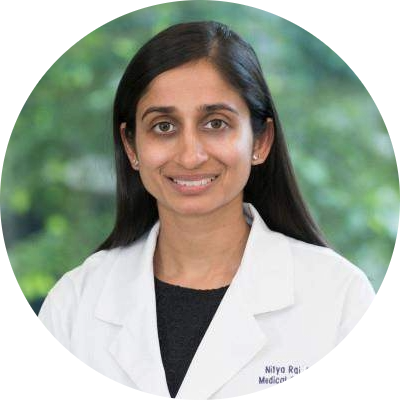
Nitya Raj, MD: Okay. So I'm going to speak from the viewpoint that DLL3 testing should remain selective, guided by disease context and therapy or trial relevance.
Okay. So the key takeaway from this slide is that DLL3 testing should remain selective and really linked to a defined sort of clinical trial or a research purpose. And we're going to walk through this takeaway looking at small cell lung cancer and what we know about it versus extrapulmonary neuroendocrine carcinoma.
If we focus first on the small cell lung cancer part of the slide, as we know, DLL3 expression is exceptionally high, right? 85 to 100% in the reported series wasn't required for the DeLLphi study, and we saw activity across the spectrum of small cell lung cancer. And so again, tarlatamab is approved based on the DeLLphi study. And so in small cell lung cancer, testing has very limited or perhaps no kind of established value for current treatment selection in the progressive previously treated patient.
But then now let's kind of focus in on extrapulmonary neuroendocrine carcinoma. And the challenge here is that expression, there are all these questions of thresholds. It's not universal across series. The reported expression is 65 to 85%, but we're still struggling to figure out what is the minimum amount of expression you may need to get benefit from these therapies. And again, all of the DLL3 directed therapies remain investigational. So we don't have a drug approval yet for extrapulmonary neuroendocrine carcinoma.
But I think what's so important for extrapulmonary neuroendocrine carcinoma is testing for DLL3, certainly, now and over the next few years, it is very likely to support eligibility for trials, the majority of which are incorporating DLL3 status into some of the eligibility criteria.
And so, as a medical oncologist, as we're thinking through these tests and when we should order them, how we're going to present the results to our patients, I think we all would agree that the testing that we do, there should be a purpose behind it. And hopefully it will coincide with our ability to offer a therapy or a potential therapy for our patient.
And so, when we think through DLL3 testing at diagnosis, the nice thing about it is that you could use the diagnostic tissue. You could avoid having to do a biopsy at a later date. That can become very challenging in our extrapulmonary neuroendocrine carcinoma patients who, unfortunately, when the disease progresses, they can start to become very symptomatic, and we get a little bit more nervous about the safety of getting more tissue. If we test a diagnosis, it may prevent delays, especially as these earlier-line trials, these first-line studies that are becoming options are becoming available to our patients.
I think the thing about we have to think through for testing a diagnosis and the challenge in this disease is often these patients get a little teeny-tiny biopsy and there's not a lot of tissue there. And so there's the possibility that testing a diagnosis could consume some of that small amount of tissue that we have before the clinical utility is clear. So we're grappling with DLL3 testing, next-generation sequencing, some of these other tests for potentially other clinical trials that may be options. And so if there's not a lot of tissue, you have to think through how you're going to use that tissue.
So let's put that against sort of holding off on the testing immediately, but perhaps doing that test when you're trying to make a decision about a clinical trial or some DLL3-targeted clinical therapy for your patient. And so the nice thing about it is that it's going to link the test results to a defined use for that patient.
So I am doing this test with the purpose of figuring out whether I can get you on a study or see if I can obtain tarlatamab off-label to treat your cancer. If you wait and kind of test when you're thinking through DLL3 as kind of the immediate next option, it could avoid testing that never informs care. I think this point is a little bit tricky now with some of the first-line studies becoming options because we may need the results to talk about first-line therapy if we have access to some of these studies.
And then another challenge with waiting and testing close to that immediate decision for a DLL3-targeted therapy is that if there's not tissue available, or again, as I was saying, if the disease has grown too quickly, the patient is perhaps too symptomatic for you to offer repeat sampling, you might not be able to do that test. Okay.
Anja Roden, MD: So I will continue to talk about broader, earlier DLL3 characterization has the potential value that when results are reliable and actionable. Earlier DLL3 testing, how do we accomplish that?
First of all, we have to establish a diagnosis of a neuroendocrine carcinoma or neuroendocrine tumor. However, while we establish the diagnosis, we get unstained slides. And these unstained slides are either for further diagnostic purposes or we reserve them for later biomarker testing. We have to keep in mind unstained slides are only good for IHC testing up to 6 weeks, maximum 2 months, but afterwards we still can use them for next-gen sequencing or molecular testing.
Why is that so important that we get these unstained slides? Every time you cut into a tissue block, the first time you cut, you cut a lot of tissue away. That's just how the process goes. So you really want to get all your slides in one time. The other is, yes, we validate these tests for formalin-fixed paraffin-embedded tissue. If we have a bone biopsy that has been decalcified or a cytology specimen that has been fixed with something else, specifically with ethanol fixing, that will actually change the antigenicity, and we need to do a different validation for these kind of specimens. And that's why all the predictive biomarkers that are so far FDA approved are only FDA approved for formalin-fixed paraffin-embedded tissue.
Now, earlier testing may facilitate that the patient comes on a trial earlier. However, so far, at least in our institutions, we do not do reflex testing for DLL3 because it's not a valid or not a so far predictive biomarker in the sense that we have an approved test and an approved medication. But we do do it up on request. And most of the requests that I see coming through are for the extrapulmonary neuroendocrine carcinomas where we don't really know whether that tumor will express DLL3 or not.
So as we talked already about limited tissue makes us really think hard, what should we do with the tissue, not to waste the tissue? And again, if it's decalcified or if there is a different fixative, we really need a different validation. Then we don't really know what is the exact cutoff for DLL3 expression. So currently, as I said, we report the percent of tumor cell expression on DLL3, but we may have to also report the intensity of staining and so on.
And so far, these thresholds may vary, but I think this is the point where we really have a discussion between oncologists and pathologists. We need to know whether this patient goes on a trial where you need to have an age score or where you need to know the intensity, or where it's enough that we report the percentage of tumor cell staining. So that really requires the discussion between oncologists and pathologist.
Dr Strosberg: All right. So another quick discussion in advanced epNEC. When does the risk of losing an adequate tissue specimen justify DLL3 testing before treatment or trial decision requires it?
I guess, Dr Roden, you argued for earlier DLL3 testing. Dr Raj, you argued for more selective DLL3 testing. But after hearing each other, do you think this should be something that's done in the first-line when patient is first diagnosed or wait until a trial is being considered?
Dr Raj: Yeah. I mean, I think that with the studies that are coming and the studies that are available and understanding the biology of this disease, I actually think doing it at the time of meeting the patient makes a lot of sense if you have access to it. I mean, I appreciate some of the concerns about wasting the tissue and whatnot, but I think this is a disease in which it's going to help us a lot to understand the DLL3 expression. And I think your best opportunity is kind of at the beginning. It may not be, it might not impact your first-line treatment depending on what the options are, but I think it's good to know whether you may have it as an option in your therapy algorithm, and I think it helps us plan.
Dr Strosberg: Great.
Dr Roden: Well, we also have to think about for small cell carcinoma specifically, we don't really have much more options, right? It's not like the lung adenocarcinomas where we have to do 4 or 5 IHC and then the NGS. So for small cell carcinoma, we usually get requests just for DLL3 and then maybe sequencing.
Dr Strosberg: Okay. I would agree that, at this point, obtaining a diagnosis makes a lot of sense.
All right, so maybe we can have a little discussion among the panel. So based on the current evidence, what can DLL3 expression reliably tell us today, and what additional evidence would establish predictive utility? And I guess 1 question perhaps for you, Dr Roden, is do you think percentage expression will ultimately be more important, or age score, or any predictions on that?
Dr Roden: I don't think we can really answer this question yet without the clinical trials. I mean, we can, I would say, pretty reliable, tell you the percentage of tumor cell expression, at least if we would use a 50% cutoff. I don't know about other cutoffs. We would have to actually look into that.
And you also know there will be some inter-observer variability if we go for intensity. So my 1+ might be my colleagues’ 2+, or my 3+ might be my colleagues’ 2+. And on top of it, there will be variation in intensity even within 1 tumor. So if you see a resection specimen, in 1 area, you will see 3+. In another area, you will see 2+.
So we can report all of that, whether we can report it very reliably, needs to be studied. But what that really means as a predictive marker, we don't know until we really have these all in clinical trials, I would say.
Dr Strosberg: Great. And let me ask you 1 more question. To what extent does DLL3 expression vary, you think, inter-tumorally and intra-tumorally if you happen to have more than 1 site?
Dr Roden: So that's another good question. There is 1 small study that looked at small cell lung carcinomas at the resection specimen and then at the recurrence, and there was about an 88% concordance. However, this is only 1 study and we have not looked into the distinction between primary tumor and metastasis, and primary tumor and then recurrence in extrapulmonary neuroendocrine carcinomas. And also, the study on small cell carcinomas has not been validated.
Based on my experience, we do see different intensities within 1 tumor in resection specimens. Now, mostly we get biopsies, so you can't really talk about that, but there will be variation, I'm pretty sure.
Dr Strosberg: Got it. And Dr Raj, am I correct in saying that they're doing DLL3 imaging studies at Memorial? I think there's a PET scan that's being developed.
Dr Raj: Yeah. I mean, there's a lot of interesting early work going into DLL3 PET scans as a means to kind of look by imaging at the distribution of the receptor. And I think it speaks to the question you just asked about heterogeneity, amongst what we may see by IHC testing in the primary, the metastases at recurrence and whatnot. And so there's some early work that we're doing at Memorial looking at expression on PET scans. And then the next step is to kind of look at that in the context of response to therapies targeting DLL.
Dr Strosberg: Great. And what clinical evidence would convince you that DLL3 expression is predictive?
Dr Raj: Yeah. So this is an exciting time for extrapulmonary neuroendocrine carcinoma. I mean, we have not had many therapies. We've had platinum-based chemotherapy, and then we extrapolate our second-line regimens from site of origin-specific options for non-neuroendocrine carcinoma disease. And so for extrapulmonary neuroendocrine, the fact that we may have a biomarker that we might be able to look at and target is exciting.
Some of the evidence we have already that we've talked about is very promising in terms of some of the response rates and PFS data that we're seeing. But what we need now is some of the bigger phase 4 data, which is hopefully coming soon, kind of in the next few years. But that randomized data taken together with some of the phase 2 data, specifically looking at different thresholds is what's going to help us decide what is truly predictive in terms of DLL3 expression.
Dr Strosberg: Great. Thank you.
© 2026 HMP Global. All Rights Reserved.
This is a non-CME activity. The views and opinions expressed by the presenter(s) do not necessarily reflect the views and opinions of the Oncology Learning Network, HMP Global, or its employees and affiliates.
Related Content


Gastrointestinal Oncology