Immune Checkpoint Inhibition in Advanced cSCC: Perspectives From Clinical Practice
Transcript
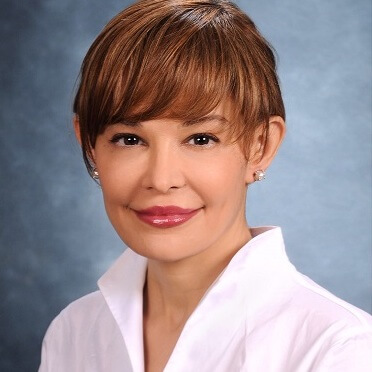
My name is Dr Bahar Dasgeb. I'm the associate professor at Rutgers University Department of Surgical Oncology, and my clinic and my research and clinical work is focused on complex and advanced skin cancers, particularly with a focus on cutaneous carcinomas, mainly squamous cell carcinoma and basal cell carcinoma. Welcome to the KOL commentary series, hosted by the Oncology Learning Network today. We are discussing the evolving treatment landscape for the advanced cutaneous squamous cell carcinoma, specifically how we navigate the choice between PD-1 and PD-L1 inhibition to personalize care for our patients.
A significant majority of cutaneous carcinomas, both squamous cell carcinoma and basal cell carcinoma, are adequately taken care of by our colleagues in community setting with surgery and other methods that are locally applied. However, a very small percentage of patients who are suffering from cutaneous carcinoma, SCC, and BCC are suffering from the complex and advanced form of the disease. Those patients are the ones that my career clinically and research is focused on, and I take care of those patients. I also see patients at earlier stage, and I also see patients who are really high risk in developing skin cancer or second or third primary skin cancers. In my practice, I have seen patients that occasionally present with hundreds of squamous cell or basal cell at a time.
At the moment, for squamous cell carcinoma, the systemic approach and treatment are two-fold: either targeted therapy, such as cetuximab, or immunotherapy. The patients in general and the background on which these tumors occur can play a significant role to personalize care for that patient. For example, if a patient is presenting with a fully functioning lung transplant, it would be reasonable to give a chance to targeted therapy, with the risk of potentially organ rejection if we give the patient immunotherapy. So usually, my first line is if I don't have to take a significant risk, I would start with a targeted therapy for them. On the other hand, I'm presenting to you a patient who's presenting with individually small, but many skin carcinomas, squamous cell or basal cell or both. And this patient has had recurrently developing four or five BCC or SCC every year needing surgery. That job, for example, can be achieved by immunotherapy, that usually, targeted therapy would not achieve that.
One of the recently approved systemic treatments, cosibelimab, has shown in clinical trial to have a favorable adverse event profile in regards to autoinflammatory and autoimmune adverse events and conditions. In my experience, when I have patients presenting with an already background of conditions such as psoriasis, bullous pemphigoid, pemphigus vulgaris, rheumatoid arthritis, inflammatory bowel disease, and I have had patients with that background who also have developed skin cancer, and some of them are prone to it because the treatment for most of these conditions is immunosuppression, and when you immunosuppress the patient, the risk of malignancies, including cutaneous malignancies, go up.
So in my experience recently, I've been putting those patients as a first line on cosibelimab. And although it's the beginning of my experience, and I acknowledge the number of patients I've treated with cosibelimab because of this drug having been available recently is not as many as the other comparable immunotherapies, but to my experience, those patients did not have their inflammatory condition flare up. And I can say that I have started seeing the benefit of lower inflammatory adverse events, and a more favorable profile in regards to autoinflammatory and autoimmune conditions to be considered when the decision between various PD-1 inhibitors or immunotherapy in general is being considered for patients.
This question is very endearing and is a good one. To my experience, I have seen a very well-tolerated profile in patients who are 65 and above, particularly 75 and above. And believe it or not, I have even tried many patients above 100, and the oldest patient I have treated has been hundred-and-some years old. In my experience of 15 years, and I have had experience with immunotherapy from the beginning of ipilimumab back in 2011, I have noticed that the patients above 65, particularly above 70 can tolerate immunotherapy very well. I have been fortunate that I have not lost a patient to adverse events of immunotherapy due to adverse events in any elderly that I have treated, and in my practice, age is not considered as one of the factors based on which we make a decision, I make a decision whether to give immunotherapy to this patient or don't. Age is not one of those factors.
In my practice, I have cosibelimab applied for the treatment of patients in various categories. I have for patients for whom I chose cosibelimab as a first-line treatment. I do have patients who have failed cemiplimab and pembrolizumab, and I switched to cosibelimab, and I want to give a couple of examples of how this decision-making was applied. The first two patients in my practice that I put on cosibelimab, they were patients that they didn't have any other treatment. They were naive patients presenting with locally advanced squamous cell carcinoma. One of them had psoriatic arthritis, on anti-psoriasis medication, on immune modulator, and the other one had colitis, inflammatory bowel disease, also on immunomodulator. Both of them had a well-controlled psoriatic arthritis and inflammatory bowel disease on their ongoing treatment. I put both of them on cosibelimab, and during the course of treatment, which is still ongoing, the psoriatic arthritis and inflammatory bowel disease, neither of them has gotten worse. So that is two examples of the background of autoinflammatory and autoimmune disease guiding me to go for cosibelimab first.
Now, here, I would like to touch a little bit on the structure of cosibelimab. Naturally, cosibelimab, we all know it's a humanized monoclonal antibody, it's IgG1 and it's PD-L1 inhibitor. Fine. That's great. But however, one of the differences of cosibelimab compared to its counterparts, cemiplimab, pembrolizumab, is that the Fc portion of this antibody, it's active, intact, and communicates and interacts with innate immunity through interleukin-1 and natural killer T cells. And I think this is very important, because if some of the experiences that we have with cosibelimab, I have noticed a little bit earlier response after a couple of infusions because PD-1/PD-L1 inhibitors unleash the adaptive immunity onto the tumor indiscriminately, but more on tumor than healthy organs. And this is something that we should consider, that cosibelimab is not necessarily another PD-L1 inhibitor. Cosibelimab is a PD-L1 inhibitor plus a completely functioning Fc portion that interacts actively with innate immunity, including natural killer T cells and complement system and antibody-mediated cytotoxicity, and added value to our adaptive cell-mediated cytotoxicity.
Well, I have brought up a few examples of patients. Number one, I think cosibelimab with time, if we really reach to a point to experience in long-term more favorable adverse events, then the question would be why not first line? If this continues as is, then potentially I can see it as the preferred or the first-line. Number two, on the context of autoinflammatory autoimmune conditions, I think it is something to be considered as a first-line, because in those patients, we really need a more favorable inflammatory adverse event profile. And finally, some of my patients that I give cosibelimab for advanced squamous cell carcinoma, they also have either advanced or non-advanced basal cell carcinoma. I have observed that basal cell is also responding. So in the future, I think it would be reasonable to apply or at least start investigation in that regard.
Another is if the combination of innate immunity related to the intact functioning Fc portion of this molecule, in addition to adaptive immunity related to PD-L1 inhibition would lead into a more dramatic and faster result, don't we all want that for our patients? And I think I will see that path, not only for cosibelimab, for the generation of combination innate immunity and adaptive immunity checkpoint inhibitors that would come based on our experience with cosibelimab. That would open the gate for the whole new category of immunotherapy. Please visit Oncology Learning Network for more education about cutaneous squamous cell carcinoma treatment landscape. Thank you for watching.
References
- Bartley B, Rosenberg A, DeBusk L, et al. Efficacy and safety of cosibelimab for advanced cutaneous squamous cell carcinoma: an expert consensus panel. J Drugs Dermatol. 2026;25(5):413-420. doi:10.36849/JDD.9954.
- Burshtein J, Schlesinger T. Cosibelimab: a novel therapeutic for advanced cutaneous squamous cell carcinoma. J Clin Aesthet Dermatol. 2025;18(11):21-23.
- Clingan P, Ladwa R, Brungs D, et al. Efficacy and safety of cosibelimab, an anti-PD-L1 antibody, in metastatic cutaneous squamous cell carcinoma. J Immunother Cancer. 2023;11(10). doi:10.1136/jitc-2023-007637.
- Grob JJ, Gonzalez R, Basset-Seguin N, et al. Pembrolizumab monotherapy for recurrent or metastatic cutaneous squamous cell carcinoma: a single-arm phase II trial (KEYNOTE-629). J Clin Oncol. 2020;38(25):2916-2925. doi:10.1200/JCO.19.03054.
- Hughes BGM, Muñoz-Couselo E, Mortier L, et al. Pembrolizumab for locally advanced and recurrent/metastatic cutaneous squamous cell carcinoma (KEYNOTE-629 study): an open-label, nonrandomized, multicenter, phase II trial. Ann Oncol. 2021;32(10):1276-1285. doi:10.1016/j.annonc.2021.07.008.
- Hughes BGM, Guminski A, Bowyer S, et al. A phase 2 open-label study of cemiplimab in patients with advanced cutaneous squamous cell carcinoma (EMPOWER-CSCC-1): final long-term analysis. J Am Acad Dermatol. 2024;92(1):68-77. doi:10.1016/j.jaad.2024.06.108.
- Idris OA, Westgate D, Saadaie Jahromi B, et al. PD-L1 inhibitor cosibelimab for cutaneous squamous cell carcinoma: comprehensive evaluation of efficacy, mechanism, and clinical trial insights. Biomedicines. 2025;13(4). doi:10.3390/biomedicines13040889.
- Lee A. Cosibelimab: first approval. Drugs. 2025;85(5):695-698. doi:10.1007/s40265-025-02164-2.
- Migden MR, Rischin D, Schmults CD, et al. PD-1 blockade with cemiplimab in advanced cutaneous squamous-cell carcinoma. N Engl J Med. 2018;379(4):341-351. doi:10.1056/NEJMoa1805131.
- Ruiz ES, Muñoz-Couselo E, Montaudié H, et al. Efficacy and safety of cosibelimab in advanced cutaneous squamous cell carcinoma: results from a pivotal open-label study with a median follow-up of ≥2 years. J Am Acad Dermatol. 2025;94(1):48-56. doi:10.1016/j.jaad.2025.09.009.
© 2026 HMP Global. All Rights Reserved.
This is a non-CME activity.
The views and opinions expressed by the presenter(s) do not necessarily reflect the views and opinions of the Oncology Learning Network, HMP Global, or its employees and affiliates.