










The Tissue Journey in NSCLC: Why Testing Strategy Starts at Diagnosis
In this video, Dr Jamie Chaft discusses why tissue acquisition in NSCLC is more than a diagnostic step—it is the foundation for histologic classification, staging, and comprehensive biomarker testing. She highlights how upfront tissue planning, multidisciplinary coordination, and tissue stewardship can help preserve testing options and reduce downstream delays.
Transcript
Dr Chaft: Hi, I'm Dr Jamie Chaft, professor of Thoracic Oncology at Memorial Sloan Kettering Cancer Center. The initial diagnostic biopsy in non-small cell lung cancer is key to opening up therapeutic opportunities for the patient in the room. There is nothing that can be wasted on that initial biopsy, and everything must be done. Unfortunately, that everything seems to become more and more with every new data set we see and drug approved. So understanding how to triage material, what is absolutely essential now versus what can wait for testing later, and how long you have to wait for these results until starting therapy are all challenges we face every day.
So first of all, we need a histologic diagnosis. So that material must be used to diagnose non-small cell lung cancer versus small cell or metastatic disease. And if non-small cell, we need to know if it is squamous cell carcinoma or non-squamous non-small cell lung cancer. And while biomarker testing is necessary in each, the degree to which we push for testing results in non-squamous non-small cell lung cancer is with greater priority. So beyond the histologic diagnosis, the first and foremost biomarker is PD-L1 expression by immunohistochemistry. This really helps us direct frontline therapy when there is not a targeted therapy option.
In terms of targeted therapies, we take a two-pronged approach to biomarker testing, at least for patients with metastatic disease. So for patients with metastatic disease, there are many publications demonstrating the clinical utility of parallel contemporaneous liquid and tissue testing. Now, liquid biopsies cannot be relied upon in the early-stage setting due to issues with sensitivity. They are generally quite good with advanced disease, particularly if there's a high disease burden. If the liquid biopsy is negative, it is essential to wait for the tumor biopsy. Now, what do we do with the tumor biopsy? The real answer today, based on the NCCN guidelines, is comprehensive next-generation sequencing, along with, if there is material, immunohistochemistry for expression of MET and HER2.
Now, what does comprehensive biomarker testing entail? In an ideal world, that is both DNA sequencing, and if DNA does not show you what you're looking for, RNA sequencing, which is far more sensitive for picking up alterations, or specifically gene fusions, in ALK, RET, ENTREC, and ROS, as well as better at MET exon 14 splice variants. Tissue insufficiency and delayed biomarker results are clinically relevant struggles we face every day. And it really depends on two factors. How sick is the patient in the room? Can they wait for a repeat biopsy, or do you need to start therapy immediately? And what is your pretest probability of finding one of these beautiful, actionable oncogenes? If that therapy you anticipate giving can cause harm after immunotherapy, it's not uncommon for us to start with a cycle of chemotherapy and hold the immunotherapy while repeating testing.
Now that if the liquid biopsy is negative, and the tissue is insufficient, you have to think about the patient in the room. And if they are a light smoker or never smoker, if they are young, if it's adenocarcinoma histology, we do our best, if the risk is acceptable, to obtain a second tissue biopsy for comprehensive genomic testing. It's really our job to open up the door of therapeutic opportunities to our patients. And if that initial biopsy is inadequate, a second one is indicated.
Tissue stewardship is a buzzword in thoracic oncology. And unfortunately, as a clinician, you often feel like you can't influence that process. I think communication is key to tissue stewardship, both from prior to the biopsy to when it hits the lab. For example, if a patient's undergoing a bone biopsy, letting the interventionalist know you need that to not be decalcified so that you can utilize it for molecular testing needs to be done ahead of time so they can make a note for the pathologist. If the tissue biopsy is going straight to the pathology lab, letting that pathologist know the patient's a never smoker may eliminate. extensive immunohistochemical tests. Really, in a guideline-based fashion, the pathologist, if they suspect non-small cell lung cancer, should be performing IHC for P40, which would suggest squamous cell carcinoma, or TTF1 for adenocarcinoma, and nothing else unless they really aren't sure where it came from. For the pathologist to know I suspect a lung cancer, it really helps them triage their battery of IHC assays and save that precious material for genomic testing.
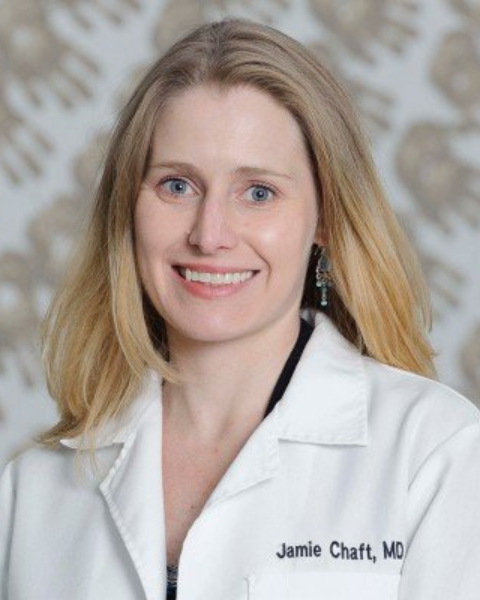 Jamie Chaft, MD, is an attending physician at Memorial Sloan Kettering Cancer Center, where she serves as the director of early-stage lung cancer research. She designs and leads clinical trials, striving to improve the cure rates in early-stage lung cancers. In such a capacity, she serves as study chair for the National Clinical Trials Network (NCTN) trial of adjuvant nivolumab within the ALCHEMIST program and co-lead of the Lung Cancer Research Foundation (LCRF) LEADER study bringing personalized neoadjuvant therapies to patients with resectable lung cancer. Dr Chaft's career is committed to moving drugs shown to have promise in more advanced lung cancers into the early-stage setting.
© 2026 HMP Global. All Rights Reserved.
Any views and opinions expressed are those of the author(s) and/or participants and do not necessarily reflect the views, policy, or position of Oncology Learning Network or HMP Global, their employees, and affiliates.




