










Session 2: From ESR1 Testing to Treatment Selection: Understanding ER-Targeted Approaches in Breast Cancer
In this 45-minute on-demand session, Erika Hamilton, MD, examines how ESR1 mutation status can help inform treatment decisions for patients with estrogen receptor (ER)-positive, human epidermal growth factor receptor 2 (HER2)-negative advanced or metastatic breast cancer.
Transcript
Hello, I'm Erika Hamilton. Welcome to this presentation from Oncology Learning Network. This is the Community Connect Webinar Series, and tonight we're going to be talking about estrogen-receptor biomarker testing, targeting mechanisms, and treatment decisions in the care of breast cancer.
So I am Erika Hamilton. I lead the breast cancer research program at Sarah Cannon. I'm also chief development officer here, and I'm happy to join you guys tonight from Nashville, Tennessee. I'm going to aim to get through this presentation in roughly about 30 minutes, and then we should have time at the end to answer questions. And if you guys put any questions in the chat, then we'll be able to get to them at the end.
So our objectives tonight are really to talk about the clinical relevance of ESR1 mutations and to talk about testing at progression from label requirements from an FDA-authorized plasma test, to talk about SERD as well as PROTAC, and some of the differentiation between these in terms of degradation and other ER-targeted approaches. Also, some use cases, and also talk about label-based patient selection, dosing, adverse event monitoring for these newer classes of drugs, dose modifications, and how we counsel patients about these classes of drugs in practice.
So I think we're all familiar with ESR1 mutations now and how to test for them. We know that ESR1 mutations become more common the longer a patient stays on endocrine therapy, and specifically, it's the longer a patient stays on aromatase inhibitors. We really don't see an increasing prevalence of ESR1 mutations with long use of tamoxifen, for example, or long use of SERDs, but specifically it's a resistance mechanism to aromatase inhibitor and the blocking of estrogen. We know that these mutations kind of lock the estrogen receptor in an active shape. I really explain it to my patients like it's a light switch, and the light switch is turned on even when estrogen isn't floating around to bind to the estrogen receptor anymore. And so that's why cancer becomes resistant to standard aromatase inhibitors; it’s not requiring that estrogen to bind to the estrogen receptor anymore. The light switch is on even if the estrogen isn't around anymore.
So in terms of ASCO recommendations, we should be testing for the emergence of ESR1 mutation at recurrence and progression on endocrine therapy for metastatic disease. We should be doing this with a CLIA-certified assay. Blood-based ctDNA is preferred due to greater sensitivity. And I think if we stop and think about that, that makes sense. We certainly still need biopsy in metastatic breast cancer. I always do an actual tissue-based biopsy when my patients are initially diagnosed with metastatic disease because I want to confirm that the cancer is still ERPR-positive and HER2-negative. We know that sometimes cancer changes its stripes. We can have cancers that come back triple negative or come back HER2-positive.
But when we're talking specifically about emergence of an ESR1 mutation, we know that if we stick a needle in just 1 lesion, we're only getting a snapshot of what that 1 metastatic spot looks like. Where if we do a blood-based assay, we're picking up whether there's a mutation in any of these metastatic spots across the patient's whole body. And so it's actually a little bit more sensitive and we're more likely to find that ESR1 mutation if we're doing it based on blood-based ctDNA. And testing should be performed even if previous tests were ESR1 wild type. So for example, if you do a mutation profile initially in metastatic disease, if somebody is on an AI and CDK4/6 inhibitor for 2, 3, 4 years, it is definitely worth repeating that in a blood-based test after progression on an AI and CDK4/6 because it’s very well that patient might've had emergence of an ESR1 and might be eligible for another therapy in that second-line setting.
So this is a diagram just reminding you how these different estrogen-targeting drugs work. So again, aromatase inhibitors really work by preventing estrogen floating around to interact with the receptor. So preventing the conversion of normal body steroids into estrogen so there's not any estrogen to interact with estrogen receptor. SERMs, on the other hand, selective estrogen receptor modulators, really bind to the estrogen receptor and changes the conformational shape. So, they can be agonistic in some tissues and antagonistic in others. This is tamoxifen, for example. A SERD, or selective estrogen receptor degrader, is similar in some ways to a SERM in the fact that it also binds the estrogen receptor. It causes a conformational change. This actually goes into the nucleus and ultimately flags the estrogen receptor for destruction or kind of turnover. This is fulvestrant, this is imlunestrant, this is elacestrant.
And then our newest drug, the PROTAC, or proteolysis-targeting chimera, vepdegestrant, over on the right, is a degrader of sorts, but it works in a different way. So it's also binding the estrogen receptor, but what this does is it recruits in E3 ligase. And when E3 ligase binds this, it essentially ubiquitinates the estrogen receptor, and this ubiquitination brings in proteasome. And the proteasome is essentially the intracellular garbage disposal. This is going to chomp up the estrogen receptor, spit it out, and it's actually iterative, meaning then this is allowed to go on and act at another location so we can be recycled. It can use again and go act on another estrogen receptor, which is a bit of an interesting and unique mechanism for vepdegestrant.
So in terms of guidelines, I think this can be a tiny bit confusing, but what I think that they're trying to get at is certainly if patients relapse and they have not had endocrine therapy within a year, we're certainly thinking about AIs in combination with CDK4/6 inhibitors. For our patients that progress and have already been on endocrine therapy and say a CDK4/6, et cetera, and we're thinking about what to give them in the second line, we certainly can switch endocrine therapy and a CDK. We can think about targeting PI3 or AKT PTEN if they have an activating mutation there. We can think about ESR1 mutations. And then for patients that aren't a candidate for therapy, we can think about cytotoxic therapies. We can have a similar conversation if we're thinking about first line. So if patients have not had endocrine therapy within a year and we're talking about first-line metastatic disease, those are patients that we would put on AI and CDK4/6.
If they have had recent endocrine therapy, we can think about PI3s, we can think about ESR1s, we can think about new endocrine therapy with a change of CDK4/6, or we could think about chemotherapy. And then in terms of our SERDs and PROTAC, remember that these are for ER-positive/HER2-negative, and you also have to have the presence of an ESR1 mutation and you have to have progression following at least 1 line of endocrine therapy.
So let's go through some of the data. EMBER-3 was the first trial that we'll march through a little bit. These were patients that had metastatic ER-positive breast cancer, HER2-negative, and we're going to talk about patients that had ESR1 mutations here and patients were randomized to either receive fulvestrant or exemestane versus imlunestrant, the oral SERD. And the primary endpoint of this trial was investigator-assessed progression-free survival initially in patients with ESR1 mutations and then also in all patients.
Now, in terms of who these patients were, they were supposed to already have CDK4/6 and could have had at least 1 additional line of endocrine therapy. They could have had nonmeasurable bone-only disease or have measurable disease, and they could not have had chemotherapy or any other investigational oral SERD.
So when we look at this, patients tended to be about 60 years old. The majority of patients were Caucasian. And in terms of line of therapy in the advanced setting, most patients were second-line. About two-thirds of patients had already had a CDK4/6. So this was not uniform. Not everyone in the trial had already had a CDK4/6, and over half of patients had visceral disease. And among those patients that had an ESR1 mutation, which is the population that benefited from the imlunestrant, our clinical benefit rate was about 10% higher with imlunestrant, 46% versus 36%. Our response rate was higher, 12% versus 5%. And then you can see progression-free survival, kind of what we care about maybe the most, over on the left. Progression-free survival improved from 3.8 months up to 5.5 months with imlunestrant for a hazard ratio of 0.62 and a statistically significant P value.
In terms of safety data, I think this really looked quite encouraging. We always look at musculoskeletal pain when we're talking about endocrine agents, those targeting estrogen. About a third of patients had musculoskeletal pain, whether we were talking about standard endocrine therapy or imlunestrant, so no real differences there. Fatigue, pretty similar, 14%, 23%. Diarrhea, maybe a little bit higher with imlunestrant, 12% versus 22%. Nausea, really very rare in both arms, same with constipation or abdominal pain, but really a pretty well tolerated side effect profile, which we've come to expect with single-agent endocrine therapy. In terms of counts, platelets, neutrophils, hemoglobin, very similar to what we see with endocrine therapy, not a big signal there. And then chemistry-wise, similar, we really don't see any significant increases compared to what we would see.
So we see about 5% of patients discontinuing imlunestrant, about 1% of patients discontinuing fulvestrant or exemestane. So a little bit more common to discontinue imlunestrant, but still about a 5% discontinuation. So the vast majority of patients were tolerating imlunestrant quite well.
So if we move and we talk about VERITAC-2, this was our trial with vepdegestrant. And I'll tell you that I presented this trial, so just to give you that caveat before we start. This was a trial in a similar population in terms of patients were largely second line, had ER-positive/HER2-negative breast cancer. And again, we're largely going to be talking about this population that had ESR1 mutations, but again, everyone was initially enrolled. It was a little bit more uniform in terms of the 2 arms. Patients were randomized either just to fulvestrant or vepdegestrant, and also a little bit more uniform in terms of the inclusion criteria. Everyone had already had CDK4/6 inhibitor with endocrine therapy. They were allowed up to 1 additional line of endocrine therapy. They also allowed that measurable or bone-only disease, and they did not allow chemotherapy, et cetera.
So when we talk about baseline characteristics here, we had about 1 in 5 patients that were pre- or perimenopausal, so kind of real world, did have some patients that were younger. And then we had a pretty even split between White patients and Asian patients, based on where in the world this trial enrolled. And then, 1 prior line of endocrine therapy was most common, and you see in this table 100% prior CDK. So keep this in mind when we talk about progression-free survival on average, because we know that our patients that have already seen CDK are going to have lower average PFSs than those have not, and so that affects our average PFS when we compare trials to trials. So about 80% had 1 prior line of endocrine therapy, so that was obviously endocrine with CDK, and then about 20% had had 2 prior lines of endocrine therapy.
So when we look again at the ESR1 mutated population, the population that ultimately went on to receive the approval, progression-free survival benefit 2.1 months up to 5.0 months. A hazard ratio of 0.58, a P value that was highly statistically significant. When we look over on the right for some of these same endpoints that we looked at for imlunestrant in terms of clinical benefit rate, this was a little bit over doubled, 20% up to 42% with vepdegestrant. And in terms of overall response rate, this was a little over quadrupled, 4% up to 19%.
In terms of safety data, I would say pretty similar. Fulvestrant compared to vepdegestrant in terms of musculoskeletal pain, again, about a quarter, a third of [vepdegestrant] patients having some musculoskeletal pain; fatigue really being 16%, 29% [fulvestrant, vepdegestrant], maybe a tiny bit more fatigue. Pretty uncommon. You don't see diarrhea. Nausea, less than 15%, constipation, 10% or less [both for vepdegestrant]. [For vepdegestrant,] you do see EKG QT prolonged—you see this in 10% of patients, grade 3 or greater in less than 2% of patients. They did do a QTC sub-study in about a hundred patients. The QTC on average is a prolonged 11 milliseconds. So it's a very mild prolonged QTC. It's recommended to check the EKG at baseline and then once while the patient is on vepdegestrant, but you don't have to serial monitor it after that. So once it's okay once, then we're done. So it's kind of like ribociclib, check it at baseline, check it once they're on it, and then you're done with it. So I think it's pretty easy to manage in the clinic.
In terms of pain parameters, pretty similar, not really something that we would have to anticipate having to manage with an endocrine therapy, and then pretty similar in terms of LFTs, et cetera. Again, not something that we really have to manage a whole lot. And then you can see the discontinuation rate for vepdegestrant at 2.9%. So again, endocrine therapy, single agent, something that's really quite tolerable for our patients.
So this is a 62-year-old female in terms of a patient case. She has bone-predominant disease. She's diagnosed with de novo metastatic disease, and on biopsy, it's ER/PR positive, HER2 1+ by IHC [immunohistochemistry], and FISH non-amplified. She initially starts letrozole and ribociclib and is on this for about 29 months, but has increasing hip pain, and her scan shows a new lesion in her pubic ramus as well as a new 1.6-centimeter mediastinal lymph node. And the question is, what would we do next? So again, she's been on AI and CDK4/6 for 29 months, so about 2½ years.
So we confirm progression of disease, and then the next step really would be sending for profiling. We talked about this in the beginning, right? So she's been on her endocrine and CDK for about 2½ years. We're definitely curious about what mutation she might have. If she has an ESR1 mutation, she's definitely a candidate for 2 oral SERDs and a PROTAC. If she has a PI3, she would be a candidate for PI3 kinase inhibitors. If she has PI3 or AKT or PTEN, she'd be a candidate for capivasertib. If not, then we'd be thinking about what else she might be a candidate for. We could think about switching her to say fulvestrant with everolimus. We could be doing a fulvestrant with abemaciclib, a CDK-switch strategy, a variety of different endocrine options. This is definitely a patient that I'd be thinking about doing more endocrine therapy.
She got great benefit out of her first line, and I'm certainly not thinking about moving to chemotherapy or an ADC yet because she really had good benefit out of her first-line endocrine therapy. So I want to keep doing endocrine therapy until her disease is really resistant. We talked about confirming her mutation status. We did review her previous therapies to assess exposure and benefit of therapy; 29 months is good. And then obviously we're wanting to talk about patient- and disease-specific factors that might influence our treatment selection.
So let's kind of wrap up some takeaways here. So ESR1 mutations have really driven the development of new targeted approaches, both the oral SERDs as well as the oral PROTACs, and they're designed to address persistent ER signaling and endocrine resistance. And I get a lot of questions because I think sometimes ESR1 mutations are a little bit confusing. On one hand, they're a resistance mechanism, right? They're a resistance mechanism to aromatase inhibitors, but they're also predicting benefit to further endocrine therapy, and both of those are true at the same time. So yes, ESR1 mutations are resistance mechanism to aromatase inhibitors, but having an ESR1 mutation predicts benefit to the oral SERDs and PROTACs, this new type of endocrine agent.
So it doesn't mean having an ESR1 mutation means you're not going to respond to future endocrine therapies. It's really predictive of benefit to this certain class of endocrine agents. Routine testing for ESR1 mutations at recurrence or progression can help patients identify these patients who might benefit from targeted treatment approaches. We really want to be testing and doing broad-based genomic profiles across the board for other alterations including BRCA, including PI3, AKT, and PTEN. All of these are actionable, separate from a clinical trial for breast cancer right now, so very important that we're checking these on patients. And then we've also talked a little bit about how a SERD is different from a PROTAC. They both ultimately try to degrade that estrogen receptor and don't rely on preventing estrogen from being around, but work on the receptor itself, but they do so in different ways and a PROTAC degrades the estrogen receptor in a different way than an oral SERD does.
I did as promised, we did get through the deck on time. So if there are any questions that come through the chat, put them in and I will answer them. Okay, so we have one. "How should clinicians think about a newly detected ESR1 mutation after a prior wild-type result, particularly after prolonged endocrine therapy?" So I think this is a great question. So we know that in the adjuvant setting or in the first-line metastatic setting, having an ESR1 mutation is actually really rare. So we're talking less than 1 or 2% in the adjuvant setting, and it's less than 5%, more like about 3% in the first-line setting. So it is not unexpected to not initially have an ESR1 mutation. In fact, most patients get an ESR1 mutation during treatment in the first-line setting.
And so I anticipate most patients that have an ESR1 mutation are going to get that while they're on their first-line treatment. And so I think that this is actually quite common. And so, testing patients after that progression on first-line AI or fulvestrant with CDK before I'm going to pick my second-line endocrine therapy is probably the most important point to test for ESR1 because that's really probably the point at which the ESR1 mutation is most likely to emerge.
"How do you explain the mechanistic distinction between a SERD and a PROTAC degrader to colleagues, and does that distinction currently change how you approach treatment selection?" This is tough because I still have a lot of people that I hear kind of lumping PROTACs in the SERD bucket, and they're different drugs. So it is true that they both ultimately degrade estrogen. So a SERD does so by binding the estrogen receptor and kind of just flagging that for ultimate degradation. The PROTAC does it in a very specific way by having E3 ligase come in that causes ubiquitination of the estrogen receptor. And when you have a bunch of that ubiquitination, it brings in the proteasome, which is the garbage disposal and chomps it up, spits it out, and then that molecule is free to go and work on the next estrogen receptor. So it's a different way to get to the same end.
So they're different. And I think we know they're different... I mean, I have a lot of people ask me, "Well, I mean, okay, I get it. It's a different mechanism, but are they really different?" I think when you have a drug that has a different side effect profile, for example, we know that one has a little bit of QT, vepdegestrant, right? For vepdegestrant also, diarrhea did not show up on the adverse event table where imlunestrant has a little bit maybe more GI toxicity. If you have a drug that has different side effects, you know it's a different drug. So fundamentally, I think that's also easy to mentally get your head around.
Would I think about a different population for these two? No, I mean, I think you, in general, select patients the same way. For both of these, you're wanting to select patients that did well on their first line with CDK4/6. No one's wanting to select a patient that progressed after 4 months on their first-line CDK4/6.That's a patient that's pretty endocrine resistant and is probably not appropriate to go on to get further endocrine therapy. So you're wanting to take a patient that did well on their first-line therapy that has an ESR1 mutation, and that would be a patient that would be eligible.
I'll tell you, we participated in the clinical trials with vepdegestrant, and I did have the opportunity on that phase 1 trial to treat some patients with vepdegestrant that had already had an investigational oral SERD. This is certainly not in the label. It was never tested in a randomized controlled trial. It is certainly too small of a sample set to make any conclusions from, but I did treat 4 patients with vepdegestrant that had already had an investigational oral SERD, and I did have several of those patients that actually had a response. So is it possible to potentially get a response with vepdegestrant if you've already progressed on an oral SERD? I've seen it. Would I generalize that? No, but that also tells me that it is a different mechanism. So I'll leave it at that maybe.
Any other questions? Okay. Another question in the chat. "Which safety or monitoring considerations are most important to review before starting a new oral ER-directed therapy, including con meds and potential drug interactions?" So I'll say that we're really lucky because we have a pharmacist that helps us with a lot of these, and I think oncology has gotten so complicated that there's so many drug-drug interactions that relying on our pharmacist to cross-reference with a lot of the patient's home meds is really helpful. So I do rely on my pharmacist sometimes to help me with a lot of those drug interactions. Our EMR is also helpful flagging and popping up with some of those, so that's always helpful, and then following up with the pharmacist of, "Hey, is this really one that I need to worry about or not?" But I also talk to the patients about any side effect that's most common.
So I think with some of the oral SERDs, say elacestrant, for example, we need to check cholesterol. With the oral SERDs, I tell patients that some patients have a little bit of GI toxicity, depending on which oral SERD that is, that can be a little bit of diarrhea or that could be a little bit of nausea. It's not nausea like chemotherapy, but just a little bit of stomach upset. With vepdegastrant, I don't tend to see much stomach upset, but I do tell them about the QTC prolongation, that it tends to be really mild, but that we're going to need to check those 2 EKGs, again, just like ribociclib at baseline, and then once they've been on the drug 1 time, and then we're done. So I kind of go through those common side effects and what to expect.
Okay. We have another question in the chat, rapid-fire question time. "What practical counseling points do you prioritize to help patients understand dosing, adherence, adverse event monitoring, and when to contact the care team?" I think dosing, having a diary or some type of log to make sure that you take your medicine is really helpful. I think we all have patients that would never dream or you would just never even think would miss their pill, and then you definitely have patients that somehow at the end of the month, there's 5 pills left and they have no idea why, and we all know that different patients are different.
I do think if patients are just taking a pill out of a bottle, it can be really hard in a busy, hectic life to remember, "Did I already take a pill out of that bottle today or not?" If you don't really have a routine. I think a pill box can really help, where Sunday or whatever day works for you, you're dividing those up already and putting them in, and so you can look can know it's Tuesday, and are the pills gone out of the box that day, or are they not? And you know that you took them, that's helpful. Some people like a little diary, a calendar that sits in their bathroom or on their kitchen table, and they make a check mark if they've taken it. That works for some people.
It just depends. A lot of my patients also have a little notebook that they keep that they'll write down any side effects or any questions because when they get to their clinic appointment, it can be really hard for them to remember what they intended to ask or that type of thing. And so having that written down in a little journal can be really helpful for them. So I think carrying around a little bit of a notebook can always be helpful.
Ultimately, I think it's always harder with an oral drug that we're counting on for patients to take at home every day compared to an IV drug where they're only having to come in once every 3 weeks and we know that they got it because they were sitting in our treatment room and the nurse documented that they got it. It's always easier. So, I also do patient callbacks in our clinic. And so it depends what drug it is, but in our regimens, we have a built-in patient callback about 7 days into a new start where we have a nurse from our clinic calling the patient of, "Hey, have you had any issues with this? Are there any problems we need to be aware of?" One, I think it makes the patient feel cared for, know that we started something and we wanted to know how they were doing. Two, it's a good check-in for them to raise any issues early before they become a significant problem.
And then also, there's a lot of patients that just don't want to cause problems or whine or call you about something that they thought you would think was trivial. And so I think when you're starting an oral therapy, just set the expectation about what you want to hear about. And so say, "Listen, if I don't hear from you, I'm going to assume everything is going great. If you're struggling with something, we want to know because it's quite likely that we've heard about this from someone else, and there might be a way that we can help you. We have a lot of tricks up our sleeve." But I don't want to start talking about this side effect and that side effect and that side effect if you're going to have none of those. That's not a good use of your time. It's not a good use of my time.
So if you have any problems, call us because we're probably going to be able to address them for you. And just let that patient know that if they're having any issues to call you because you do want to help and you do want to know about it. I think giving patients the permission and explaining to them that you want to hear about it really goes a long way in them feeling comfortable in reaching out and calling the clinic because a lot of patients just don't want to bother you and the care team. They know that you're busy, et cetera, and they'll stay at home, and kind of suffer with something until that next visit when they come back and see you. And obviously, that's not what we want to have happen. I think I addressed the different arms of that question. Dosing, adherence, adverse events. Yes.
Okay. Those are the questions that are in the chat so far, unless anybody else has any more. If so, pop them in. We can continue rapid fire Monday night. I think that might be it guys. We might have been efficient on a Monday night. Everyone's sharp at the beginning of the week. Okay. I think that was it. Well, thank you for your attention this Monday night. I hope everyone has a fantastic week, and thank you so much for attending.
© 2026 HMP Global. All Rights Reserved.
Any views and opinions expressed are those of the author(s) and/or participants and do not necessarily reflect the views, policy, or position of Oncology Learning Network
Related Content
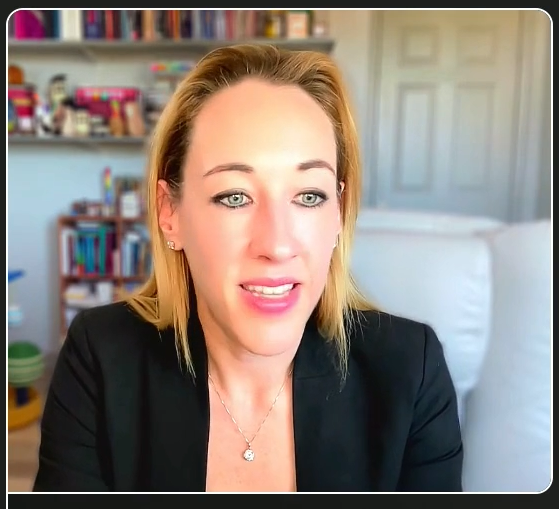




Dr Erika Hamilton serves as the Director of the Breast Cancer Research Program at Sarah Cannon Research Institute. In 2026, she took the role of Chief Development Officer, overseeing all late-phase oncology programs and driving engagement with industry partners to further SCRI’s Accelero strategy, a next-generation clinical trial delivery model designed by the Sarah Cannon Research Institute to revolutionize oncology drug development and expand patient access in community settings.




