Case Presentation: Pediatric Cervicomedullary Ganglioglioma With a BRAF V600E Mutation

Patient Case:
A 12-year-old female with no significant prior neurologic history presented with progressive respiratory difficulty and hypoxia. Her symptoms were initially attributed to community-acquired pneumonia, and she was treated with antibiotics. However, despite appropriate antimicrobial therapy, her respiratory compromise persisted, prompting further evaluation. Magnetic resonance imaging (MRI) of the brain and cervical spine revealed a mass centered at the cervicomedullary junction.
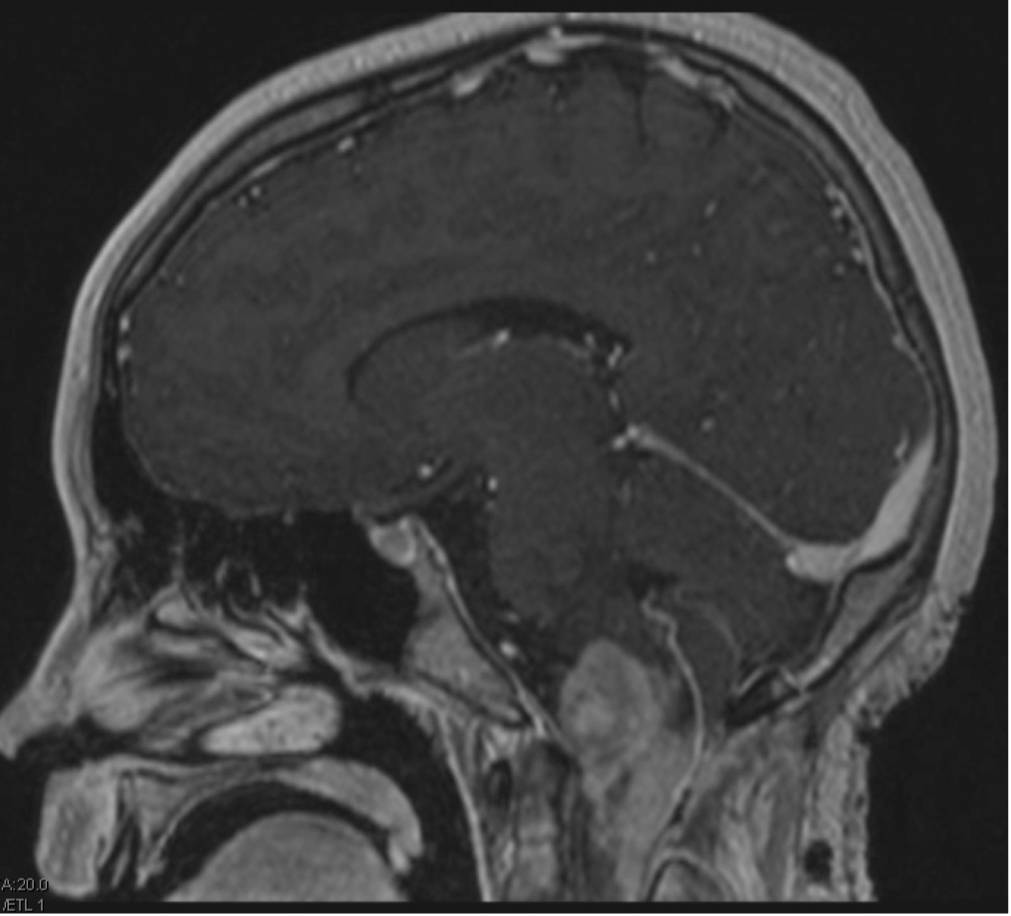
Given the tumor location and her worsening respiratory symptoms with concern for brainstem compression and progression of neurologic dysfunction. A stereotactic biopsy was performed.
Histopathologic evaluation revealed a low-grade glioneuronal neoplasm consistent with ganglioglioma. Initial immunohistochemical studies showed negativity for H3 K27M and IDH1 R132H mutations, with a low proliferative index (Ki-67, 1-3%). Second pathology review and molecular characterization confirmed a diagnosis of ganglioglioma, CNS WHO grade 1, with a BRAF p.V600E mutation. Additional immunohistochemistry demonstrated positive BRAF p.V600E protein expression in both ganglion and glial cell components, retained ATRX nuclear expression, retained H3.3 K27me3 expression, and NeuN positivity highlighting dysplastic ganglion cells.
Because of the tumor's critical cervicomedullary location, surgical resection is not feasible, and the patient was treated with focal radiation at the referring institution. She initially achieved clinical stability and remained admitted during her course of radiation due to concerns that her airway may become compromised secondary to the inflammation caused by radiation.
Surveillance imaging over the subsequent year demonstrated concern for progressive disease, therefore a BRAF inhibitor and MEK inhibitor were started. Early in treatment, medication doses were adjusted to improve tolerability. Her clinical course was complicated by treatment-related dermatologic toxicity with erythema nodosum that required temporary interruption of both targeted agents and a short course of prednisone. Subsequent imaging raised concern for disease progression, although interpretation was complicated by interruptions in therapy resulting from adverse effects.
At her most recent follow-up, she reported excellent overall functional status and remained adherent to her medications and her dermatologic issues are controlled on dapsone which will be continued indefinitely until completion of therapy.