










Ribociclib Shows Potential as Treatment Option for Patients With Glioblastoma
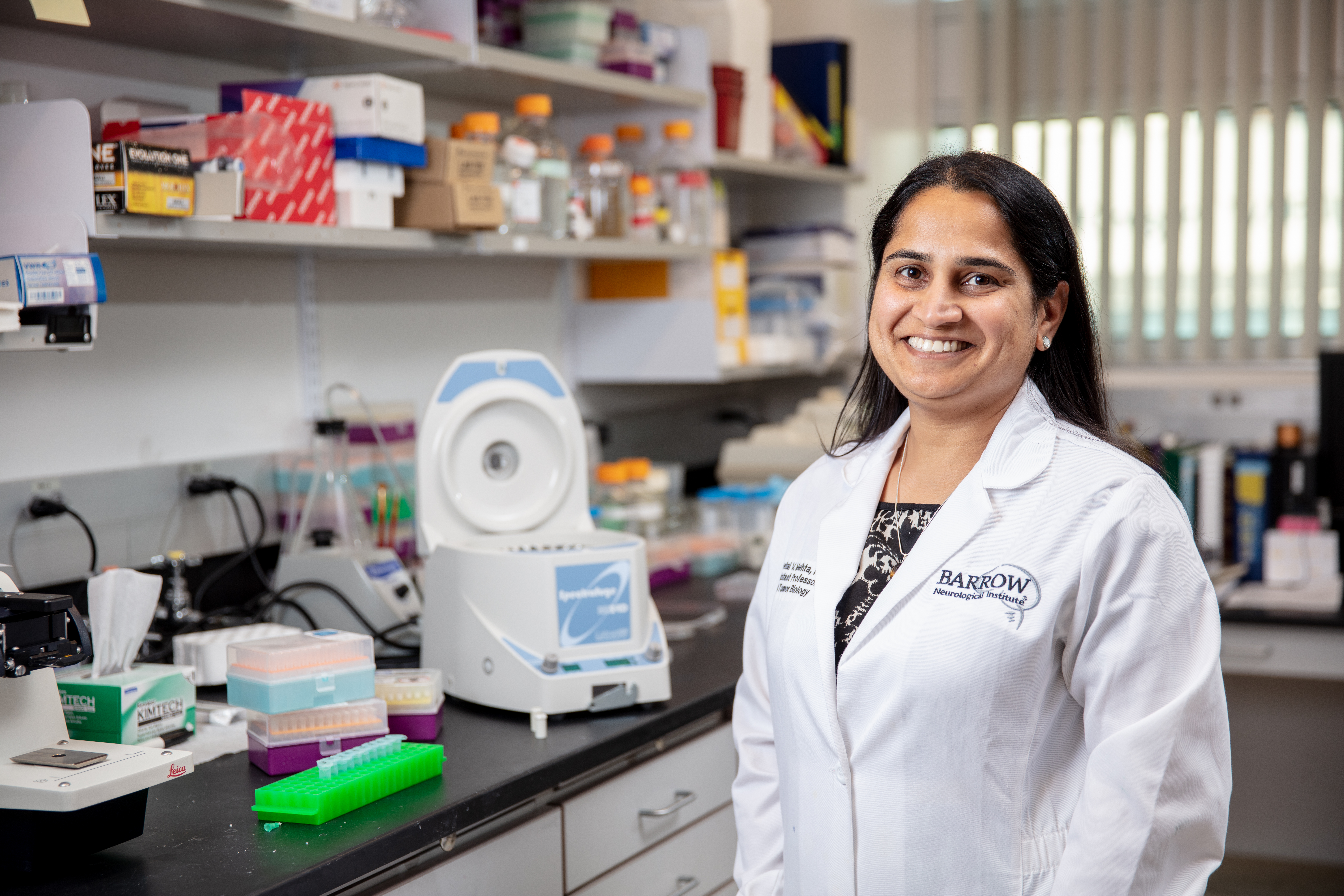
In an interview with Oncology Learning Network, Shwetal Mehta, PhD, Deputy Director, Ivy Brain Tumor Center, and Associate Professor, Barrow Neurological Institute, discussed the findings and clinical significance of a study evaluating the use of ribociclib, a highly selective CDK4/6 inhibitor, in patients with recurrent glioblastoma (Clin Cancer Res. 2019 Jul 8. Epub ahead of print).
What existing data led you and your co-investigators to conduct this research?
Ribociclib, a drug that was recently FDA-approved for breast cancer, is part of a new class of drugs that target cell division thereby suppressing cancer progression. We knew that the pathway targeted by ribociclib is frequently deregulated in glioblastoma and thus it was selected to form the backbone of a new drug cocktail for malignant glioma therapy.
Considering the fact that glioblastoma is such a complex cancer with multiple deregulated pathways we designed this study to identify the subtypes of glioblastoma that may respond to this drug and which resistance mechanisms were at play in the tumors treated with this new drug.
Please briefly describe your study and its findings. Were any of the outcomes particularly surprising?
One of the biggest challenges in treating brain tumors is the inability for drugs to cross the blood-brain barrier. At the Ivy Brain Tumor Center, our phase 0 clinical trials are designed to determine whether the drug can penetrate the brain at sufficient concentration and if it is able to inhibit its target.
Results from this trial show that ribociclib is not only able to reach the tumor tissue, but also within the surrounding brain area. We also show that the drug is able to effectively hit its molecular target in tumor cells. These findings were encouraging because very few cancer drugs are capable of penetrating the brain at concentrations sufficient to modulate their target.
What are the possible real-world applications of these findings in clinical practice?
We have identified a drug that not only gets through the blood-brain barrier at effective drug concentrations, but also hits its target in patients. Our findings open new avenues for utilizing ribociclib as a monotherapy or as a part of a drug cocktail for brain tumors.
Do you and your co-investigators intend to expand upon this research? If so, what are/will be your next steps?
Our experimental design uncovered a potential resistance mechanism in patient tumors treated with ribociclib. Based on these data, the Ivy Brain Tumor Center team has already designed a new combination clinical trial for recurrent glioblastoma patients. This trial is currently open and recruiting patients.
Is there anything else pertaining to your research and findings that you would like to add?
Glioblastoma is a very complex and heterogeneous cancer and our studies show that a single drug, even with good brain penetration is not sufficient to slow down cancer progression.
Future trials from the Ivy Brain Tumor Center will focus on combining multiple new FDA-approved drugs for glioblastoma patients.




