Unmet Need for Patients With CP-B HCC
This discussion explores the complexities of treating patients with hepatocellular carcinoma (HCC) and Child-Pugh B liver dysfunction, where limited clinical evidence often intersects with challenging real-world decision-making. Dr Ghassan Abou-Alfa reviews emerging data in this population and discusses how liver function, alongside tumor burden and other patient-specific factors, can influence treatment selection and outcomes. The conversation highlights the importance of individualized care and multidisciplinary collaboration when managing these patients.
Speaker:
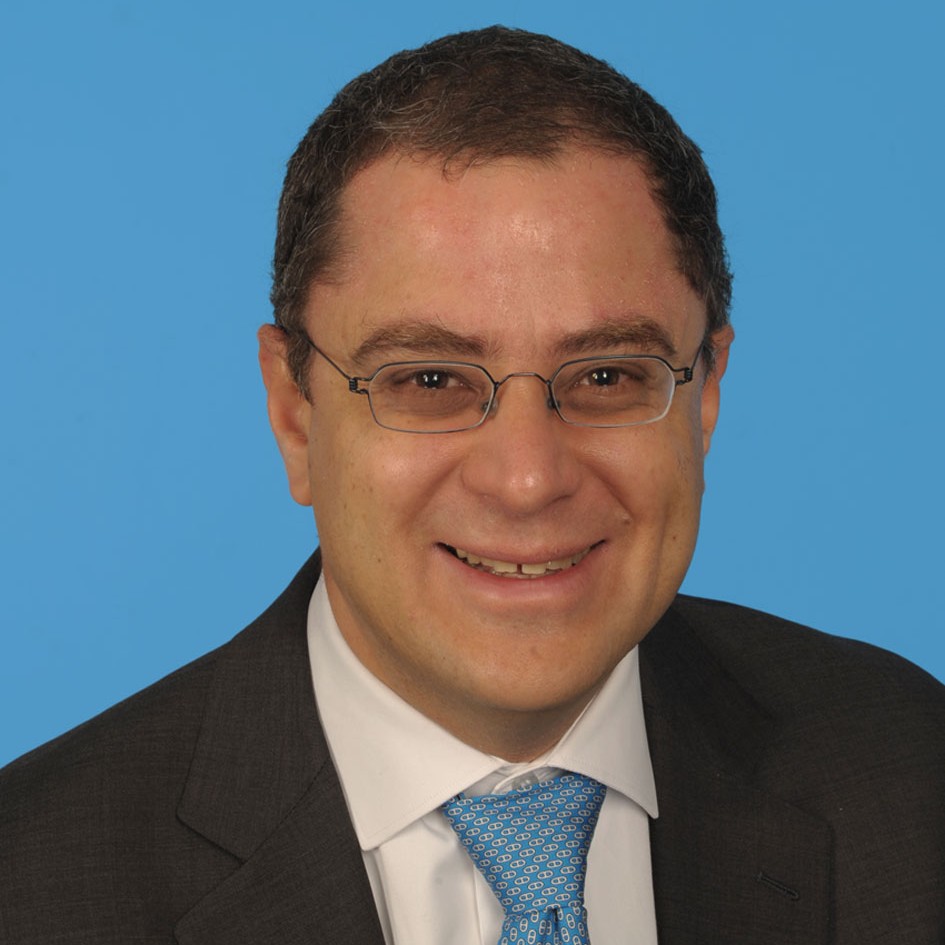
Ghassan Abou-Alfa, MD, is an attending physician at Memorial Sloan Kettering Cancer Center (MSK), professor of medicine at Weill Medical School at Cornell University, and adjunct professor of medicine and medical diplomacy at Trinity College Dublin in Dublin, Ireland. He specializes in the treatment of gastrointestinal malignancies and in particular, hepatocellular carcinoma (HCC), intrahepatic and extrahepatic cholangiocarcinoma (IHC), gallbladder cancer (GB), and fibrolamellar carcinoma (FLC). Dr Abou-Alfa is the immediate previous chair of the National Cancer Institute (NCI) Hepatobiliary Task Force and currently serves at the NCI AIDS Malignancy Consortium (AMC) as vice-chair for the Solid Tumor Working Group while also serving on its steering committee.
Dr Abou-Alfa’s research focuses on incorporating small biological molecules and checkpoint inhibitors into standard cancer therapies. In recent years, his group at MSK led the first efforts evaluating sorafenib in HCC, which was ultimately approved by the FDA for that indication in 2007. Dr Abou-Alfa also led his group at MSK on the efforts evaluating cabozantinib, which was approved by the FDA for HCC indication in 2019.
To explore how liver function, alongside tumor burden, influences prognosis, treatment considerations, and outcomes in HCC, see Video 1.
To learn how experts integrate liver function, comorbidities, disease characteristics, and patient goals into individualized treatment decision-making for Child-Pugh B HCC, see Video 3.
Transcript
Dr Abou-Alfa: Hello, everybody. This is Ghassan Abou-Alfa from Memorial Sloan Kettering Cancer Center. It's a delight to continue to talk about liver cancer and hepatocellular carcinoma. And specifically, our dear colleagues are always concerned about the patients with relatively poorer liver function. What we define or what we have used long way is Child-Pugh scoring. The Child-Pugh, just to remind you, is a reference point where most of the studies have been done with Child-Pugh A, but understandably, whenever the albumin might drop down a little bit, the bilirubin might go up a little bit, or the ascites might develop, of course, patient might move into Child-Pugh B. And the question is, can we look into the treatment of patients with liver cancer using the checkpoint inhibitors in Child-Pugh B?
The evidence is quite intriguing. If anything, we have data that already has been reported in regard to patients with Child-Pugh B. And we have seen that, yes, after all, it might be possible. And let me dissect that for you a little bit more in detail. To remind everybody, historically, the Child-Pugh B patients were excluded from most of the studies, if not all of the studies. And at the same time, as we evolved in our understanding and experience in regard to use of checkpoint inhibitors, we started getting more comfortable in regard to the use of immunotherapy in Child-Pugh B patients. Why is that? Experience definitely mattered. But more importantly, we did depend on some critical studies that came out. Some of them are reported and others still ongoing as we speak. As far as the current reported study, I think we can refer to the SIERRA study. The SIERRA study evaluated the well-known HIMALAYA regimen, or what's called the STRIDE regimen, looking into a single dose of tremelimumab plus durvalumab on a monthly basis. This has been looked into in patients with Child-Pugh B7 and B8, even up to ECOG 2, and including portal vein thrombosis. So far, it has been rather acceptable, showing that the drugs are well tolerated. It probably is the most key evidence source for use of checkpoint inhibitors in Child-Pugh B patients. Another study is still ongoing, and we're definitely looking forward to seeing the results, which could be very valuable, is the KIRROS study, looking into the combination of atezolizumab plus bevacizumab, again in the same population of Child-Pugh B7 and B8. We hope to expect the study's results by about the end of next year.
So what does this tell us? Number one is, please, we urge our colleagues not to really focus on or zero in with regard to Child-Pugh B as being a yes/no decision or understandably avoid treating patients with Child-Pugh B, but rather look into a more controlled evaluation of the patients by assessing the details of the Child-Pugh B scoring. And understandably, reassure yourself by the presence of the data that we're talking about that really permit us to treat the patient with Child-Pugh B with checkpoint inhibitors.
What could be missing? No doubt that further details—and remember, Child-Pugh B is a broad selection of patients, not just one or two—and no doubt that the survival outcome might differ in this population. But so far, we did not see this from the data that I just showed. And no doubt that, yes, some of us are going to worry, like, what if things worsen in Child-Pugh B patients? We don't have that read yet, but no doubt that we urge our colleagues to make sure that hepatology is involved in the care of the patients and really make it teamwork between hepatology and medical oncology to ensure that patients are appropriately taken care of with regard to managing ascites, hyperbilirubinemia, and encephalopathy.
Please do remember that Child-Pugh B is rather a relatively narrow window, and after the long, long line of Child-Pugh A being in steady state, Child-Pugh B is more like a curve. In other words, things can drop off and worsen as time goes. For that reason, one more time, really stress the critical necessity for ensuring that hepatology is involved in the care of the patients, as well as medical oncologists.
If I were to summarize, I would say that it's going to be a custom-based approach, but of course with open eyes on all our sides and making sure that we really look into patient perspectives. The three elements of Child-Pugh B that are mostly going to be important players are usually the albumin, bilirubin, and ascites. Please reassure yourself that as much as we're concerned about the use of TKIs (tyrosine kinase inhibitors) in Child-Pugh B, we don't have that much of a problem with checkpoint inhibitors, as we demonstrated in the SIERRA study, and hopefully the KIRROS study will come afterwards to prove the same thing as well.
I thank you very much for listening. Have a good day.
© 2026 HMP Global. All Rights Reserved.
Any views and opinions expressed are those of the author(s) and/or participants and do not necessarily reflect the views, policy, or position of Oncology Learning Network or HMP Global, their employees, and affiliates.
Related Content