Adjuvant Erlotinib Following Complete Resection of EGFR-Mutant Non-Small Cell Lung Cancer Improves Disease Free Survival But Not Overall Survival
Clinical Summary:
- Design/Population: The Alliance A081105 ALCHEMIST trial evaluated adjuvant erlotinib versus observation after complete resection in patients with stage IB-IIIA EGFR-mutant NSCLC. Originally designed as a placebo-controlled study with overall survival as the primary endpoint, the trial was converted to an open-label design because of poor accrual and ultimately closed early following FDA approval of adjuvant osimertinib.
- Key Outcomes: Among nearly 390 enrolled patients, adjuvant erlotinib did not improve overall survival compared with observation despite improving disease-free survival. The speaker noted that these findings were consistent with the superior efficacy and tolerability of osimertinib observed in metastatic EGFR-mutant NSCLC.
- Clinical Relevance: The study highlights how evolving standards of care can supersede ongoing clinical trials while emphasizing the enduring value of well-annotated clinical trial datasets.
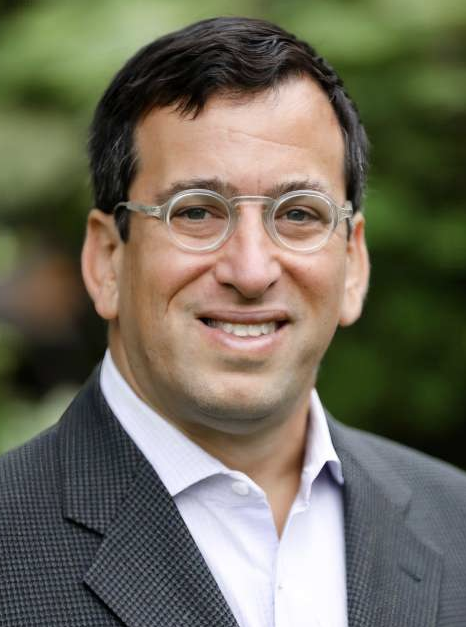
Ramaswamy Govindan, MD, Washington University School of Medicine in St. Louis, Missouri, discusses the final overall survival results from the Alliance A081105 ALCHEMIST trial evaluating adjuvant erlotinib after complete resection of stage IB-IIIA EGFR-mutant non-small cell lung cancer (NSCLC). Originally designed as a placebo-controlled study, the trial was later amended to an open-label comparison of erlotinib versus observation because of poor accrual and was ultimately closed after the FDA approval of adjuvant osimertinib.
Among nearly 390 enrolled patients, adjuvant erlotinib improved disease-free survival but did not improve the primary endpoint of overall survival. The speaker noted that these findings were not unexpected given the subsequently demonstrated superiority of osimertinib in EGFR-mutant NSCLC. Ongoing translational analyses using whole-genome, transcriptome, exome, and proteomic profiling aim to identify biomarkers that may predict benefit from EGFR tyrosine kinase inhibitors and help guide future personalized treatment strategies despite the evolving therapeutic landscape.
Dr Govindan presented these findings at the 2026 American Society of Clinical Oncology (ASCO) Annual Meeting in Chicago, Illinois.
Transcript:
At this ASCO Annual Meeting in Chicago, we presented the results of the ALCHEMIST trials. Actually, I should say 2 trials. One focused on the use of nivolumab in the treatment of patients with resected NSCLC. The second focused on the use of the EGFR inhibitor erlotinib following complete resection of stage IB to IIIA EGFR-mutant NSCLC. I’m going to focus on the EGFR study from the ALCHEMIST program.
This study was launched nearly 13 years ago when patients did not have the option of receiving an EGFR inhibitor in the postoperative setting. At that time, we did not have osimertinib even in advanced metastatic NSCLC. The study was designed to test whether postoperative erlotinib improved overall survival following complete resection in patients with stage IB to IIIA EGFR-mutant NSCLC.
As the study evolved, a few things happened. First, we realized that it was difficult to accrue patients because many did not want to receive placebo. Therefore, we converted the trial into an open-label study. The placebo arm was removed and replaced with an observation arm.
Then, in 2020, the results of the adjuvant osimertinib studies were presented. That resulted in suspension of the study, modification of the consent form, and eventually closure of the study when the FDA approved osimertinib in the adjuvant setting.
We had planned to accrue 450 patients, but we ultimately enrolled nearly 390 patients. We then followed these patients for the primary endpoint of overall survival. Because patients lived longer, it took longer to reach the overall survival endpoint, and we closed the study after all patients had completed 5 years of follow-up.
When we recently performed the final analysis, it turned out, rather disappointingly, that postoperative erlotinib did not improve overall survival in this patient population. It did improve disease-free survival, but the overall results were somewhat disappointing, although I would say they were not entirely unexpected.
We had already learned in metastatic EGFR-mutant NSCLC that patients did better with osimertinib than with erlotinib. Osimertinib is a better drug and is better tolerated, so these findings were not surprising.
An important point I would make is that this study presents us with several opportunities. We are conducting 2 important translational substudies from this clinical trial. First, we are evaluating genomic markers to determine whether there are subgroups of patients who benefit from EGFR-targeted therapies in this population. We are using state-of-the-art whole-genome, transcriptome, and exome analyses.
The second study, which is close behind, is using proteomics. We can now evaluate 10,000 to 20,000 proteomic markers to determine whether these markers can identify subgroups within the EGFR-mutant population who derive greater benefit from EGFR tyrosine kinase inhibitors, even though the treatment studied was erlotinib rather than osimertinib. Once we identify these markers, there will be opportunities to evaluate their role with other currently available agents.
The important message is that, as time evolves, the treatment landscape changes. Although the study design was appropriate when the trial began, it was ultimately overtaken by better therapies, which is good for patients. In addition, there are always opportunities to learn from these trials, particularly through translational research using novel biomarkers. The available technology has advanced dramatically compared with what was possible in 2012 or 2014. Hopefully, you will hear more about these findings once those translational studies are completed.
Thank you for listening.
Source:
Govindan R, Mandrekar SJ, Kozono DE, Chaft JE, Gerber DE, Sands J, et al. Adjuvant erlotinib versus observation after complete resection of EGFR-mutant NSCLC: Final overall survival results of Alliance A081105. Presented at the 2025 ASCO Annual Meeting; May 30–June 3, 2025; Chicago, Illinois. Abstract 8507.