Image
Review the role and relevance of isatuximab-irfc in the multiple myeloma landscape today.
To learn more, view the full series: Subcutaneous Solutions: The Evolving Landscape of Drug Administration in Multiple Myeloma Care.
Dr Beth Faiman: Hello, everyone. My name is Beth Faiman. I am from Cleveland Clinic in Ohio, and I am here to discuss Subcutaneous Solutions: The Evolving Landscape of Drug Administration in Myeloma Care. I'm happy to be here discussing isatuximab, chapter 4, “Isatuximab in the Multiple Myeloma Landscape,” with some colleagues of mine, Dr Sikander Ailawadhi from Mayo Clinic and Dr Joseph Mikhael. We've had a rich discussion on the previous chapter, so if you haven't tuned into those, please rewind and go to those. For right now, we're going to discuss just isatuximab and myeloma landscape. This was FDA-approved in March of 2020. Isatuximab, it's an anti-CD38 monoclonal antibody. This is now considered the standard of care treatment for multiple myeloma.
It used to be talking about other drugs as the backbone, oral drugs as the backbone of treatment, but I really think that anti-CD38 monoclonal antibodies and the newly diagnosed or relapsed space are really the backbone of treatment for newly diagnosed and relapsed patients with myeloma, and this panel can agree or disagree with me in just a moment. I just wanted to take a brief second to discuss how this drug works. CD38 is expressed on the cell surface of hematopoietic and tumor cells. This drug, isatuximab, inhibits CD38 enzymatic activity, and we think it does that by triggering cancer cell death through the antibody-dependent cell mediated toxicity, or ADCC, antibody-dependent cellular phagocytosis, or ADCP, and the complement dependent cytotoxicity. We also believe that it enhances immune cell function and activates natural killer cells. So, various mechanisms of action. What are some of the indications, Dr Mikhael, where you use this drug in your practice?
Dr Joseph Mikhael: Yeah, so I've been involved with this drug from its start. I had the privilege of actually leading the first inhuman study of isatuximab.
Dr Beth Faiman: When it was letters and numbers, right? I remember that.
Dr Joseph Mikhael: Correct. It was just letters and numbers back in the day. I was still at Mayo Clinic then, and it was a privilege to be a part of that. That ultimately led into the study that we did with pomalidomide and dexamethasone, which led to its first indication. So, it has 3 indications; isatuximab is 3 indications. The first is in combination with pomalidomide and dexamethasone. Patients must have had at least 2 prior therapies, not necessarily 2 prior lines, but 2 prior therapies. That includes lenalidomide and a proteasome inhibitor. Then, its second indication, which really had, I think, a tremendous impact by virtue of the IKMEA study, was in combination with carfilzomib and dexamethasone, patients with 1 to 3 prior lines.
Then most recently, just in the last year, we have seen isatuximab make its foray into frontline settings. It is now approved in combination with VRD, or bortezomib, lenalidomide, and dexamethasone, in patients who are not planning to go to autologous stem cell transplant based on the IMROZ study. So, we have it with pom-/dex-. We have it with carfilzomib and dex- in the relapse setting and the frontline setting in combination with VRD. I agree with you that it has now really become a centerpiece in the therapy that we provide our patients with myeloma.
Dr Beth Faiman: I like how you said a centerpiece like it's on a table, you have a buffet of options, and this is on the table is a centerpiece. I like that. I'm going to go to you, Dr Ailawadhi, in a minute. I just wanted you to maybe speak to the NCCN Guidelines® and what the recommendations are, just very briefly, because when we're giving drugs, it's often only reimbursed, at least in the United States, based on the indication and frontline relapse or whatever. Where do you see the NCCN Guidelines highlighting this medication, and where do you use it in your practice?
Dr Sikander Ailawadhi: I think, Beth, that is such an important question because when multiple myeloma is treated majority in the community oncology setting, it becomes extremely important for the practice to not only follow the evidence but also do it in a financially feasible kind of manner. So, having regimens included in the NCCN Guidelines and having the appropriate category of evidence behind them helps not only the physicians make the right choice, have the patients discuss the right appropriate options, but also get reimbursed for that treatment from the insurance. Now, isatuximab is actually a drug which has 3 category 1 NCCN indications. In the relapse/refractory setting, Dr Mikhael, so Joe mentioned very nicely the isa-/pom-/dex- and the isa-/carfilzomib/dex- regimens. Both of them are approved in the relapse/refractory setting and have category 1 level of evidence, which is the highest level of evidence that any regimen can have.
In the frontline setting, I would actually point out that this is the only 4-drug regimen that has category 1 recommendation by NCCN for patients who are not going to an autologous transplant and for patients who are basically below the age of 80 years who are not frail. So, again, category 1 evidence for relapse/refractory, 2 regimens, category 1 evidence, the only category 1 evidence for frontline quadruplet for patients who are not going to autologous stem cell transplant. And then, it does have a category 2B presence in NCCN Guidelines for isatuximab with carfilzomib/len-/dex- for frontline use as well.
Dr Beth Faiman: Absolutely. Thank you for that summary. I'd like to say that what resonated with me was highlighting that this is the only 4-drug regimen with isatuximab in frontline and transplant-ineligible patients, and it's a very effective regimen. We're seeing some deep responses as well. I think we discussed earlier on in prior chapters about the experience with the subcutaneous and the IV different comparators. We know that the American Society Clinical Oncology maybe, the data might be enhancing and expanding the patient experience and administration strategies. So, stay tuned for that. Dr Mikhael, any final words on this section before I close out?
Dr Joseph Mikhael: No, I mean, I think it's been summarized very well. I think what's critical here is that we are seeing a particularly prominent role of isatuximab now, even in clinical trials in the frontline setting, as we're learning about how quadruplets are helpful in transplant-eligible and ineligible patients. I do really believe as we are able to administer it even more conveniently through the OBI that we've been discussing, the on-body injector, I think we're going to see this drug play a greater role in frontline and relapse myeloma.
Dr Beth Faiman: As a centerpiece, got it. Well, thank you so much. Joining me, Dr Ailawadhi, Dr Joseph Mikhael, and thank you, the audience. I'd like to encourage all of you who are listening to this to tune into our chapter 5, which will be “Integrating the Evidence—The Role of On-Body Injectors in Evolving Multiple Myeloma Care.” Thank you.
Sikander Ailawadhi, MD
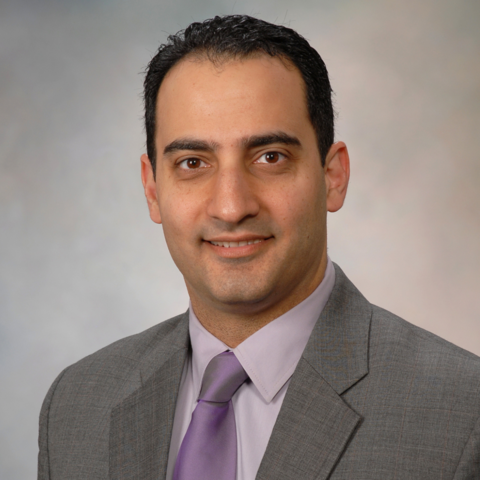
Dr Sikander Ailawadhi is a professor with the Division of Hematology-Oncology at Mayo Clinic in Jacksonville, Florida. His career focus has been on the treatment of plasma cell disorders with core research efforts in understanding the epidemiology and pathophysiology of these disorders and evaluating the benefit of various therapeutic strategies in different populations based on racial-ethnic and socioeconomic diversity. He has worked on the development of novel therapeutics by means of conducting several phase 1 through phase 3 clinical trials for novel drugs, including cellular therapy such as CAR T-cell treatment. Dr Ailawadhi also leads Mayo Clinic’s International Cancer Center and is focused on expanding and implementing the Mayo model of care and vision across the world.
Joseph Mikhael MD, MEd, FRCPC, FACP, FASCO
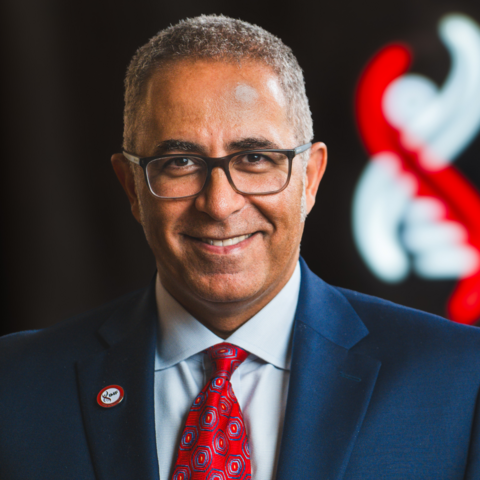
Dr Joseph Mikhael is a professor in the Clinical Genomics and Therapeutics Division at the Translational Genomics Research Institute (TGen), an affiliate of City of Hope Cancer Center. He is also the chief medical officer of the International Myeloma Foundation (IMF) and director of myeloma research at the HonorHealth Research Institute. He is the principal investigator of many clinical trials, primarily in relapsed multiple myeloma. Dr Mikhael also serves as the treasurer on the executive board of the American Society of Hematology. Dr Mikhael has published over 200 peer-reviewed articles and lectures internationally on a regular basis. He leads the IMF’s diversity efforts, namely the M-Power project in the African American community. He is also the chair of the Diversity, Equity, and Inclusion Council at TGen. Dr Mikhael is heavily involved in training future researchers, mentoring junior faculty, and finding ways to enhance access to novel agents worldwide.

Beth Faiman, PhD, MSN, APN-BC, BMTCN, AOCN, FAAN, FAPO
Dr Beth Faiman is an adult nurse practitioner in the Department of Hematology/Oncology at the Cleveland Clinic, a Case Comprehensive Cancer Center member under the Cancer Prevention, Control, and Population Research Program, and editor-in-chief of the Journal of the Advanced Practitioner in Oncology. She is also the editor of several books and author of numerous chapters and papers. In 2013, Dr Faiman was co-chair of the first Nursing Symposium at the International Myeloma Workshop and subsequent conferences. She has served on the American Board of Internal Medicine Maintenance of Certification Committee and as associate editor of the American Society of Hematology Clinical News. In 2023, Dr Faiman was given the NP/PA Educator of Distinction Award in Multiple Myeloma, and in 2022, she was named the Top NP in Hematology/Oncology and inducted as an inaugural Fellow of Advanced Practice in Oncology. Dr Faiman is a distinguished fellow in the American Academy of Nursing. She remains an active author, presenter, mentor, and educator on hematology, oncology, cellular therapies, and supportive cancer care.