Image
View an in-depth discussion on subcutaneous on-body injection vs traditional push subcutaneous administration during multiple myeloma treatment through the lens of the phase 2 IZALCO trials.
To learn more, view the full series: Subcutaneous Solutions: The Evolving Landscape of Drug Administration in Multiple Myeloma Care.
Dr Sikander Ailawadhi: Hello, everyone. I'm Sikander Ailawadhi from Mayo Clinic, and we'll continue our discussion on the series about on-body injectors, where the series title is Subcutaneous Solutions: The Evolving Landscape of Drug Administration in Multiple Myeloma Care. With me, I'm joined by Dr Beth Faiman and my other colleague, Dr Joe Mikhael. So, we are now continuing our discussion in chapter 3 of this series, where the title is, “Deep Dive—On-Body Injectors vs Traditional Subcutaneous Administration.” What we'll be discussing in this particular chapter is another clinical trial titled IZALCO.
Where IZALCO was a phase 2 randomized sequential open-label study which evaluated the efficacy and safety of isatuximab administered either via a manual push, which is the traditional subcutaneous way of administering a drug, or the on-body injector in combination with carfilzomib and dexamethasone in patients with relapsed/refractory disease who had received at least 1 to 3 prior lines of treatment. Again, this study is randomizing whether the patient gets the isatuximab with a traditional subcutaneous administration or the on-body injector, and the partner drugs of carfilzomib, dexamethasone are the same for everybody. With that study design in mind, maybe Joe, I'll start with you again. A very unusual sort of a design, but the purpose of the study is obviously not to say one is better than the other, et cetera. Just talk to me about what you got from the study design, and what were the efficacy endpoints that came out?
Dr Joseph Mikhael: Yeah, no, I actually really like the study design. I think it's quite innovative to have the same patients who received SUBQ then go on and receive the OBI. You could think at first, oh, wouldn't it be simple if you just had a group of patients get OBI and a group patient SUBQ? But then it's harder for people to speak about their personal experience and what they preferred over the other. To me, it was one thing when we evaluated in the past that people said, oh, I really liked getting an OBI. But here they're comparing an OBI to just the standard manual push subcutaneous. To me, that was really quite fascinating. From an efficacy standpoint, thankfully, there wasn't an expectation that the efficacy would be affected by this kind of administration. So, it met what was pre-specified. The response rate was about 80%, 79.7% to be precise, and with a follow-up of about 10 months. The VGPR rate was as expected in just under two-thirds of patients at 62% and the complete remission in about 22%. I think we can, from just a pure efficacy standpoint, be comfortable in saying this form of administration meets the efficacy metric that we would want, but I'm excited to hear Beth talk about the safety.
Dr Sikander Ailawadhi: Excellent, and then thanks for setting us up with that. So, Beth, as Joe pointed out, the drug worked; it showed the efficacy, the percentages, numbers, response rates, et cetera. But again, it's extremely important for us all to be discussing with our patients while we're suggesting a drug, and on top of that, a novel way of administering the drug. Is it safe? What are the signs?
Dr Beth Faiman: Yeah, balancing the efficacy and the safety is so important. We saw that the overall safety profile was similar to the IKEMA published data. So, the isatuximab and the IV carfilzomib dexamethasone. Interestingly, as you heard Dr Mikhael mention, the patients were randomized to get the traditional SUBQ with the needle administration versus the on-body injection. In that, only 2 patients, about 2.7%, that were treated with the traditional method, had an infusion-related reaction. None with the on-body device, which is interesting to me, and those are mostly local injections we saw.
When you're looking at the outcome data, I think Dr Mikhael already alluded to this—I'm going to hear what he has to say about the healthcare provider—but from the patient perspective, 74.5% of the patients prefer the on-body device, which I thought was really interesting to me because you're getting intravenous carfilzomib. So, if you already have an IV for the carfilzomib, you'd think, gosh, don't they want to prefer and ask for an IV? But it wasn't observed in the study. That wasn't an option. But they did prefer the on-body Injector, 17% only the manual injection, and 8%, 8.5% had no preference. I thought that was interesting to me that it was such a high percentage wanted the OBI. What do you think about this data, Dr Ailawadhi?
Dr Sikander Ailawadhi: I think that is amazing. And in fact, it's to be able to see that our patients really preferred, and it was a clear cut, hands down. There was not even a question there. The patients preferred the on-body injector so much was great. I think an important piece which I would come back to Joe, to you about is patient preference is there, but the way I think of this on-body injector is that this has an opportunity to change, to revolutionize the way our workflows are in our healthcare system. How do we actually deliver the drug? How do we treat patients in our setup? How is treatment operationalized? So, from that standpoint, this study also looked at the healthcare providers, the physician's preference, and their take on the device as well as the route of administration. What did you gather from that data?
Dr Joseph Mikhael: Yeah. Well, first of all, I thought it was great that a number of nurses responded. I think there were 16 nurses and 3 docs. I've learned, I listened to the nurses. I trust what they say. They very often are very much in sync with what the patients are thinking. But again, a little bit like Beth described from the patient experience, it almost overlapping numbers, 75.9% preferred the OBI method. And I suspect that's a combination of them recognizing the value to their patient, but also the notion that they themselves, as you've said, can see how this affects the healthcare system, that this can be done more conveniently. This can be done more rapidly. They don't have to be sitting there pushing a needle into a patient. They just adhere this simple little escargot, as some have described it, the little snail that just gets attached to the skin and it does its own work. I was impressed that over three-quarters of the providers preferred the OBI method, and then there's really no preference by 21%. So really, no one of the healthcare providers in any significant manner preferred it being given subcutaneously in the traditional method.
Dr Sikander Ailawadhi: Excellent. That's such a good summary of the data, and I can at least say that we had the privilege of participating in the IRAKLIA study. I was able to speak with a patient as well as a nurse who participated and used the device, and this is exactly what they said, well, this changed the whole workflow of the treatment unit. No longer did the nurse have to be sitting constantly with the patient pressing a drug or pushing a drug into their skin through the needle when they had the on-body injector. That made the patient feel different, feel better, feel more positive about overall this negative experience of having cancer or its treatment. So, I really appreciate you guys summarizing all this data for us. With that, I would like to also thank our audience who've been listening in to this discussion. And once again, thank my colleagues, Dr Faiman and Dr Mikhael, in this discussion. I would really encourage you to keep listening to the next chapter, which is the isatuximab in multiple myeloma landscape. Thank you.
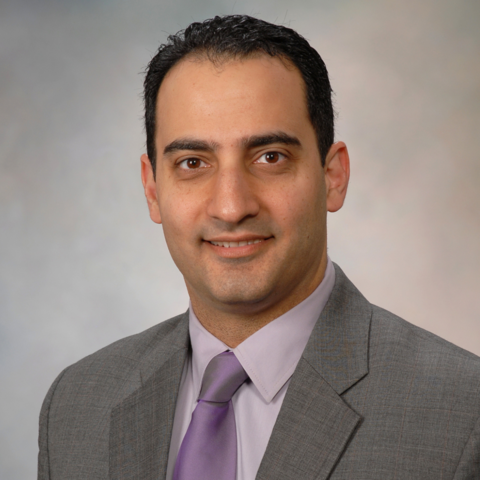
Sikander Ailawadhi, MD
Dr Sikander Ailawadhi is a professor with the Division of Hematology-Oncology at Mayo Clinic in Jacksonville, Florida. His career focus has been on the treatment of plasma cell disorders with core research efforts in understanding the epidemiology and pathophysiology of these disorders and evaluating the benefit of various therapeutic strategies in different populations based on racial-ethnic and socioeconomic diversity. He has worked on the development of novel therapeutics by means of conducting several phase 1 through phase 3 clinical trials for novel drugs, including cellular therapy such as CAR T-cell treatment. Dr Ailawadhi also leads Mayo Clinic’s International Cancer Center and is focused on expanding and implementing the Mayo model of care and vision across the world.
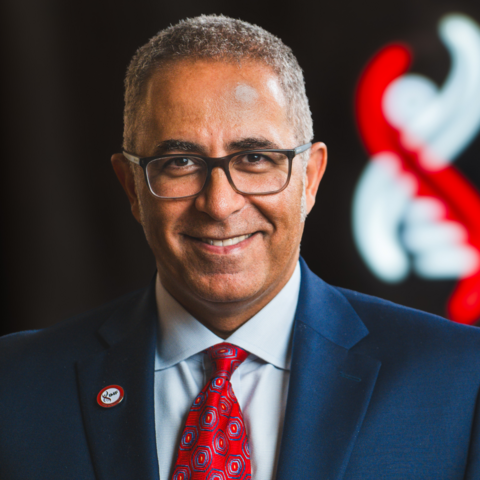
Joseph Mikhael MD, MEd, FRCPC, FACP, FASCO
Dr Joseph Mikhael is a professor in the Clinical Genomics and Therapeutics Division at the Translational Genomics Research Institute (TGen), an affiliate of City of Hope Cancer Center. He is also the chief medical officer of the International Myeloma Foundation (IMF) and director of myeloma research at the HonorHealth Research Institute. He is the principal investigator of many clinical trials, primarily in relapsed multiple myeloma. Dr Mikhael also serves as the treasurer on the executive board of the American Society of Hematology. Dr Mikhael has published over 200 peer-reviewed articles and lectures internationally on a regular basis. He leads the IMF’s diversity efforts, namely the M-Power project in the African American community. He is also the chair of the Diversity, Equity, and Inclusion Council at TGen. Dr Mikhael is heavily involved in training future researchers, mentoring junior faculty, and finding ways to enhance access to novel agents worldwide.
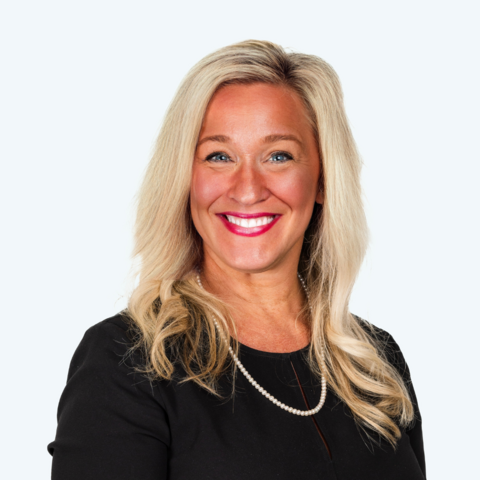
Beth Faiman, PhD, MSN, APN-BC, BMTCN, AOCN, FAAN, FAPO
Dr Beth Faiman is an adult nurse practitioner in the Department of Hematology/Oncology at the Cleveland Clinic, a Case Comprehensive Cancer Center member under the Cancer Prevention, Control, and Population Research Program, and editor-in-chief of the Journal of the Advanced Practitioner in Oncology. She is also the editor of several books and author of numerous chapters and papers. In 2013, Dr Faiman was co-chair of the first Nursing Symposium at the International Myeloma Workshop and subsequent conferences. She has served on the American Board of Internal Medicine Maintenance of Certification Committee and as associate editor of the American Society of Hematology Clinical News. In 2023, Dr Faiman was given the NP/PA Educator of Distinction Award in Multiple Myeloma, and in 2022, she was named the Top NP in Hematology/Oncology and inducted as an inaugural Fellow of Advanced Practice in Oncology. Dr Faiman is a distinguished fellow in the American Academy of Nursing. She remains an active author, presenter, mentor, and educator on hematology, oncology, cellular therapies, and supportive cancer care.