MRD-Guided Treatment Strategies Advance Personalized Care in Acute Lymphoblastic Leukemia
Clinical Summary:
- Design/Focus: Marlise Luskin, MD, examines the evolving role of measurable residual disease (MRD) assessment in acute lymphoblastic leukemia (ALL), including advances in detection methods, prognostic interpretation, and the integration of MRD results into treatment decisions.
- Key Takeaways: Next-generation sequencing improves MRD detection and risk assessment, while persistent MRD following initial treatment may warrant therapeutic intensification with blinatumomab, allogeneic stem cell transplantation, or emerging cellular therapies.
- Clinical Relevance: As novel immunotherapies move into earlier lines of treatment settings, MRD-guided strategies may help clinicians identify patients requiring treatment escalation while supporting individualized approaches that reduce unnecessary chemotherapy exposure and long-term toxicity.
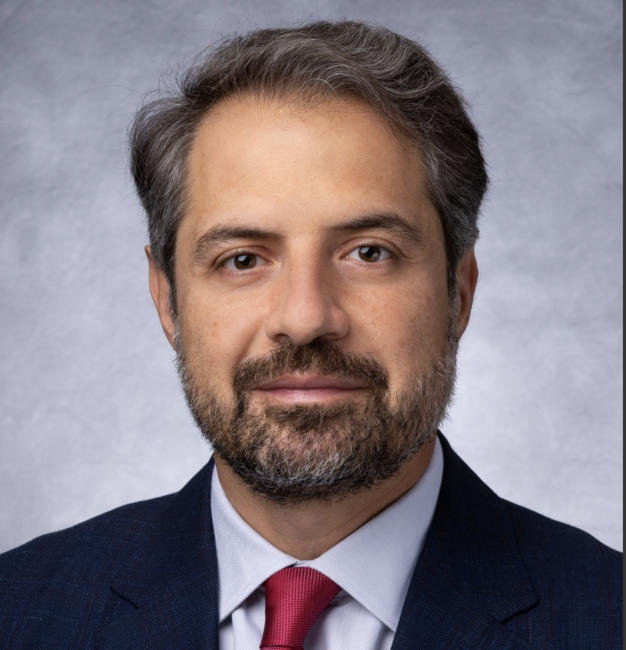
Marlise Luskin, MD, Dana-Farber Cancer Center, Boston, Massachusetts, discusses the evolving role of measurable residual disease (MRD) assessment in acute lymphoblastic leukemia (ALL) and its implications for treatment selection, risk stratification, and long-term disease control following her presentation at the Lymphoma, Leukemia, and Myeloma Congress in New York, New York.
Dr Luskin reviews advances in MRD is detection, including next-generation sequencing, and how MRD results guide treatment intensification with blinatumomab, stem cell transplantation, and cellular therapies. She also discusses the earlier integration of immunotherapy to prevent relapse, reduce chemotherapy exposure, and improve outcomes for patients with ALL.
Transcript:
Hi, my name is Marlise Luskin. I'm from the Dana-Farber Cancer Institute in Boston, Massachusetts. It's great to be at LL&M this year in New York City. I had the privilege of giving a talk about the role and the implications of measurable residual disease (MRD) in the treatment of patients with acute lymphoblastic leukemia (ALL).
MRD is really the central challenge in ALL. For most patients with ALL, we're able to get them into a morphologic or a complete remission with early treatment. Then our goal subsequently is to eradicate that measurable residual disease, any little bits of disease left, so that the patient doesn't relapse.
In my talk today, I talked about different ways to measure or detect measurable residual disease and then how to adjust treatment based on the detection or lack of detection of that residual disease.
I talk about different methods to measure measurable residual disease, including multiparameter flow cytometry, as well as newer methods, including next-generation sequencing (NGS) that targets the immunoglobulin heavy change (TCR) receptor. Flow-based MRD remains an important tool. It hasn't been completely replaced, but now NGS is available for many patients, about 80 to 90% of patients with ALL, and this tool allows us to more specifically and sensitively detect MRD and can allow more precise prognostication.
Additionally, I talk about how to interpret MRD results and I think it's important to understand both the patient's disease, what genetic subtype, the treatment context, what treatment they've received, and the time point, and using that information to understand the implication of the MRD and how to adjust treatment.
Broadly speaking, I talk about understanding that persistent MRD after initial therapy is a reason to adjust therapy, to employ a different therapy such as blinatumomab to eradicate the MRD, and in many cases to escalate treatment in terms of the consolidation approach – including in some patients, allogeneic stem cell transplant, and in other cases employing other novel and investigational approaches including cellular therapy.
Increasingly, we are integrating novel agents, immunotherapy, into early treatment phases and that is changing the patterns of MRD that we're detecting and requiring us to do more studies about how to interpret MRD results. It's an exciting time to have better tools and better therapies, and we're learning more every day, every month, every year, about how to use MRD to tailor treatment for patients so they get the right amount of therapy at the right time.
In terms of future directions, I think it's important that we continue to generate this information and to recognize that MRD is a recognition that there's some leukemia in the body and needs to be treated aggressively– we never want to wait till a patient relapses. We want to treat them before there's overt disease while they're healthy and while they can benefit from any available therapies.
I think what's really exciting is that we now have several novel immunotherapy-based agents approved including blinatumomab, inotuzumab, multiple CAR T-cell products. These are approved for relapse disease. Blinatumomab has approval for persistent or recurrent measurable residual disease, but we're studying about how to use these effective agents earlier in therapy so that we can get it right the first time, so the patient never has to experience relapse.
What we'd like to do is employ those novel agents more effectively early treatment, figure out where we can de-escalate more conventional chemotherapy, and then we have new drugs coming down the pipe that we're investigating and hopefully will be even more effective, less toxic, and maybe even more convenient.
We love to cure ALL patients more frequently with less toxic and shorter treatment programs. We are making a lot of progress but still work to be done. Certain subtypes of ALL certainly need special attention, including T-ALL and therapy-related ALL, KM22A-rearranged ALL.
We hope that our industry, pharma, and academic colleagues will continue to focus on this rare disease that can be very aggressive and is certainly important to make further treatment advances.