Nivolumab Plus Doxorubicin, Vinblastine, and Dacarbazine in Advanced Hodgkin Lymphoma
Clinical Summary:
- Design/Population: The phase 3 SWOG S1826 trial was a multinational, cooperative group study which randomized adolescent and adult patients with advanced Hodgkin lymphoma to receive either nivolumab or brentuximab vedotin plus plus doxorubicin, vinblastine, and dacarbazine.
- Key Outcomes: Nivolumab demonstrated superior progression-free survival, leading to early trial closure due to efficacy. The nivolumab regimen was also associated with lower toxicity, including reduced infection and neuropathy rates, and minimal immune-related adverse events.
- Clinical Relevance: Nivolumab plus AVD establishes a new frontline standard of care for advanced Hodgkin lymphoma.
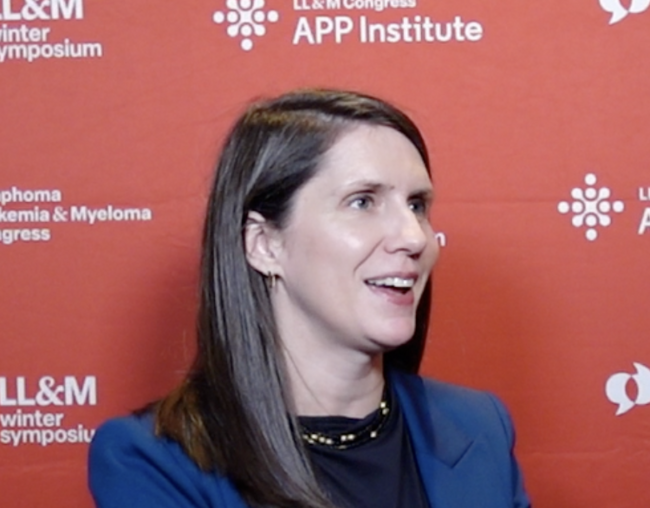
Jonathan Friedberg, MD, Wilmot Cancer Institute, Rochester, New York, discusses results from the phase 3 SWOG S1826 trial, which demonstrated that nivolumab plus doxorubicin, vinblastine, and dacarbazine (AVD) significantly improved efficacy and safety compared with brentuximab vedotin plus AVD among patients with advanced Hodgkin lymphoma.
Based on these results, the FDA approved nivolumab plus AVD for adult and pediatric patients 12 years of age and older, establishing a new frontline standard of care.
Transcript:
I'm Jonathan Friedberg, director of Wilmont Cancer Institute and chair of the SWOG Lymphoma Committee, and I'm pleased to discuss the S1826 clinical trial and its implications.
This was a clinical trial that was conducted throughout North America, including all of the adult National Cancer Institute-funded cooperative groups, the Canadian Clinical Trials Group, and the pediatric cooperative group in the United States. In this sense, it was a trailblazing trial in advanced stage Hodgkin lymphoma because it was the first time in recent memory that the pediatric group and the adult groups all worked together on a single clinical trial.
The background for this trial is we know that the outcomes with Hodgkin lymphoma are quite positive, but for advanced stage disease there are still some subsets of patients that don't do well, and with standard ABVD-based regimens we see approximately 80 to 85 percent of patients may be ultimately cured.
About a decade ago, we had the approval of brentuximab vedotin combined with AVD chemotherapy that not only improved progression-free survival but also improved overall survival compared to ABVD, so that did become a new standard of care. Issues with the brentuximab vedotin AVD combination continue to include the concept that close to 20% of patients may either not respond or experience disease progression, toxicity concerns, particularly around neuropathy that is a major problem with brentuximab vedotin. In the pediatric setting, brentuximab vedotin was also included in a more aggressive chemotherapy backbone, but one of the issues in the pediatric setting was that still the close to the majority of patients were receiving involved site radiation therapy as part of the treatment. Obviously, this has significant risk for late effects, particularly for the vulnerable children who are being treated who have at least 50 more years of life ahead of them.
With all of those concepts, we designed a study to try to harmonize the approach between the pediatric and adult populations and then also improve outcomes with still an eye on decreasing toxicities. The drug that we chose to study was nivolumab that I'm sure everybody is familiar with. It's a standard checkpoint inhibitor that's been used across many solid tumor types, the single agent response rate of nivolumab is highest in Hodgkin lymphoma compared to any other tumor type. We had preliminary data demonstrating safety and early efficacy when you combine nivolumab with AVD chemotherapy, and that led us to design the S1826 trial, which was a head-to-head comparison between brentuximab AVD versus nivolumab AVD for patients 12 and above with advanced stage Hodgkin lymphoma.
This study enrolled very quickly and in fact enrolled faster than we had planned. The study was universally accepted, I think, across all of the cooperative groups as a very compelling study, and patients also appreciated the opportunity to participate in this trial.
After a very short follow-up period, the data safety monitoring committee closed the trial after all patients were accrued because there was such a profound efficacy signal favoring the nivolumab AVD arm. We waited an additional year of follow-up in order for results to mature and then published the results in the New England Journal of Medicine, demonstrating a statistically and clinically significant difference favoring nivolumab AVD compared to brentuximab AVD as far as the primary end point, which was progression-free survival. We also demonstrated that the nivolumab AVD arm had less toxicity with decreased infection risk, decreased neuropathy risk, and although we were concerned about immune-related adverse events, the burden of those was very limited on this trial.
In addition, for the pediatric patients specifically, very few of those patients received radiation therapy, and if you take a look at the entire trial, less than 1% of patients received radiation therapy. Taken together, these results really have changed the care of patients with advanced stage Hodgkin lymphoma, and in March of this year the FDA approved nivolumab AVD as a frontline regimen for this situation.
Moving forward, this trial has also taught us quite a bit as far as correlative studies, and preliminary results of ctDNA assays suggest that they were highly predictive of outcome as far as clearance of ctDNA, as well as the rate of clearance of ctDNA predicting for ultimate remission and cure. This sets up the potential ability in the future to use ctDNA as a response-adapted approach where patients who have early clearance may be able to study deescalation of therapy and patients who have delayed clearance may be appropriate candidates for escalation of therapy. We fully anticipate that the harmonization between the pediatric groups and the adult groups will continue, and that's a very exciting advance of this study.
Globally, the German colleagues, who have traditionally used a different chemotherapy backbone, have recently published also very appealing results of a regimen called BRECAD treatment that is also very highly active in this situation, and we're in discussions around potential collaborations with them, hopefully ultimately to help harmonize the approach to Hodgkin lymphoma globally. Thank you very much for your attention, and for your interest in this exciting trial.
Source:
US Food and Drug Administration. FDA approves nivolumab with chemotherapy for previously untreated Hodgkin lymphoma. Accessed March 20, 2026. https://www.fda.gov/drugs/resources-information-approved-drugs/fda-approves-nivolumab-chemotherapy-previously-untreated-hodgkin-lymphoma
Herrera AF, LeBlanc M, Castellino SM, et al. Nivolumab+AVD in advanced-stage classic Hodgkin’s lymphoma. N Engl J Med. Published online October 16, 2024. doi:10.1056/nejmoa2405888