Zenocutuzumab Expands Targeted Treatment Options for NRG1 Fusion-Positive Cholangiocarcinoma
Clinical Summary:
- Zenocutuzumab recently received FDA approval for patients with previously treated, advanced NRG1 fusion-positive cholangiocarcinoma. Identification of eligible patients requires comprehensive molecular profiling, including RNA-based next-generation sequencing.
- Zenocutuzumab offers substantially greater efficacy than conventional second-line chemotherapy while maintaining a favorable tolerability profile. RNA-based sequencing improves detection of NRG1 fusions that may be missed with DNA-based testing alone.
- These findings reinforce the importance of incorporating both DNA- and RNA-based next-generation sequencing into routine molecular testing to identify patients who may benefit from newly available targeted therapies.
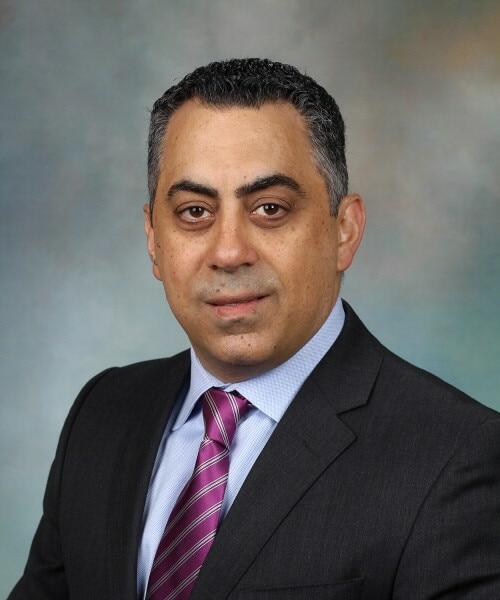
James Cleary, MD, PhD, Dana-Farber Cancer Institute, Boston, Massachusetts, discusses the recent FDA approval of zenocutuzumab for patients with NRG1 fusion–positive cholangiocarcinoma and the evoloving role of comprehensive molecular profiling in expanding targeted treatment options.
Dr Cleary explains why RNA-based next-generation sequencing is essential fro detecting NRG1 fusions, which are often not identified by DNA-based testing alone. He also reviews the clinical benefit of zenocutuzumab compared with conventional second-line chemotherapy and discusses how comprehensive genomic testing can improve access to precision therapies for paitents with cholangiocarcinoma.
Transcript:
Hi, my name is James Cleary, and I'm a medical oncologist at Dana-Farber Cancer Institute. I'm very excited to be talking to you today about a new development in cholangiocarcinoma.
Cholangiocarcinoma is a relatively rare cancer of the bile ducts. Over the last 10 years, there's really been a significant improvement in the treatment of patients with advanced cholangiocarcinoma because we're starting to see targeted therapy options for these patients.
The reason having targeted therapy options for our patients has been such a wonderful development for patients has been that when you have a patient with advanced cholangiocarcinoma, and they've been treated with first-line chemoimmunotherapy, we know that second-line chemotherapy really doesn't work as well as we'd like. But what we've seen with targeted therapy is that targeted therapies really can work much better than chemotherapy in the second-line setting. Examples of targeted therapies that we already have for cholangiocarcinoma include FGFR2 translocations, IDH1 mutations, HER2 amplification.
The issue in treating cholangiocarcinoma patients is that while we have some patients who have a targeted therapy option, many patients don't. We're still looking for more targeted therapy options with the goal being that every patient with cholangiocarcinoma will have a targeted therapy option.
In the last few months, the FDA approved a new targeted therapy for cholangiocarcinoma patients. This targeted therapy, zenocutuzumab, is for patients with NRG1 fusions. NRG1 fusions are interesting because unlike the other genetic alterations I mentioned before, FGFR2 translocations, IDH1 mutations, HER2 amplification, you really need to do RNA-based next-generation sequencing to find NRG1 fusions. The reason for this is that NRG1 is a very complicated gene with very big introns. DNA next-generation sequencing just doesn't perform that well.
One of the big messages we have are that in addition to having a new drug, zenocutuzumab for patients with NRG1 fusion cholangiocarcinoma, that you have to do RNA-based next-generation sequencing and that will help you find these NRG1 fusions. It'll also help you find other fusions because we've known for a long time that RNA-based next-generation sequencing is complimentary to DNA-based next-generation sequencing and it can help you find more fusions beyond NRG1.
In my practice for all cholangiocarcinoma patients, I'm sending off DNA-based next-generation sequencing and RNA-based next-generation sequencing to talk about this new drug. For patients with NRG1 fusion-positive cholangiocarcinoma, zenocutuzumab is extremely well tolerated, but importantly, its efficacy is far beyond what we'd expect to see with chemotherapy. It's really been a nice advance for patients because it's well tolerated, but it more than doubles the effectiveness of chemotherapy in the second line setting.
Really the punchlines are, we have a new drug for cholangiocarcinoma for patients with NRG1 fusion. NRG1 fusions are rare, but if you look and you find it, it's a great option for patients. But the only way you're going to find it is if you send off both DNA next-generation sequencing and importantly RNA next-generation sequencing.
Source:
Cleary JM, Springfeld C, Arnold D, et al. Efficacy and tolerability of zenocutuzumab in advanced NRG1 fusion–positive cholangiocarcinoma: Results from the eNRGy phase II trial. J Clin Oncol. Published online: July 1, 2026. doi:10.1200/JCO-25-03128