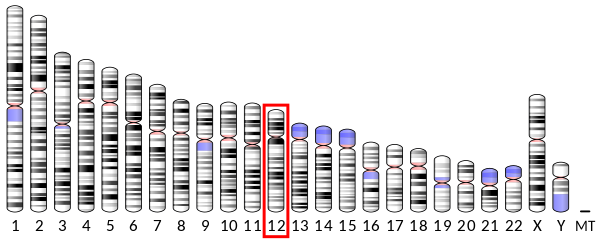
GPRC5D is expressed on CD138+ cells and a target for immunotherapy.1 It is also a promising marker for monitoring the tumor load and targeting multiple myeloma cells since it is highly expressed in these cells, but minimally expressed in other cancer cell types.3
GPRC5D Biological Pathways Reviews
GPRC5D
G protein-coupled receptor class C group 5 member D (GPRC5D) is a gene expressed in the hair follicle and malignant bone marrow plasma cells.1 G protein-coupled receptor proteins are cell surface receptors located in the plasma membrane. Activation of the protein occurs when it binds to an external signaling molecule, which causes a conformational change and triggers an interaction between the protein and an available G protein.2
Faith E. Davies, MD, provides an update on treatment options for patients with multiple myeloma in early relapse at the 2022 Lymphoma, Leukemia & Myeloma Congress in New York.
Faith E. Davies, MD, provides an update on treatment options for patients with multiple myeloma in early relapse at the 2022 Lymphoma, Leukemia & Myeloma Congress in New York.
Ajai Chari, MD, provides insight into the FDA approval of teclistamab for relapsed/refractory multiple myeloma and background on the data that led to this approval.
Ajai Chari, MD, provides insight into the FDA approval of teclistamab for relapsed/refractory multiple myeloma and background on the data that led to this approval.
Shaji K. Kumar, MD, discusses the PFS and OS benefit seen with daratumumab added to lenalidomide and dexamethasone vs lenalidomide and dexamethasone alone in transplant-ineligible patients with newly diagnosed multiple myeloma.
Shaji K. Kumar, MD, discusses the PFS and OS benefit seen with daratumumab added to lenalidomide and dexamethasone vs lenalidomide and dexamethasone alone in transplant-ineligible patients with newly diagnosed multiple myeloma.
At the 2022 ASH Annual Meeting and Exposition in New Orleans, LA, Ajai Chari, MD, discusses talquetamab efficacy and safety for patients with heavily pretreated relapsed/refractory multiple myeloma.
At the 2022 ASH Annual Meeting and Exposition in New Orleans, LA, Ajai Chari, MD, discusses talquetamab efficacy and safety for patients with heavily pretreated relapsed/refractory multiple myeloma.
Emese Zsiros, MD, PhD, discusses results from the phase 3 KEYNOTE-B96 trial, which demonstrated that pembrolizumab improves survival while maintaining quality of life in patients with platinum-resistant ovarian cancer.
Emese Zsiros, MD, PhD, discusses results from the phase 3 KEYNOTE-B96 trial, which demonstrated that pembrolizumab improves survival while maintaining quality of life in patients with platinum-resistant ovarian cancer.
The management of refractory metastatic colorectal cancer (mCRC) remains constrained by a biologically resistant, immune-excluded tumor microenvironment. In this peer-led debate, experts examine how tumor...
The management of refractory metastatic colorectal cancer (mCRC) remains constrained by a biologically resistant, immune-excluded tumor microenvironment. In this peer-led debate, experts examine how tumor...
Phase 1 results from the POLARIS trial demonstrate that GPRC5D-targeted CAR-T cell therapy (OriCAR-017) is a promising treatment modality for patients with relapsed/refractory multiple myeloma.
Phase 1 results from the POLARIS trial demonstrate that GPRC5D-targeted CAR-T cell therapy (OriCAR-017) is a promising treatment modality for patients with relapsed/refractory multiple myeloma.
GPRC5D-targeting CAR-T cell therapy demonstrated a promising clinical efficacy and manageable safety profile in patients with relapsed/refractory multiple myeloma.
GPRC5D-targeting CAR-T cell therapy demonstrated a promising clinical efficacy and manageable safety profile in patients with relapsed/refractory multiple myeloma.
Study findings show the novel GPRC5D-targeting T-cell redirecting bispecific antibody, talquetamab, demonstrates substantial activity against MM cell lines and primary MM cells.
Study findings show the novel GPRC5D-targeting T-cell redirecting bispecific antibody, talquetamab, demonstrates substantial activity against MM cell lines and primary MM cells.
Findings from the LocoMMotion study demonstrate there is no well-established standard of care treatment for patients with triple-class exposed relapsed/refractory MM.
Findings from the LocoMMotion study demonstrate there is no well-established standard of care treatment for patients with triple-class exposed relapsed/refractory MM.
A novel combination of isatuximab plus standard of care pomalidomide and dexamethasone resulted in improved OS for patients with R/R MM, according to the phase 3 ICARIA-MM trial.
A novel combination of isatuximab plus standard of care pomalidomide and dexamethasone resulted in improved OS for patients with R/R MM, according to the phase 3 ICARIA-MM trial.
Teclistamab showed robust safety data as a BCMA and CD3 bispecific antibody during the MajesTEC-1 trial to treat patients with heavily pretreated R/R MM.
Teclistamab showed robust safety data as a BCMA and CD3 bispecific antibody during the MajesTEC-1 trial to treat patients with heavily pretreated R/R MM.
Real-world data demonstrate that lorlatinib provides high response and durable disease control in advanced ALK-positive NSCLC, with exploratory lipid biomarkers potentially predicting response.
Real-world data demonstrate that lorlatinib provides high response and durable disease control in advanced ALK-positive NSCLC, with exploratory lipid biomarkers potentially predicting response.
Results from the phase 2 IMGN853-0420 study demonstrate that mirvetuximab soravtansine plus carboplatin shows clinical promise in FRα-expressing platinum-sensitive ovarian cancer.
Results from the phase 2 IMGN853-0420 study demonstrate that mirvetuximab soravtansine plus carboplatin shows clinical promise in FRα-expressing platinum-sensitive ovarian cancer.
Results from the phase 1 BEHOLD-1 study demonstrate that mocertatug rezetecan shows clinical promise among patients with platinum-resistant ovarian cancer and recurrent endometrial cancer.
Results from the phase 1 BEHOLD-1 study demonstrate that mocertatug rezetecan shows clinical promise among patients with platinum-resistant ovarian cancer and recurrent endometrial cancer.
Results from the SERENA-1 trial demonstrate that camizestrant plus capivasertib shows strong clinical promise in endocrine-resistant patients with ER-positive, HER2-negative advanced breast cancer.
Results from the SERENA-1 trial demonstrate that camizestrant plus capivasertib shows strong clinical promise in endocrine-resistant patients with ER-positive, HER2-negative advanced breast cancer.
In older patients with late-relapsing DLBCL, R-CHOP-like therapy retreatment produced meaningful response rates and survival outcomes, though many patients required less intensive therapies at relapse and outcomes remained influenced by...
In older patients with late-relapsing DLBCL, R-CHOP-like therapy retreatment produced meaningful response rates and survival outcomes, though many patients required less intensive therapies at relapse and outcomes remained influenced by...
Results from an ongoing, phase 1b/2 trial demonstrate that the addition of the PP2A inhibitor LB-100 to dostarlimab shows encouraging clinical efficacy with manageable safety among patients with platinum-resistant ovarian clear cell...
Results from an ongoing, phase 1b/2 trial demonstrate that the addition of the PP2A inhibitor LB-100 to dostarlimab shows encouraging clinical efficacy with manageable safety among patients with platinum-resistant ovarian clear cell...
Results from a prospective cohort study demonstrate that longitudinal ctDNA monitoring can potentially serve as a strong, real-time biomarker for response and recurrence in advanced, high-grade serous ovarian cancer.
Results from a prospective cohort study demonstrate that longitudinal ctDNA monitoring can potentially serve as a strong, real-time biomarker for response and recurrence in advanced, high-grade serous ovarian cancer.
Results from the phase 3 NRG-GY019 trial confirm that letrozole alone is inferior to chemotherapy followed by letrozole among patients with low-grade serous carcinomas.
Results from the phase 3 NRG-GY019 trial confirm that letrozole alone is inferior to chemotherapy followed by letrozole among patients with low-grade serous carcinomas.
Final overall survival results from the phase 3 ROSELLA trial demonstrate that the addition of relacorilant to nab-paclitaxel significantly improved survival compared with nab-paclitaxel alone in platinum-resistant ovarian cancer.
Final overall survival results from the phase 3 ROSELLA trial demonstrate that the addition of relacorilant to nab-paclitaxel significantly improved survival compared with nab-paclitaxel alone in platinum-resistant ovarian cancer.
Results from the phase 3 ATLAS trial demonstrate that carfilzomib plus lenalidomide and dexamethasone significantly improves PFS in newly diagnosed patients with multiple myeloma following autologous hematopoietic stem-cell transplantation.
Results from the phase 3 ATLAS trial demonstrate that carfilzomib plus lenalidomide and dexamethasone significantly improves PFS in newly diagnosed patients with multiple myeloma following autologous hematopoietic stem-cell transplantation.
True or False: The GPRC5D gene is typically expressed in hair follicles, but CD138-positive multiple myeloma cells have also been found to express GPRC5D.
True or False: The GPRC5D gene is typically expressed in hair follicles, but CD138-positive multiple myeloma cells have also been found to express GPRC5D.
According to Dr Faith E. Davies, MD, which of the following is NOT a principle behind selecting an optimal combination of therapeutic agents for patients with multiple myeloma in the early relapse stage?
According to Dr Faith E. Davies, MD, which of the following is NOT a principle behind selecting an optimal combination of therapeutic agents for patients with multiple myeloma in the early relapse stage?
In patients with extensive-stage small cell lung cancer receiving chemoimmunotherapy, which thoracic radiotherapy strategy was associated with improved survival outcomes?
In patients with extensive-stage small cell lung cancer receiving chemoimmunotherapy, which thoracic radiotherapy strategy was associated with improved survival outcomes?
True or False: Results from the STELLAR-303 trial demonstrate that zanzalintinib plus atezolizumab does not significantly improve overall survival compared with regorafenib in patients with relapsed/refractory metastatic colorectal cancer...
True or False: Results from the STELLAR-303 trial demonstrate that zanzalintinib plus atezolizumab does not significantly improve overall survival compared with regorafenib in patients with relapsed/refractory metastatic colorectal cancer...
Did auceliciclib demonstrate acceptable tolerability and preliminary signs of clinical activity in patients with advanced solid tumors and recurrent/relapsed high-grade glioma?
Did auceliciclib demonstrate acceptable tolerability and preliminary signs of clinical activity in patients with advanced solid tumors and recurrent/relapsed high-grade glioma?
Test your knowledge of the clinical benefit of tucatinib plus trastuzumab therapy in patients with chemotherapy-refractory, HER2-positive, RAS wild-type metastatic colorectal cancer.
Test your knowledge of the clinical benefit of tucatinib plus trastuzumab therapy in patients with chemotherapy-refractory, HER2-positive, RAS wild-type metastatic colorectal cancer.
Test your knowledge of how serum LDH and α-HBDH levels following first-line chemoimmunotherapy may influence survival outcomes in extensive-stage small cell lung cancer (ES-SCLC).
Test your knowledge of how serum LDH and α-HBDH levels following first-line chemoimmunotherapy may influence survival outcomes in extensive-stage small cell lung cancer (ES-SCLC).
Test your knowledge on safusidenib erbumine, a selective mutant IDH1 inhibitor, patients with newly diagnosed, chemotherapy- and radiotherapy-naïve grade 2 IDH1-mutated gliomas.
Test your knowledge on safusidenib erbumine, a selective mutant IDH1 inhibitor, patients with newly diagnosed, chemotherapy- and radiotherapy-naïve grade 2 IDH1-mutated gliomas.
Test your knowledge on the response rates and survival outcomes of chidamide, azacitidine, cytarabine, aclarubicin, G-CSF (CACAG), and venetoclax therapy for patients with R/R acute myeloid leukemia.
Test your knowledge on the response rates and survival outcomes of chidamide, azacitidine, cytarabine, aclarubicin, G-CSF (CACAG), and venetoclax therapy for patients with R/R acute myeloid leukemia.
Test your knowledge of results from the phase 3 TROG 05.01 trial evaluating postoperative radiotherapy with or without concurrent chemotherapy in high-risk cutaneous squamous cell carcinoma of the head and neck.
Test your knowledge of results from the phase 3 TROG 05.01 trial evaluating postoperative radiotherapy with or without concurrent chemotherapy in high-risk cutaneous squamous cell carcinoma of the head and neck.