Continuous vs Fixed-Duration Therapy in Chronic Lymphocytic Leukemia
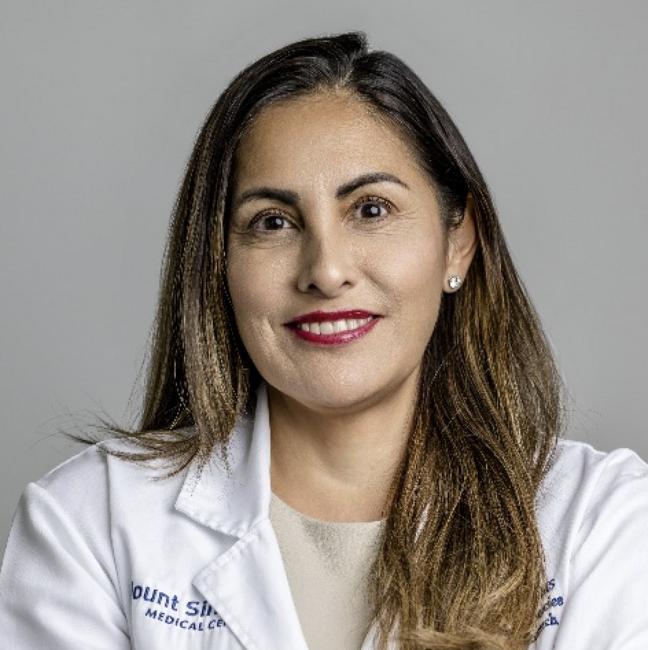
At the 2026 LL&M Winter Symposium in Amelia Island, Florida, Neil Kay, MD, Mayo Clinic, Rochester, Minnesota, discusses the evolving debate between continuous versus fixed-duration therapy for patients with chronic lymphocytic leukemia (CLL).
Dr Kay uses clinical trial data to support both approaches, including recent studies suggesting fixed-duration regimens may achieve comparable outcomes to continuous therapy.
Transcript:
Hello, my name is Neil Kay, I’m a hematologist at Mayo Clinic in Rochester, Minnesota. My focus is primarily on the treatment, management, and investigation of patients with chronic lymphocytic leukemia. I’m pleased to be able to speak at the [LL&M Winter] meeting in Amelia Island, and my topic was continuous versus fixed-duration therapy.
To do that, I first presented why we're still looking at both types of therapy, what are the underlying biologic rationale for choosing continuous versus fixed-duration. I then reviewed the evidence that supports the application of continuous therapy for our patients, which revolve around many trials which have been around for a while and have been reported many times, and have given us a lot of important progression-free survival, overall response, and duration of response information. The RESONATE-2 trial which was chlorambucil tested versus ibrutinib, that's been around for quite a while and has really given us a very valuable multi-year evidence for high levels of response, which has been quite durable.
That was the first part of my talk, the second part of my talk was fixed-duration and there we reviewed the recent fixed-duration approaches that have been tested in trials [including] CAPTIVATE and FLAIR. These trials have been recently reported, both at ASH and in Blood, and have been 12 months for CAPTIVATE, for FLAIR it's anywhere from 2 to 6 months because it's MRD-guided. In those cases, there has been convincing evidence that the use of BCL-2 inhibitor plus a BTKi can be very effective in most patients before they get through those 12 months or greater approaches.
The other highlight that I would make for this talk was that I did review the ASH abstracts, which have looked at other combinations in fixed-duration that included sonrotoclax plus xanabrutinib, which are 2 different BTKi and BCL2 inhibitors. There's also been a recent report of triplets with those drugs plus an anti-CD20 and they do look promising. In addition, I did review the recent data for non-covalent inhibitor perturbrutinib which has been used in triplet and looks promising.
Finally, I would mention that perhaps the most important ASH presentation in terms of the debate between continuous and fixed-duration was the CLS17 trial, which was presented by Dr Osman at the plenary session. In that case, he presented 3 year data that showed that a fixed-duration approach was non-inferior to a continuous approach– that's very important information and that's beginning to perhaps address the critical question, should I choose continuous or fixed-duration but, there's more to come there and that data was still relatively early in that trial.
Source:
Kay N. Continuous versus fixed duration therapy including lessons from 2025 data. Presented at LL&M Winter Symposium; January 30-February 1, 2026. Amelia Island, Florida.