Advantages of Subcutaneous Immunotherapy for Patients
Experts and a patient discuss the practical advantages of subcutaneous immunotherapy for genitourinary cancers, including reduced chair time, less discomfort, and the resulting impact on patient quality of life and treatment burden.
Transcript
Jeff Yorio, MD: All right, welcome back everybody. Thank you again for joining us for our series focusing on subcutaneous immunotherapy for genital urinary cancers. We're going to move into our third section, which is advantages of subcutaneous immunotherapy for patients. My name's Dr Jeff Yorio. I'm a medical oncologist at Texas Oncology in Austin. I help serve as the Central Texas site research lead for Texas Oncology and also serve as a executive member of the GU Cancer Research Team at Sarah Cannon Research Institute. With me today, I have Pablo.
Pablo Saenz, PharmD: Hi there. My name is Pablo Saenz. I am a pharmacist and I am a pharmacy manager at one of our Texas Oncology in the Austin area.
Yorio: Next we have Meagan.
Meagan Farnie, BSN, RN: Hi, I'm Meagan Farnie. I'm a nurse here at Texas Oncology in Austin and currently serving as the infusion supervisor.
Yorio: All right, great. Then we have Dean joining us as well.
Dean Tuel: Dean Tuel. I'm a patient of Yorio.
Yorio: All right. Thank you everybody for joining us. Great view of perspectives as we look at this type of treatment. I think we've gone over in our previous chapters the use of immunotherapy in GU cancers, the availability of some of the subcutaneous forms that are now available as well. Let's focus on subcutaneous treatment itself.
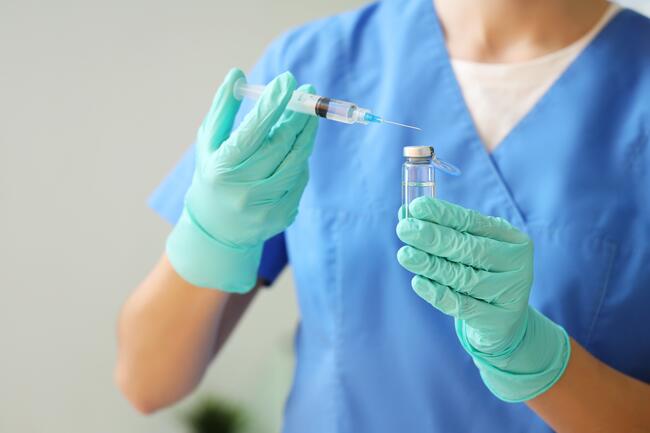
I think Dean touched on this a lot in the last section, but maybe one of the biggest advantages is looking at shorter time being in clinic, shorter time in the chair. IV nivolumab, even as a single agent, takes about 30 minutes. There's also the time of getting a peripheral IV in place or a port access, whereas subcutaneous nivolumab is typically administrated into the abdomen or thigh over 3 to 5 minutes. Similarly, pembrolizumab, kind of a similar type of situation where the IV formulation's going to take about 30-plus minutes, and the subcutaneous form, 1 to 2 minutes.
Why does the time in the chair matter? I know we've covered some of this before, but maybe I'll start with Dean because he's the one who has to experience that from his end. Why does that matter?
Tuel: For me, the longer you're there, there's just being reminded that you normally have this disease or had this disease. The longer you're there, the more the reminder. So, it just creates somewhat of a mental cloud over it. I think just knowing that you're going to be there less time helps lighten the load of whatever burden people carry when they're going there for treatment.
Yorio: What do you think, Meagan? You see folks coming in and have to sit in our infusion chairs all day long or for several hours and have to come back frequently. What are your thoughts as you think about chair time?
Farnie: Yeah. Again, one of the biggest questions we have when patients are starting therapy is how long am I going to be here and how long is the infusion? A lot of times they'll ask that every time, and I'm like, "It's the same as the last time. It's going to be about this long." I think it's a big deal for patients. I mean, it would be a big deal for me to have to be somewhere for a certain amount of time with having children or even the caregiver. Some of our patients are not able to drive themselves for other reasons, and having to coordinate transportation, and then having to coordinate transportation home if that person can't stay with them. Childcare. There's a bunch of different reasons why it's hard for people to come and sit here all day long. Especially once you get to this stage where you're just able to come in for a quick infusion to help sustain your life, it's like, "I'm going to do whatever I have to do, but I'd like to not be here all day."
I've heard so many times, too, patients will be like, "I love you guys, but I'm glad I don't have to sit here all day with you. Y'all are fun, but I'm ready to go." I just think it's back to the whole quality of life thing. You want to be able to take a medication that's going to help and sustain your life, but then also have the quality of life aspect of that too and be able to be home with your family. A lot of our patients continue to work and that's hard to do, hard to take off work for hours on end for an infusion. So, the shorter treatment that we can find for these patients that have the same efficacy is definitely an improvement with cancer treatment in general.
Tuel: If I could just add onto that, it just reminded me that in the scenario prior to me getting the shot, you're trying to get a family or friend to be there with you. Well, when it takes this amount of time, it's harder to get those people to be available the whole time. Now you're opening up a window for other people to participate and help you along the road by making it more available.
Yeah, it just kind of amplifies the whole experience by making it less painful, less time, makes it even more available for other people to help you. A lot of those people, they want to participate, they want to be available to help you. So now you're giving them opportunity to be able to do that.
Yorio: Has anyone noticed, I think the one other thing people maybe have concerns with subcutaneous injections are just potential reactions at that site and maybe swelling around that site, that type of thing. Has anybody noticed that to be an issue so far, heard patient complaints or anything like that?
Farnie: I personally haven't seen that with pembro or nivolumab, but I will say that back to the whole education aspect of that, a lot of patients, especially again, once they get to this stage in their treatment, they're expecting an IV. They know what to expect when they get an IV infusion. They know what to look for. Being that it's a different route of administration, a lot of times, like we talked about before, they're expecting it to be maybe not as, maybe their symptoms will go away or whatever the case may be with that.
I think just educating our patients on, while this is the same drug, and it's going to work the same, and it's going to give you time back, there's an additional aspect to watching the injection site. You might have some redness, you might have some swelling or itching at the site. If that happens, let your nurse know, let your doctor know. So, just educating the patients with every step is major in all of the cancer treatments across the board.
Saenz: Yeah, and looking even to other medications that have had similar transitions, we haven't necessarily seen a great increase in new adverse events or a significant change from that proponent.
I think another offshoot of another area that benefits with really everything that's being considered is shorter time means also more patients that we can treat and that we can schedule. To Dean's point, it gives us more flexibility to say, "Well, we have these appointments available now for patients." So, it gives them more flexibility because we are able to accommodate maybe a wider scope of times versus before where we have to block off a set amount of time that it not only limits one patient, but it limits everyone else.
In hearing Dean's comments and both of your comments, it also reminds me that the cog itself in the wheel, how every consequence is also there's a benefit on the other end as well for another patient.
Farnie: Good point.
Yorio: No, excellent point.
Tuel: You had mentioned something about whether or not there was any side effects or anything from that area when you get the shot. Now, I personally don't have any except for one. I think 2 of the times that I've had the shot, they take and put a circular Band-Aid over the spot that was injected. What ends up happening is because the whole event had such a minimal impact in terms of feeling it, that I end up waking up the next day and I'm touching myself, "Oh, what the hell is that?" So, I actually feel like I've got this rough spot on my skin and I'm like, "Oh, it's just a Band-Aid." It's just all you think.
Farnie: Well, if that's the worst thing that's happening, I think we're doing pretty good.
Yorio: That's great. Okay. Well, let's plan to close this chapter and we'll move on to the next. Again, this was our looking at advantages of subcutaneous immunotherapy for patients. Please join us for our next section and last section, which will be how to implement subcutaneous immunotherapy for providers.
© 2026 HMP Global. All Rights Reserved.
Any views and opinions expressed are those of the author(s) and/or participants and do not necessarily reflect the views, policy, or position of Oncology Learning Network or HMP Global, their employees, and affiliates.
Related Content