Cevostamab Consolidation After BCMA CAR T-Cell Therapy for Patients With R/R Multiple Myeloma: "STEM" Trial
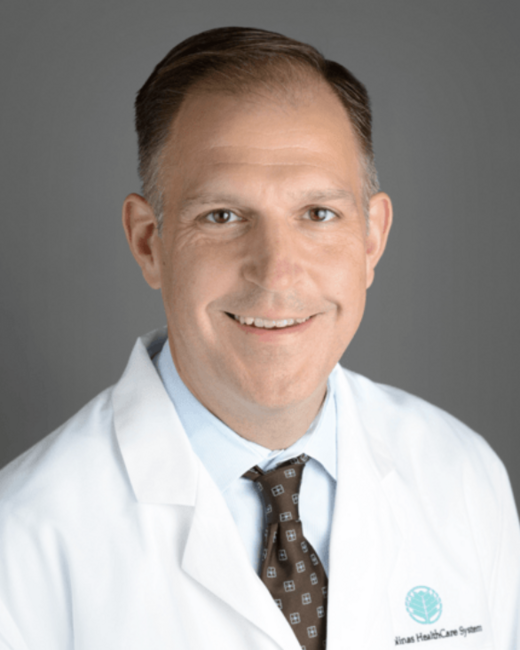
At the ASH 2025 Annual Meeting & Exposition, Adam Cohen, MD, University of Pennsylvania, Philadelphia, Pennsylvania, shares data from the “STEM” (Sequential T Cell-Engagement for Myeloma) phase 2 trial on cevostamab (cevo), an FcRH5-targeted, T-cell-engaging bispecific antibody, consolidation following BCMA CAR T-cell therapy.
“We hypothesized that fixed-duration cevo following BCMA-targeted CAR T cells would be feasible, tolerable and improve sustained minimal residual disease (MRD)-negative complete response (CR) rates, potentially leading to more durable responses,” Cohen and coauthors wrote. The preliminary efficacy appears promising, while analyses and follow-up are ongoing.
Transcript:
Hi, my name's Adam Cohen. I'm a myeloma physician from the University of Pennsylvania. I'm here at the ASH 2025 Annual Meeting, and I'm going to tell you about our abstract describing our phase 2 study of cevostamab consolidation following BCMA CAR T-cell therapy for multiple myeloma, what we call the "STEM" trial, which stands for sequential T-cell engagement for myeloma.
The background here is that while we know that BCMA CAR T-cells can really have excellent outcomes in relapsed/refractory myeloma, the vast majority of patients unfortunately relapse and particularly certain high-risk groups of patients, high-risk cytogenetics, extramedullary disease, still have suboptimal outcomes. We designed this trial with the idea of, what if we came in after the BCMA CAR T-cells with a bispecific antibody that hits a different target on the myeloma cell.
Cevostamab is a bispecific antibody that has activity in relapsed/refractory myeloma, but it hits a different target called FcRH5, whose expression is independent of BCMA, so that even if the myeloma cells have lost or downregulated BCMA, the bispecific antibody may be able to redirect those T-cells to attack the residual cells and perhaps that would lead to better outcomes.
We designed this phase 2 study. It's a single institution, investigator-initiated trial. Patients are getting commercial BCMA CAR T-cells, either ide-cel or cilta-cel. Then about 10 to 12 weeks after the CAR T-cells go in, as long as they have stable disease or better, and they've recovered from their acute toxicities, they start getting cevostamab, which is an IV infusion given once every 3 weeks. There is a single step up dose given on day 1, and then the full dose starts on day 8 and then continues every 3 weeks thereafter. They get 8 cycles of therapy, and if they're in an MRD-negative complete response, they stop. If they're not, they get an additional 8 cycles of therapy. It's anywhere from 6 to 12 months of additional consolidation with the cevostamab. The primary endpoint of the study is MRD-negative complete response rate at 1 year after CAR T-cells because that's really been associated with prolonged progression-free survival. This was a preliminary analysis that we've conducted, so the study is still ongoing though we've completed accrual. We've enrolled 27 patients. They were highly previously treated with median of four prior lines of therapy, 75% triple class refractory, 10% had had a prior BCMA therapy and majority had high-risk cytogenetics.
The main takeaway so far that giving cevostamab in this manner, post CAR T-cell, seems feasible. The median number of cycles completed was 8, which was the planned amount after the CAR T-cells. The main toxicities have been hematologic, so about 45% with grade 3 or higher neutropenia, about a quarter of patients with grade 3 or 4 thrombocytopenia. We have seen low grade allergic type reactions, rash, cough, nasal congestion in about 40 to 50% of patients infections were seen in about half the patients, but only 15% grade 3, 4. Cytokine release syndrome importantly was only seen in 15% of patients all grade 1 or grade 2.
Overall, this seems to be a feasible consolidation regimen with relatively good safety. We have seen some unusual immune related events including case of enterocolitis, autoimmune hepatitis, and 2 cases of ITP, all of which were reversible with supportive care, short courses of steroids.
Getting to the efficacy data, 63% of patients were already incomplete response when they entered the trial post-CAR, that number went up to over 80% after 8 cycles. In the patients who are evaluable at the one year mark, so far, it's over 93% of patients in complete response. The 1 year MRD-negative CR rate is 93%. That's the primary endpoint of the study.
That looks very good so far. It's obviously early days. We need to complete the study and get a sense of the durability of these responses, but so far, only 1 patient had progressed at that time point. This is something that we're really excited about. We'll finish up this study and then based on those data, decide if we'd like to continue to explore this in a larger randomized study.
Source:
Cohen M, Susanibar-Adaniya S, Garfall A, et al. Phase 2 study of cevostamab consolidation following BCMA CAR T cell therapy: preliminary safety, efficacy, and correlative data from the “STEM” (Sequential T Cell-Engagement for Myeloma) trial. Dec 6-9, 2025; Orlando, FL. Abstract: 699