










Experts Discuss Cancer Care in the COVID Era at the ACCC Annual Meeting – Part II
At the 2021 Virtual ACCC 47th Annual Meeting & Cancer Center Business Summit, a panel of healthcare professionals discussed real-world experiences on the challenges of COVID-19 and its effect on cancer care. Even in today’s COVID-vaccine environment, there are still dramatic shifts taking place in staffing, revenue, digital health, and more.
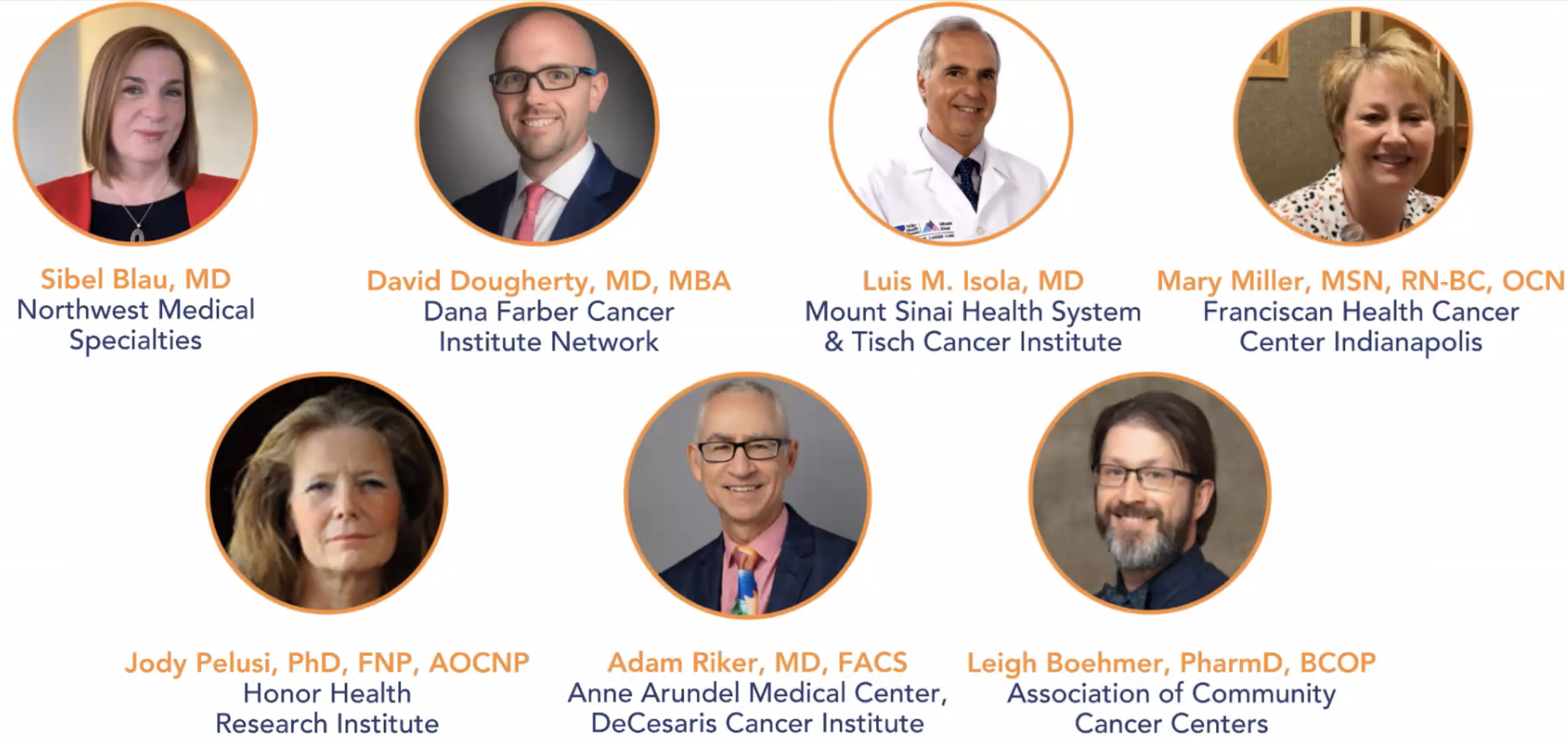
Early on in the crisis, many health care employees were impacted by financial hardships at the individual level, including child and elder care, lost income, and more. So, Dr Blau’s practice created a hardship fund for employees to donate payed time off for others who were struggling.
Dr Riker said he also set up an emergency fund for his furloughed staff. His entire senior leadership team took a 30% pay cut for several months, he said, which went into a pool to distribute out to those in need.
“Just to see the generosity of the physicians in senior leadership was really quite amazing,” Dr Riker said.
At Mount Sinai it was a similar experience. Isola said his senior faculty and management took a pay cut for several months to be reinvested into employee maintenance. The center, he said, is in a much better place than when COVID first began and is more prepared for the second wave.
The crisis has also affected operations and revenue, according to Dr Dougherty.
He said at Dana Farber, there was a significant drop in volume at the onset of the pandemic, but telehealth was brought on quickly to recover any financial loss and maintain operations. In most instances, he said, Dana Farber was back to its pre-COVID exam infusion volume by late May or early June.
When the pandemic began, Riker said his institute continued to treat oncology patients who needed chemotherapy. Although volume dropped slightly due to mandates, the center managed to maintain 85-90% of both medical and radiation oncology visits that were undergoing active treatment.
“We got them through most of that therapy with really no adverse outcomes,” Dr Riker said, adding that the surgical piece of the puzzle was different.
National organizations, including the Society of Surgical Oncology, the American Society of Breast Surgeons and the American College of Surgeons, released guidelines on who should be operated on or not. Dr Riker said his healthcare system then tiered out cases and prioritized what was a cancer that needed to be operated on versus what was a cancer that could wait.
Cancer screenings during the crisis have dropped off in various regions of the country. And according to Ms Miller, the pandemic forced many patients to avoid screenings altogether, especially ovarian, over fears of COVID exposure.
“We're seeing a lot of late-stage ovarian cancer patients, young, coming in an it's not having very good outcomes. It's pretty scary....We’ve seen some ugly situations that are very heartbreaking to see what’s going on and how late they waited, and then it decreases what their chances are,” she said.
Dr Isola said the effects of the lack of screenings for cancer will linger for years to come. In the future, healthcare organizations will need to figure out how to keep screenings going and encourage the population to come in and feel safe doing so, according to Dr Blau.
Estimating how much longer programs and practices will feel the financial impact of the pandemic, Drs Isola, Blau, and Riker all said it will be about a year or 2 from now when healthcare organizations will recoup some margin of net profit.
Diving deeper into the negative effects of the patient experience during the pandemic, Ms Miller said one of the biggest dissatisfiers has been visitation, with her hospital’s oncology unit basically on lockdown for months.
However, there were exceptions. According to Ms Miller, she always tried to make sure patients had one visitor if something special was going on, were receiving a new diagnosis or were at end-of-life care.
Dr Pelusi said in her outpatient setting, oncology patients were not allowed visitors unless necessary. She instead utilized video chats for conversations and exam participation.
On top of dramatic shifts in telehealth, staffing, and budgets, COVID-19 has brought an onslaught of issues surrounding systemic racism, health care disparities and social determinants of health, Dr Riker said.
“For example, we couldn’t really do telehealth with many of our patients because they don’t have access to Zoom. They don’t have access to MyChart. They have trouble even coming to see us face-to-face because they don’t have a car or they have to take public transportation. These are real issues and we have to address them, and we have learned a bit from the first COVID crisis to now,” he explained.
Dr Riker said that one of the things he’s noticed between the first and second wave is that newly diagnosed patients actually want to be seen by their doctor. They do not want to do telehealth visits, and he agreed it’s the right choice.
“If it’s a newly diagnosed cancer patient there’s got to be at least one face-to-face visit with their physician,” Dr Riker said.
Certain dynamics in cancer care have also been accelerated by the crisis.
For example, Dr Isola said, he leveraged alliances in the New York City tri-state area to provide care locally to patients who couldn’t travel.
Another example, Dr Riker covered, included his company’s reorganization of how it took care of patients in the ambulatory care setting. Before COVID, his medical oncology group was in a different office than the surgical oncology group.
“They weren’t together, which isn’t the most efficient way to deliver cancer care,” he said.
In turn, he reorganized DeCesaris into a truly patient-centered, multidisciplinary ambulatory clinic focused on bringing together medical oncologists with surgical oncologists in a clinical setting.
A major lesson to walk away with is that we can be great problem solvers, Dr Isola said.
Ms Miller agreed.
“Our oncology group was the first group at our hospital system to really jump on the telehealth bandwagon and just run with it. I think our cancer program was the leader in our hospital of getting things going and figuring out different ways to do things,” she said.
“It was exciting to see the different ways they came up with taking care of patients. I look forward to seeing other ways that they're coming up with … things like just trying to put the patient first and figure out how to take care of the patients in these hard times,” Ms Miller continued.
Dr Pelusi shared her similar views.
“I think we’ve been not only creative, but very effective and efficient, in terms of what we’ve done. It actually, in the long run, saves us a lot of time and we can put that time and effort into better patient care,” she said.—Emily Bader
Click here to read Experts Discuss Cancer Care in the COVID Era at the ACCC Annual Meeting –Part I




