










Design Implications for Multidisciplinary Community Care: TriHealth Cancer Institute
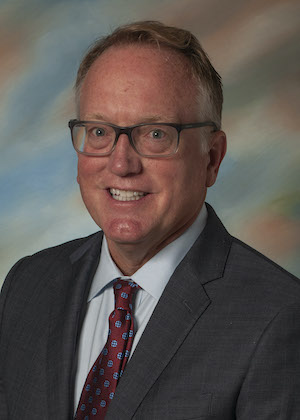 At the ACCC Annual Meeting and Cancer Center Business Summit (March 4-6, 2020; Washington, DC), Journal of Clinical Pathways spoke with Mark G. Witte, Executive Director, TriHealth Cancer Institute, about multidisciplinary care at the largest cancer care provider in the greater Cincinnati region, as well as renovations of four integrated centers in the network.
Can you describe what multidisciplinary cancer care looks like at a community practice like TriHealth Cancer Institute?
Mr Witte: The way that we think about it is within a “clinical microsystem” model – all of the elements that have to be coordinated around the patient. When we think about cancer care, we are not simply considering the treatment that we deliver, but the comprehensive model of care – the understanding of the role that nutrition, social work, and behavioral health plays in helping patients during their cancer journey.
Furthermore, we think of it not only in terms of the subspecialties of medical, surgical, and radiation oncology, but we also think of it in terms of genetics and other elements like social work, financial counseling, behavioral health, and nurse navigation. We have built a delivery model where those components are present in the outpatient setting.
In the past, patients often experienced many services in the hospital, but the reality is cancer care is mostly given in the outpatient setting. Thus, we shifted a majority of those resources into the outpatient clinic. Then, part of our strategy in building new centers was to build around the experience of the total package of care that we want to deliver to patients.
What are some key considerations for building a strong and successful care model? In other words, what are the aspects of your care model that you would consider unique compared to other comparable community practices?
Mr Witte: We started the cancer institute in 2010. At the time, there were only seven doctors. Four of those doctors retired and left the practice. Today, we have 31 practicing doctors. We have been recruiting younger physicians over the last 10 years, all of whom come out of training in a model with a background in oncology, genetics, social work, and navigation. They have come out of training with a steadfast and well-rounded idea of how to deliver cancer care. In turn, our physicians were compelled to re-evaluate our model.
It has been key for us to recruit physicians. We have a diversity strategy in our recruiting. That diversity means training. We do not want all of them to come from one training ground. We hire from a medical school in Cincinnati, fellowship programs, and elsewhere. We also want to reflect diversity in terms of ethnicity and gender so as to align with the patients we care for in our system.
I do not think there is a secret sauce to a successful multidisciplinary care model. However, it does require a commitment to delivering the best possible care. We cleared the physical slate of how we thought about buildings and structure and started from scratch. We created a new structure in our offices that does not separate the clinic space of radiation oncology, surgical oncology, and medical oncology from one another. Multidisciplinary care happens on a daily basis and by placing providers together, it lends itself to more collaboration.
The title of your session includes the phrase, "Lost in translation." My assumption is that this is a reference to potential challenges or issues involved in the process of building a multidisciplinary care model. Can you elaborate?
Mr Witte: The focus of my presentation is how we look to not simply build buildings, but also reflect this multidisciplinary model of care within our buildings. The model can easily be lost in translation when new structures are built.
Can you speak to the patient feedback you have received from this model?
Mr Witte: Like every health system, we have patient-experience software to gain feedback. We also have what we call a “patient family advisory council,” which consists of patients who have previously experienced care coming back to provide direct feedback. I facilitate that group. At our last session, we had 13 patients attend. We try to keep it at a size where a dialogue may be had.
We take the feedback from Press Ganey questionnaires and further explore what we have heard from patients. At our last meeting, we explored issues related to medical reconciliation and office communication. However, I will acknowledge that the questionnaire does not always provide a deeper insight into why we have the scores that we have.
The other feedback system we have is nurse-leader rounding. The assistant nurse managers that we have are nurses in our infusion centers, in our radiation centers, and in the hospital. They have an obligation to engage in patient rounding. We have a tool in our system in which they document what they hear so that we are, on a regular basis, obtaining feedback on the ground floor, so to speak.
Are there any other important points you would like to make at this time?
Mr Witte: I just want to stress the emphasis we put on committing to the model of care that we wanted to provide before we began the building of buildings. That started with hiring the right doctors and nurses as well as coming to a deep understanding of our delivery system and new model. It was to transform the way care was delivered. This commitment on the frontend was most important.




